Meyer Burger is considering its legal options after long-time heterojunction tandem solar cell manufacturing partner Oxford PV ended its collaboration agreement unexpectedly.
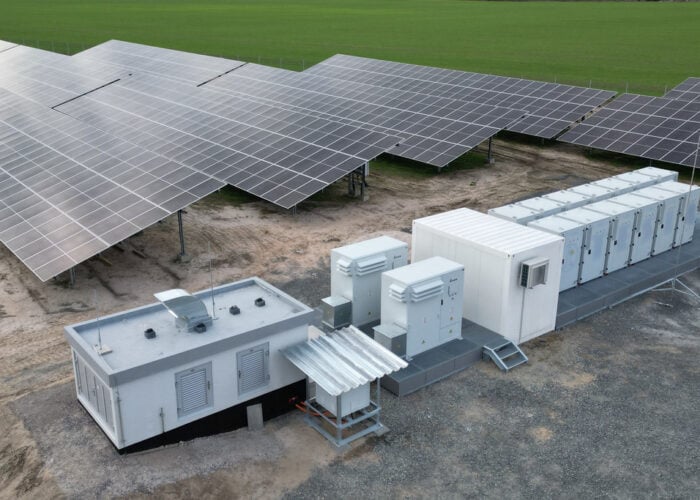
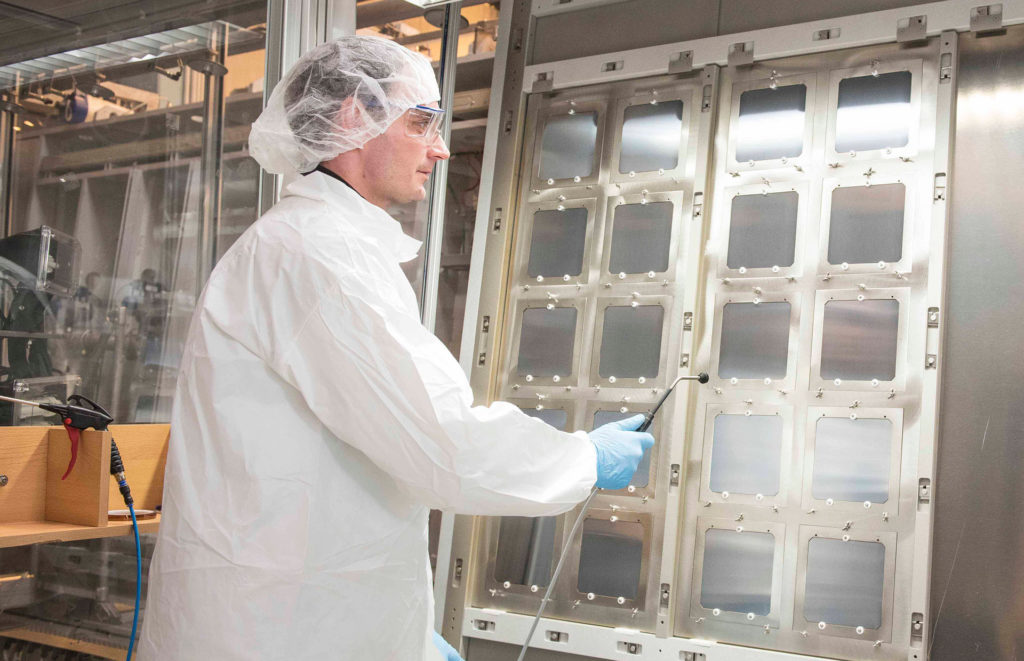
Late last week (Friday 23 July 2021) Oxford PV confirmed that it had completed construction of its new manufacturing facility in Brandenburg an der Havel in Germany. The site, which is expected to begin full production next year, is home to Oxford PV’s first volume manufacturing line of its perovskite-on-silicon tandem solar cells.
Try Premium for just $1
- Full premium access for the first month at only $1
- Converts to an annual rate after 30 days unless cancelled
- Cancel anytime during the trial period
Premium Benefits
- Expert industry analysis and interviews
- Digital access to PV Tech Power journal
- Exclusive event discounts
Or get the full Premium subscription right away
Or continue reading this article for free
Frank P. Averdung, chief executive at Oxford PV, said the operation of a small volume line at the site since 2017 had allowed the company to optimise the perovskite cell product, with plans now afoot to bring that product to market.
“Now that the technology is ready for deployment and the factory build-out has been completed, we are excited about our journey ahead to realise our mission to make perovskite PV the mainstream solar technology,” he said.
With the completion of the facility, Oxford PV also revealed that it had terminated its exclusive relationship with Meyer Burger, the solar equipment manufacturer-turned-module maker it has partnered with for more than two years.
Meyer Burger responded with its own statement today, confirming that it was “considering legal options to enforce its rights”.
The two signed a formal collaboration agreement in early 2019 with the intent of accelerating perovskite-on-silicon heterojunction solar cell and module development. Oxford PV agreed to purchase a 200MW heterojunction manufacturing line from Meyer Burger, with the latter also agreeing to take a stake of up to 18.8% in the former.
Meyer Burger remains the largest single shareholder of Oxford PV, holding a 19.76% stake in the firm.
The partnership led Oxford PV to firm up plans to become a merchant manufacturer of heterojunction perovskite solar cells and modules, however the following year saw Meyer Burger complete its own pivot towards heterojunction solar cell and module manufacturing.
Meyer Burger said the announcement was unexpected, but stressed that the consequences of Oxford PV’s decision would have no impact on its own business transition, nor on the guidance it has committed to.
“The perovskite tandem technology is an integral part of Meyer Burger’s technology roadmap. Based on its own developments and know-how, Meyer Burger has a comprehensive portfolio of processes, technologies and production techniques for its own potential mass production of tandem solar cells and modules.
“This includes the essential manufacturing processes and machines for perovskite tandem solar cells and corresponding solar modules with Meyer Burger’s proprietary SmartWire interconnection technology. Meyer Burger thus holds a key to critical success factors such as product reliability and cost-efficient mass production,” the statement read.
Shares in Meyer Burger fell more than 9% in early trading this morning, falling from a previous close of CHF0.48 (US$0.52) to CHF0.40 (US$0.43) per share.