Monocrystalline ingot/wafer producer M.Setek to stop production of polysilicon

Facebook
Twitter
LinkedIn
Reddit
Email
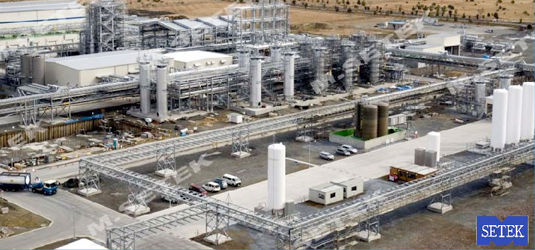
Japan-based M.Setek, a subsidiary of Taiwan based flat panel display and PV module manufacturer, AU Optronics Corp (AUO) is to stop production of monocrystalline polysilicon production, due to cost competitive issues.

Japan-based M.Setek, a subsidiary of Taiwan based flat panel display and PV module manufacturer, AU Optronics Corp (AUO) is to stop production of monocrystalline polysilicon production, due to cost competitive issues. 

In a Taiwan Stock Exchange statement, AUO noted that it would incur a one time impairment charge of M.Setek’s equipment and facilities totalling NT$ 6.75 billion (US$203 million), recognised in its fourth quarter 2015 financial period. 

This article requires Premium SubscriptionBasic (FREE) Subscription

Try Premium for just $1

  • Full premium access for the first month at only $1
  • Converts to an annual rate after 30 days unless cancelled
  • Cancel anytime during the trial period

Premium Benefits

  • Expert industry analysis and interviews
  • Digital access to PV Tech Power journal
  • Exclusive event discounts

Or get the full Premium subscription right away

Or continue reading this article for free

However, AUO noted that it would continue to operate M.Setek’s ingot/wafer slicing operations at the facilities.

According to PV Tech’s own analysis, M.Setek had less than 10,000MT of direct polysilicon production per annum. 

Polysilicon remains in overcapacity mode after more than four years and spot market prices have fallen below small quantity producers cash production cost levels (US$20/kg – US$15/kg) again in 2015. 

However, overcapacity also remains in monocrystalline ingot/wafer production, adding to pricing pressures in 2015 of mono-wafers, compared to multi-wafers. 

AUO’s PV module operations, BenQ Solar with manufacturing operations in Malaysia produces monocystalline modules but does not have integrated production operations. 
Read Next

September 4, 2026
The US PV manufacturing sector is set to make huge strides by 2030, but with some upstream constraints unresolved and question marks over future demand drivers.
September 2, 2026
In the third part of this week’s series exploring the US solar supply chain, we track how quickly announced manufacturing capacity is translating into real production.
September 1, 2026
US module production is at a near saturation point, but significant capacity gaps persist further up the supply chain, writes head of PV Tech Research, Moustafa Ramadan.
August 31, 2026
Head of PV Tech Research, Moustafa Ramadan, kicks off a five-part series tracing the evolution and future of the US solar manufacturing supply chain.
August 24, 2026
Stronger downstream demand drove a surge in wafer prices last week, according to the latest figures from the Silicon Industry Branch of the China Nonferrous Metals Industry Association.
August 24, 2026
Australian investment firm Quinbrook Infrastructure Partners has advanced its plans to develop a polysilicon production facility in the Townsville area of Queensland, Australia.

Upcoming Events

Solar Media Events
October 13, 2026
San Francisco Bay Area, USA
Solar Media Events
November 3, 2026
Málaga, Spain
Solar Media Events
November 24, 2026
Warsaw, Poland
Solar Media Events
February 2, 2027
London, UK