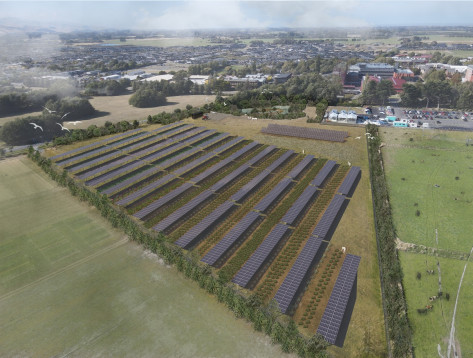
Lincoln University revealed plans on Wednesday (10 July) to develop New Zealand’s first ‘high-value’ agrivoltaic (agriPV) solar farm.
According to the university, the 1.5MWp solar installation, comprising approximately 2,800 PV modules, will “demonstrate how productive land can be optimised to grow high-value horticulture crops while generating commercial-scale solar energy”.
Try Premium for just $1
- Full premium access for the first month at only $1
- Converts to an annual rate after 30 days unless cancelled
- Cancel anytime during the trial period
Premium Benefits
- Expert industry analysis and interviews
- Digital access to PV Tech Power journal
- Exclusive event discounts
Or get the full Premium subscription right away
Or continue reading this article for free
The rows of bifacial PV panels will be mounted on an east-west tracking system, with two different height configurations. This will allow for commercial crop production alongside and underneath the panel structures. The system will generate around 2.3GWh of renewable energy per year.
Next to the main array, a second smaller array will be dedicated to multi-use research as its main function, with complete manual control, different height and panel configurations, and different panel technologies.
Subject to resource consent, the project will be constructed on a four-hectare parcel of university-owned land adjacent to the campus at the corner of Springs and Ellesmere Junction Road.
Scheduled for completion in mid-2025, the energy farm will increase the University’s total generating capacity to approximately 3.56GWh, covering 18% of the campus’s annual electricity requirements after the heating system upgrade to 100% electric power.
Lincoln University’s chief operating officer, Susie Roulston, said the Lincoln University Energy Farm is key to the University’s goal to become carbon neutral by 2030 and carbon zero by 2050.
“Our multi-disciplinary approach has enabled decarbonisation and a novel agriPV system. The Lincoln University campus is both an exemplar of sustainable practices and a showpiece for transformative land use,” Roulston said.
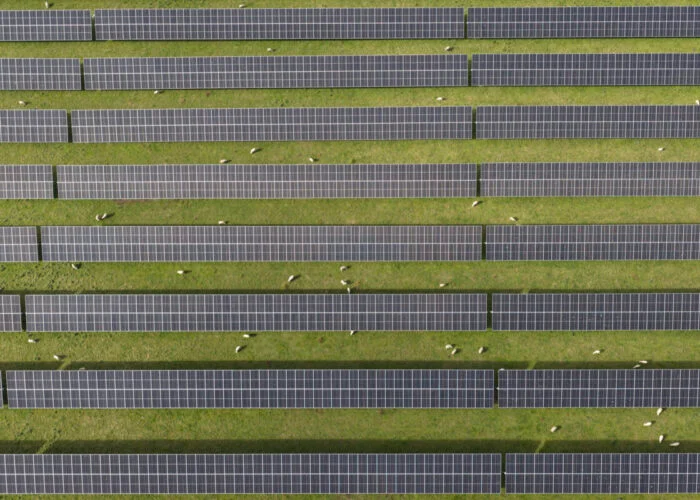
The university said that the project will be the “first demonstration of high-value agriPV in Aotearoa, New Zealand”, adding that “while livestock grazing is commonly practised within solar installations locally and internationally, this approach is primarily for the purpose of managing grass growth and is relatively low-value”.
New Zealand’s agriPV landscape
As mentioned by the university, although this is the first project exploring “high-value” agriPV, it is not the first solar farm to be developed that incorporates agriPV. Instead, multiple projects have added this into their plans.
For instance, New Zealand solar developer Lodestone Energy revealed in late June 2024 that it would build a 220MW agriPV project on the country’s South Island.
The project will cover 340 hectares, around 1.5% of the total Haldon Station farmland, and Lodestone plans to begin construction next year. While the company did not specify which modules would be used for the project, it will add to a growing portfolio of solar projects in operation, with Lodestone currently operating the 33MW Kaitaia project and the 32MW Rangitaiki project on the country’s North Island.