Technology used in GE’s wind turbines, is now being applied to large-scale PV systems. Building on a platform of power electronics, monitoring and controls that enhance wind energy grid integration, GE has developed a 600 kW solar inverter, which includes grid-friendly features to deliver performance in large-scale solar installations similar to conventional power plants.
Problem
Try Premium for just $1
- Full premium access for the first month at only $1
- Converts to an annual rate after 30 days unless cancelled
- Cancel anytime during the trial period
Premium Benefits
- Expert industry analysis and interviews
- Digital access to PV Tech Power journal
- Exclusive event discounts
Or get the full Premium subscription right away
Or continue reading this article for free
Because the energy output of a solar power plant is directly related to the availability of the sun, anticipating the load that the solar power plant will provide can present a challenge for the utility grid, causing the plant to trip off-line. In order to ensure that solar power plants stay online, providing cleaner, more reliable energy, the variability needs to be managed so that it is more predictable—even during disturbances such as intermittent cloud cover.
Solution
While some software changes were needed to modify GE’s wind converter technology for solar applications, the hardware has remained nearly the same, enabling GE to leverage its expertise in the manufacture of its extremely reliable wind converters. GE’s wind converters include control functions that enhance integration—a requirement to meet grid codes. SunIQ, GE’s suite of solar plant monitoring and controls, can manage voltage in a similar way. The GE inverter utilizes a two-stage power conversion approach, which provides the output of the inverter at a standardized grid voltage of 480 Vac. This voltage minimizes AC side current, eliminating the need for an intermediate transformer, resulting in higher conversion efficiency compared to a single-stage power conversion system. If multiple converters are connected to a medium voltage grid, a standard medium voltage transformer can be used. Fitted with a robust outdoor-rated enclosure, the GE 600 kW Solar Inverter has been designed to perform even in extreme environmental conditions.
Applications
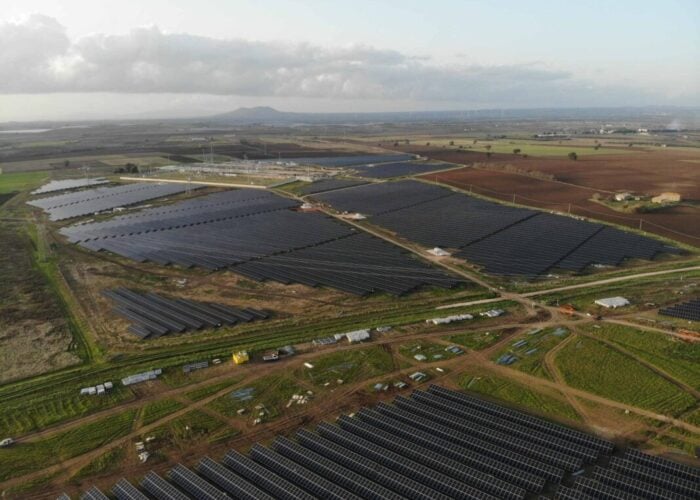
Large utility-scale power plants.
Platform
GE’s SolarRIDE-THRU technology allows inverters to stay on-line during grid disturbances. SolarRIDE-THRU includes Low Voltage Ride Through (LVRT), Zero Voltage Ride Through (ZVRT), and High Voltage Ride Through (HVRT) capabilities. GE’s SolarFREE Reactive Power feature provides controlled reactive power through all operating conditions. Even when not generating active power, inverters with SolarFREE can provide reactive power for continuous voltage support and regulation. This feature can eliminate the need for grid reinforcements—even in no-sun conditions—and may allow for more economic commitment of other generating resources. GE inverter is certified to applicable UL and CSA standards.
Availability
November 2009 onwards.