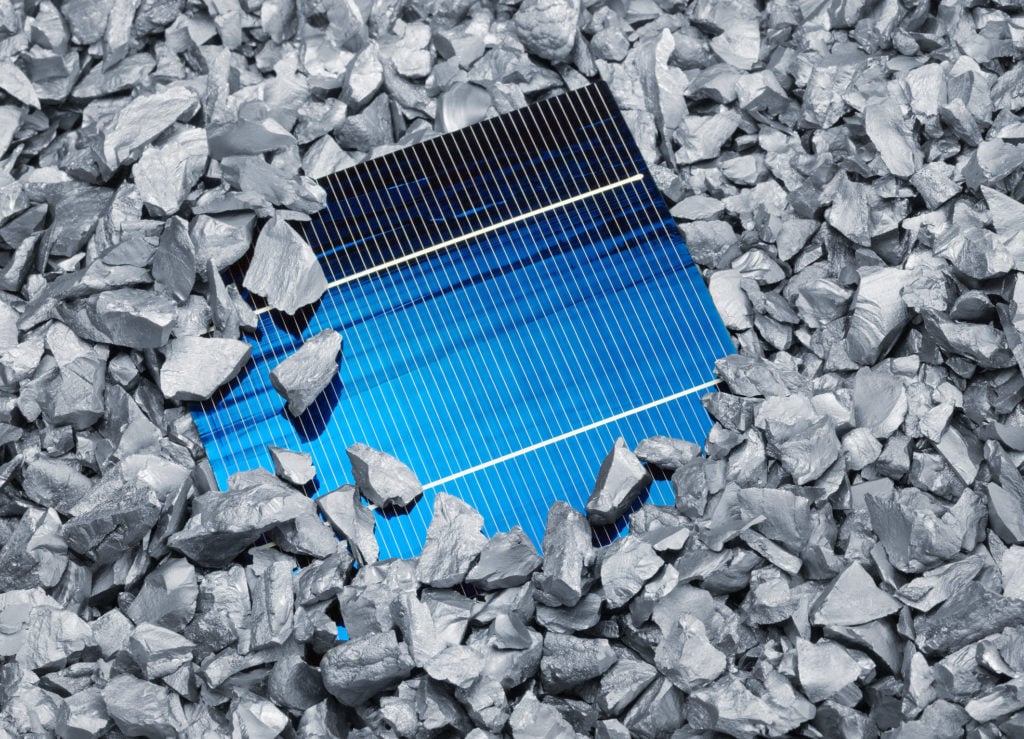
The US Department of Commerce (DoC) has initiated an investigation into the imports of polysilicon and its derivatives.
Launched earlier this month, the investigation was initiated under Section 232 of the Trade Expansion Act of 1962 and seeks to determine the effects of polysilicon imports in the US, how they affect domestic production, and the role of foreign supply chains in meeting domestic demand.
Try Premium for just $1
- Full premium access for the first month at only $1
- Converts to an annual rate after 30 days unless cancelled
- Cancel anytime during the trial period
Premium Benefits
- Expert industry analysis and interviews
- Digital access to PV Tech Power journal
- Exclusive event discounts
Or get the full Premium subscription right away
Or continue reading this article for free
Set to be published on Wednesday (16 July 2025), the Federal Register notice highlights that the DoC will seek comments on the matter for a period of 21 days from the moment of the document’s publication on the Federal Register.
Among the information and comments the DoC is interested in is the feasibility to increase domestic capacity in order to reduce import reliance, as well as “the impact of foreign government subsidies and predatory trade practices on the competitiveness of the polysilicon and its derivatives, in the United States” and “the economic impact of artificially suppressed prices of polysilicon and its derivatives due to foreign unfair trade practices and state-sponsored overproduction.”
This is not the first measure the US has taken regarding polysilicon in the past few months. Last December, the Office of the United States Trade Representative (USTR) increased tariffs on Chinese polysilicon and solar wafers from 25% to 50%. Under Section 301, this measure took effect at the beginning of 2025.
Currently, the US does not produce enough polysilicon capacity to cover the country’s annual nameplate production capacity for solar modules. According to data from the trade association Solar Energy Industries Association (SEIA), there is 25GW of operational polysilicon production, with a further 8GW announced – among which Hemlock Semiconductor aims to build a new manufacturing facility in Michigan – compared to the 57.5GW solar PV module operational annual nameplate production capacity alone.
The notice is expected to be published later this week (16 July) and should be accessible here.
The price of polysilicon in China has been relatively low in the past years, with recent average prices for n-type polysilicon below US$5.5/kg, while overseas PV-grade polysilicon prices average more than US$15.5/kg, according to platform provider of nonferrous and ferrous metals Shanghai Metals Market.
Moreover, despite the persistent oversupply of polysilicon in recent years, the industry could be heading into a shortage by 2028, according to a recent report from polysilicon market analyst Bernreuter Research. Johannes Bernreuter, head of Bernreuter Research, said: “Polysilicon prices in China will hardly rise beyond US$5/kg through 2027 unless manufacturers shorten supply more drastically or the price of silicon metal feedstock rebounds strongly.”
A supply shortage could arise if those manufacturers eliminate all excess capacity in an effort to increase the price of polysilicon.
Demand for polysilicon from the solar industry, which Bernreuter Research said is the biggest buyer of the material, is set to stay strong in the coming years