In its 2020-2021 budget, India has proposed custom duties for solar imports, the roll-out of PV on farms and near railways nationwide, as well as lower taxes for new domestic power producers and foreign sovereign wealth funds.
The Union Budget earmarks INR 22,000 crore (US$3 billion) on various schemes within the power and renewables sector.
Try Premium for just $1
- Full premium access for the first month at only $1
- Converts to an annual rate after 30 days unless cancelled
- Cancel anytime during the trial period
Premium Benefits
- Expert industry analysis and interviews
- Digital access to PV Tech Power journal
- Exclusive event discounts
Or get the full Premium subscription right away
Or continue reading this article for free
It proposes to halve concessional corporate tax for new domestic power generators from 30% to 15% and grant foreign sovereign wealth funds a tax exemption on interest, dividend and capital gains income made on investments in infrastructure and “other notified sectors”. The latter would apply to investments made before March 31, 2024 and with a minimum lock-in period of three years.
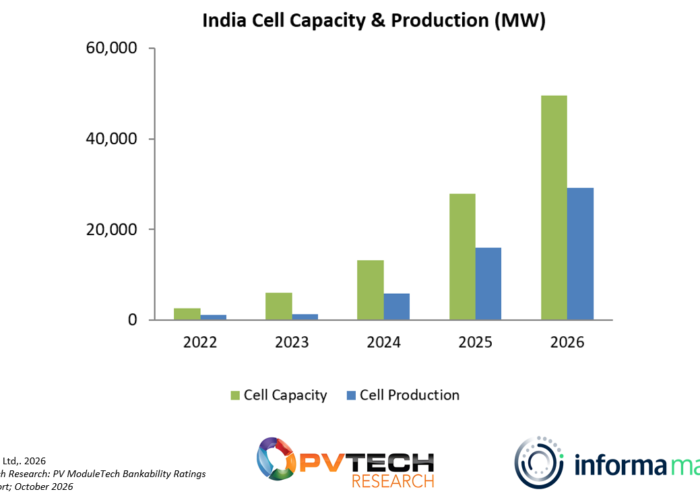
In a bid to boost domestic manufacturing, the government has also proposed the introduction of a 20% customs duty on imported solar cells and modules. There is no set timeline for the proposed amendment to India's customs act, which would apply to solar cells and cells assembled into modules or panels.
It is not the first time India’s federal government has searched for policy to curb the solar industry's reliance on foreign products.
A two-year safeguard duty imposed on solar cells and modules imported from Malaysia and China in mid-2018 was flawed, given its timeframe was too short to attract new manufacturing investments. Renewables consultancy Bridge to India noted one year in that no new units had been launched.
Another government scheme, launched in February 2019, is targeting the installation of 12GW of PV for government and public sector buildings using only domestically sourced solar cells and modules.
Finance Minister: Smart metering will relieve DISCOM stress
In the year to come, the government intends to reduce the “financial stress” felt by the distribution sector – in particular distribution companies (DISCOMs) – by promoting smart metering.
“I urge all the state and union territories to replace conventional electricity meters by pre-paid smart meters in next three years. Also, this would give consumers the freedom to choose the supplier and the rate as per their requirements. This is a very important step in reaching electricity to all people,” Finance Minister Nirmala Sitharaman said in a budget speech on Saturday.
The Budget also outlines plans to expand on a pre-existing farming solar pump scheme to ensure that 20 million farmers can access funding for stand-alone solar pumps, help a further 15 million farmers “solarise” grid-connected pumps, and launch separate scheme whereby farmers can set up solar power generation capacity on unused land and sell it to the grid.
The government said it will encourage the deployment of “large solar capacity” on land owned by the Indian Railways and allocate INRS4,400 crore (US$616 million) to incentivise cities with populations larger than one million to clean up their air.
“The government’s continued focus on decentralised renewable energy by expanding the KUSUM scheme, the drive to close inefficient thermal plants, and the steps to expand the stock of land for solar projects is encouraging,” PwC India's energy, coal and mining lead Kameswara Rao told PV Tech in an email.
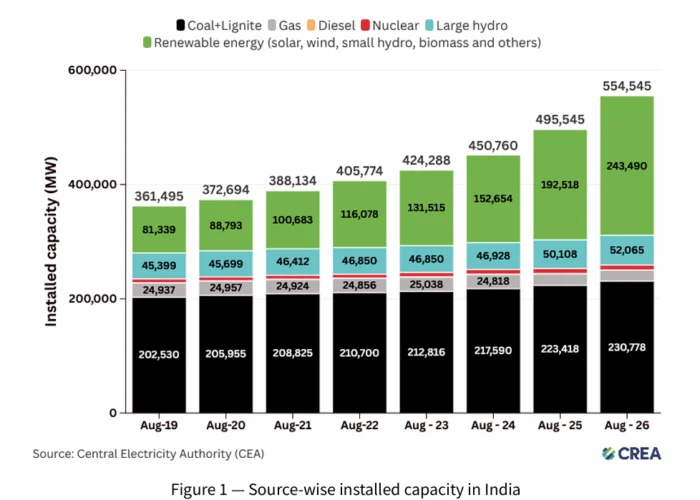
“This should help increase the share of non-fossil fuel generation, which in 2019 grew to 24%,” he said.
Bridge to India: Budget "somewhat disappointing"
Vinay Rustagi, managing director of renewable energy consultancy Bridge to India, told PV Tech in an email that government's plans do not go far enough.
“The budget was somewhat disappointing for the power sector as there was none of the big-bang reform announcements expected to address key operational and financial hurdles in the sector,” he said.
“For renewables specifically, the two most relevant developments are reduction of corporate tax rate to 15% for new IPPs and a complete tax waiver for sovereign wealth funds, the biggest investors in the market. We don’t believe that any of the other announcements relating to solar pumps, railways or customs duty would have any material impact on the sector,” he added.
PwC's Rao said that the tax proposals “should lower the cost of capital and enhance financing available to new projects,” adding that “the lower costs should encourage utilities to contract more renewable energy.”
He noted that they “can reverse the situation faced last year when 40% of renewable energy auctions went undersubscribed.”