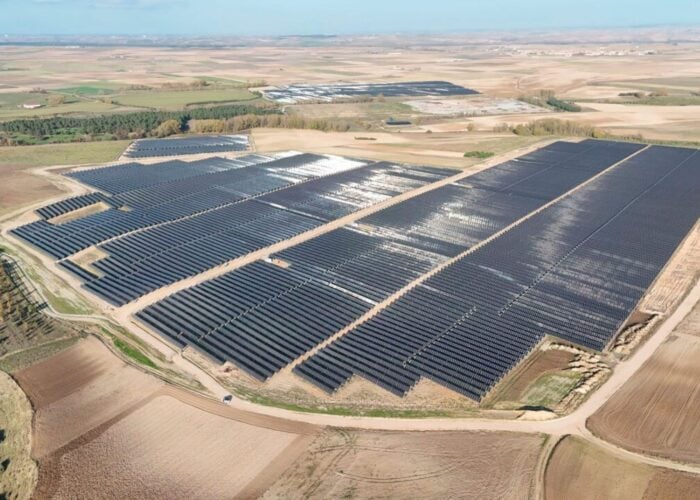
India is expected to install 2.5GW of solar in 2015, significantly up from the previous forecast of 2GW, under the latest quarterly ‘India Solar Market Update’ from Mercom Capital Group.
Installations to date this year have reached around 1,400MW, which is already a record breaking year for India. The country’s cumulative capacity is now at 4.5GW.
Try Premium for just $1
- Full premium access for the first month at only $1
- Converts to an annual rate after 30 days unless cancelled
- Cancel anytime during the trial period
Premium Benefits
- Expert industry analysis and interviews
- Digital access to PV Tech Power journal
- Exclusive event discounts
Or get the full Premium subscription right away
Or continue reading this article for free
This is the second time this year that Mercom has raised its 2015 forecast. One reason it is being raised to 2.5GW is India’s cabinet, chaired by prime minister Narendra Modi, officially approving the 100GW by 2022 solar target, up from 22GW.
The Mercom report found that, should cumulative installations reach 5GW by the end of 2015, the remaining 95GW will need to be reached at a compound annual growth rate (CAGR) of 63% up to 2022.
The 100GW target is split between 60GW ground-mount and 40GW rooftop solar.
The mercom report stated: “While 60GW may be achievable with the right policies in place, 40GW of rooftop in six years is very aggressive considering cumulative rooftop installations in India are just under 250MW.”
This echoes consultancy Bridge to India’s concern that the Ministry of New and Renewable Energy’s (MNRE) annual target to reach 4,800MW of rooftop solar in 2016/17 is “improbable”. MNRE recently released annual targets up to 2022.
Mercom said that government-owned entities such as Solar Energy Corporation of India (SECI) and the National Thermal Power Corporation (NTPC) have started to enter the solar industry and directly compete with private businesses. SECI has been converted into a commercial entity and NTPC announced that it is evaluating a plan to set up solar manufacturing.
The report said that government entering into business contrasts with prime minister Modi’s statement: “It's not the government's business to run a business.”
Solar developers, manufacturers and investors that Mercom spoke with viewed this as a negative development for the industry.
Mercom also found a failure to allocate financing from the National Clean Energy Fund (NCEF) towards the solar industry with almost US$3 billion sitting in the NCEF fund unused. The NCEF was created in 2010 to fund up to 40% of the cost for research and innovative projects in clean energy technologies by public or private sector entities.
PV developers told Mercom that the states of Punjab, Karnataka, Andhra Pradesh, Telangana, Madhya Pradesh and Maharashtra were the most attractive for the solar industry at present, but they expressed concern about the SECI and NTPC’s commercial entrance into the sector.
Domestic manufacturers told Mercom that demand is picking up slowly, but with a lot of price pressure. They are also finding it difficult to compete with Chinese manufacturers. This is an issue given Modi’s speech to India’s scientific community just this week, in which he called on the domestic market to bring about innovation in solar technology. Domestic manufacturers are also often dependent on domestic content requirements.
Investors told Mercom that they are concerned by the record low bids for solar contracts in Telangana (INR5.17/kWh) and Madhya Pradesh (INR5.05/kWh). Mercom said that most Indian banks are unwilling to lend below a INR6/kWh tariff.