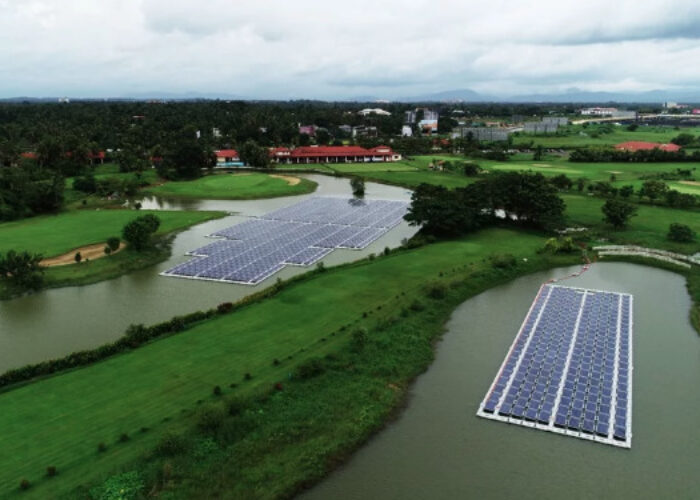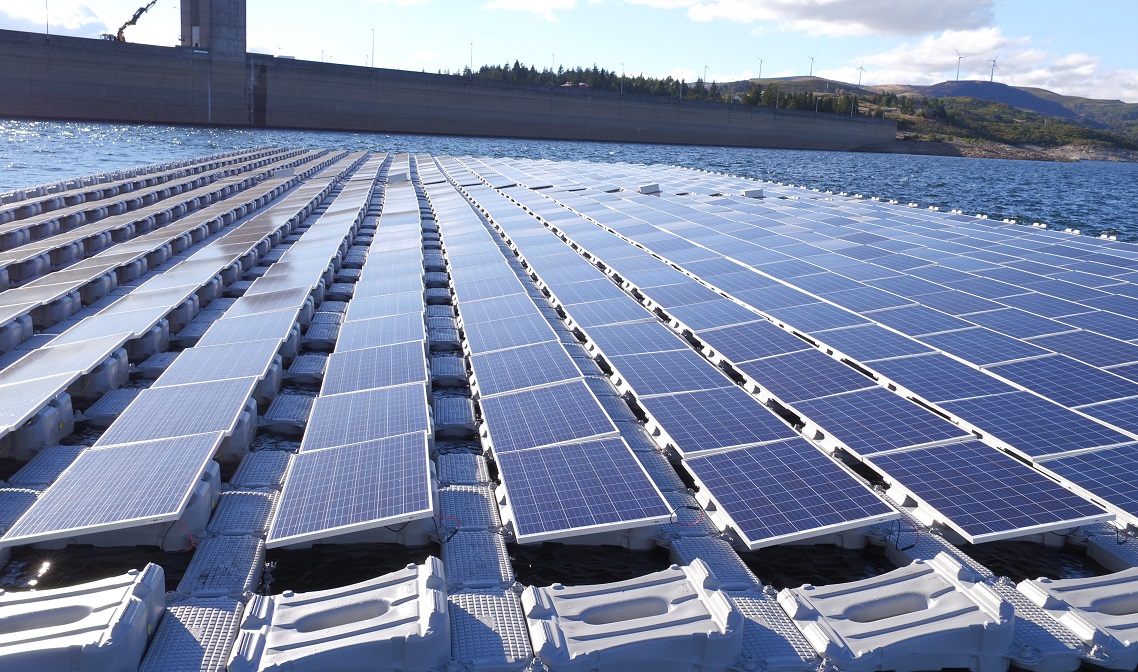
Hydropower plants across Africa could double their capacity if just 1% of their reservoirs are used to install floating solar projects, new research suggests.
The large-scale roll-out of floating solar at hydropower reservoirs in the continent could reduce water evaporation, help to satisfy future energy needs and increase resilience to climate change without redesigning existing infrastructure, according to the study.
Try Premium for just $1
- Full premium access for the first month at only $1
- Converts to an annual rate after 30 days unless cancelled
- Cancel anytime during the trial period
Premium Benefits
- Expert industry analysis and interviews
- Digital access to PV Tech Power journal
- Exclusive event discounts
Or get the full Premium subscription right away
Or continue reading this article for free
Entitled ‘Assessment of floating solar photovoltaics potential in existing hydropower reservoirs in Africa’, the research says floating photovoltaic (FPV) can complement hydropower production during increasingly frequent dry periods in Africa, while hydropower provides a more flexible operation to intermittent PV output.
The researchers used a combination of satellite images and reservoir data to analyse floating solar’s potential at 146 of Africa's largest operational hydropower plants as of 2016.
Despite its status as the continent with the most abundant solar resources, Africa is said to have an installed PV capacity of just 5GW, less than 1% of the global total. In terms of FPV developments, South Africa’s first such project was completed in 2019 and had a capacity of 60kW, while German company Droege Energy revealed plans the same year for a 20MW floating solar plant in Malawi.
While land availability for renewables deployment is not a major challenge in Africa, the report says FPV systems have additional advantages that are pertinent to Africa: increased efficiency thanks to the cooling effect of water, evaporation reduction, improvement of water quality by preventing algae growth and a lower impact of dust.
The report notes that FPV projects typically involve higher costs, in part due to operation and maintenance factors, the additional expertise required and increased soft costs, such as licensing and financing. However, colocation of floating solar with hydro plants means that transmission infrastructure is in place, removing some construction costs related to connecting to the grid.
A report published last year by Fitch Solutions found that falling costs, a range of successful pilot projects and a better understanding of the benefits are leading to a growing interest in FPV globally. The consultancy forecasts nearly 10GW of floating solar capacity will be installed in the next five years, with Asia dominating the technology’s project pipeline.