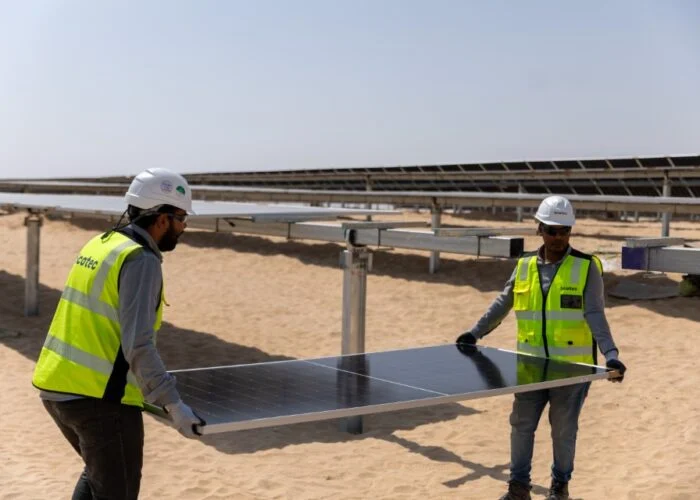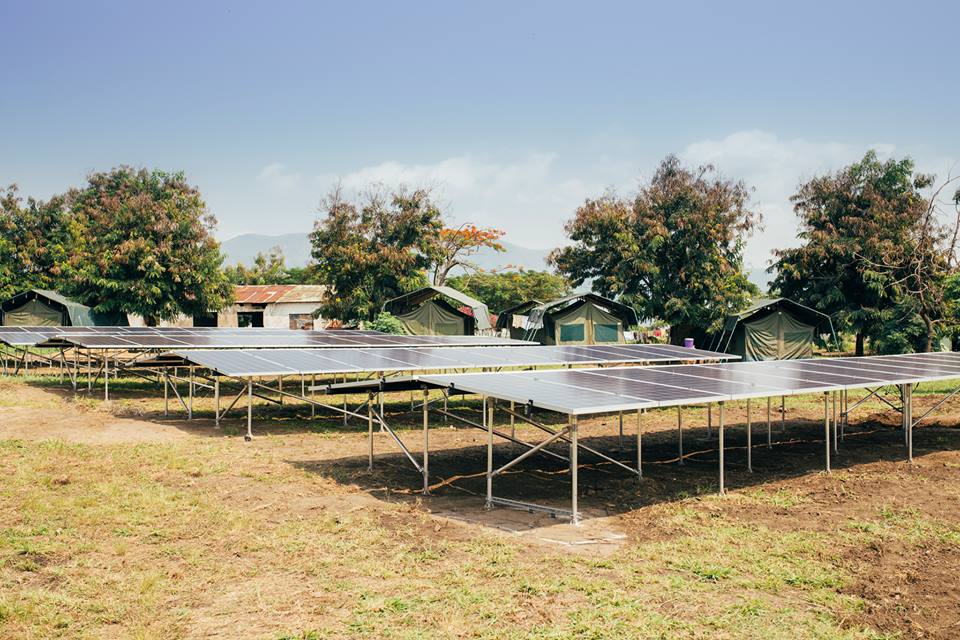
Plummeting solar-plus-storage costs could help electrify millions worldwide by facilitating a ten-fold explosion of mini-grid systems, a new report from the World Bank has said.
The 19,000 mostly hydro- and diesel-based mini-grids that power 47 million people today could boom to 210,000 systems powering 490 million by 2030, according to the institution.
Try Premium for just $1
- Full premium access for the first month at only $1
- Converts to an annual rate after 30 days unless cancelled
- Cancel anytime during the trial period
Premium Benefits
- Expert industry analysis and interviews
- Digital access to PV Tech Power journal
- Exclusive event discounts
Or get the full Premium subscription right away
Or continue reading this article for free
Its report said most new mini-grids will feature a mix of PV with batteries, adding that the 10-15GW of solar / 50-110GWh of mostly lithium-ion batteries expected by 2030 would bring CO2 savings of 1.5 billion tonnes.
According to the World Bank, hitting the 210,000 mini-grid target by 2030 would require bringing solar hybrid costs down to around US$0.20/kWh, compared to today’s US$0.55/kWh baseline.
Achieving such a milestone would see the costs of PV modules drop from US$690/kWp (today) to US$140/kWp (2030) while li-ion batteries would decline from US$598/kWh to US$62/kWh in the same period.
“Mini-grids are now one of the core solutions for closing the energy access gap…we are working with countries to actively mobilise public and private investment,” said Riccardo Puliti, a senior director of Energy and Extractives at the World Bank.
Asia leads but Africa catches up
According to the study, South Asia (9,300) and East Asia & Pacific (6,900) have installed most of the 19,000 mini-grids to date, with Afghanistan (4,980) and Myanmar (3,988) topping the global charts.
However, it is Africa that currently leads on the planning front, with projects in Senegal, Nigeria and others helping the continent account for 4,000 of all 7,500 systems under development worldwide.
The study identified PowerGen, OMC and Husk Power as the top three mini-grid developers in terms of project count, while the utility ranks were led by NPC-SPUG, RAO and JIRAMA.
According to the World Bank, reaching the global 210,000-by-2030 mini-grid target will require investment of US$220 billion, up from the US$28 billion injected so far.
Mini-grid support to date has included billions from development financiers but also US$259 million from private investors between 2013 and 2018, the report said.
Risk perceptions and macro-economic issues continue to cripple access to finance but crowdfunding, debt-to-equity and other innovations are helping bring down barriers, the document added.
See here to read the World Bank's mini-grid report in full