Non-PV renewables dominated electricity consumption in Portugal last month – REN

Facebook
Twitter
LinkedIn
Reddit
Email
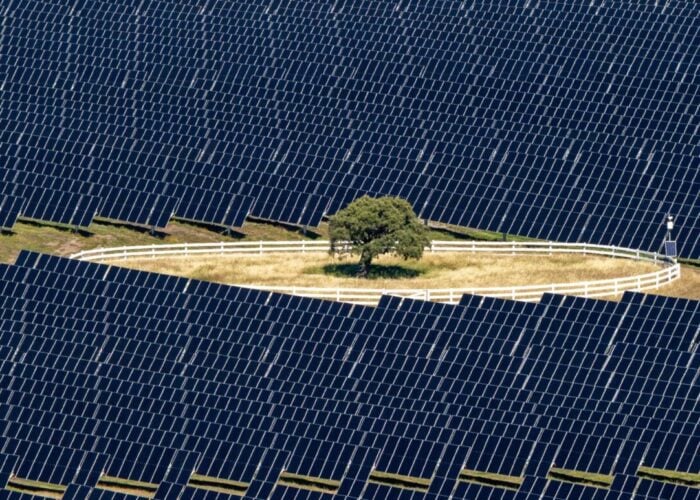
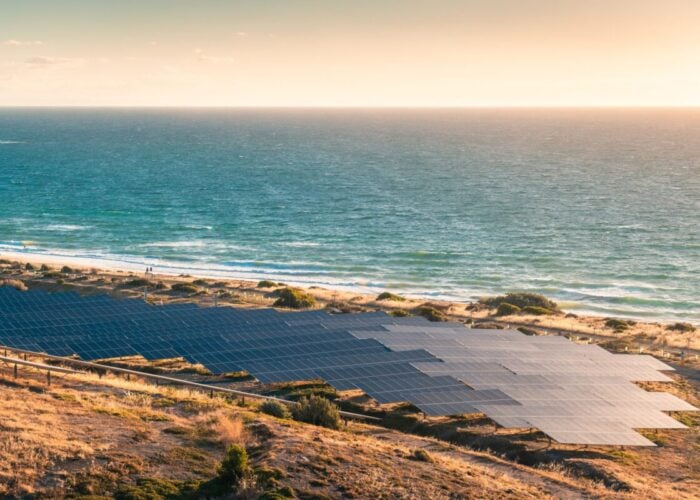
The figure was due to favourable weather conditions for renewable technologies. Image: REN

Renewables supplied 88% of electricity consumption in Portugal last month, but PV only accounted for 4%, according to Portuguese energy company Redes Energéticas Nacionais (REN). 

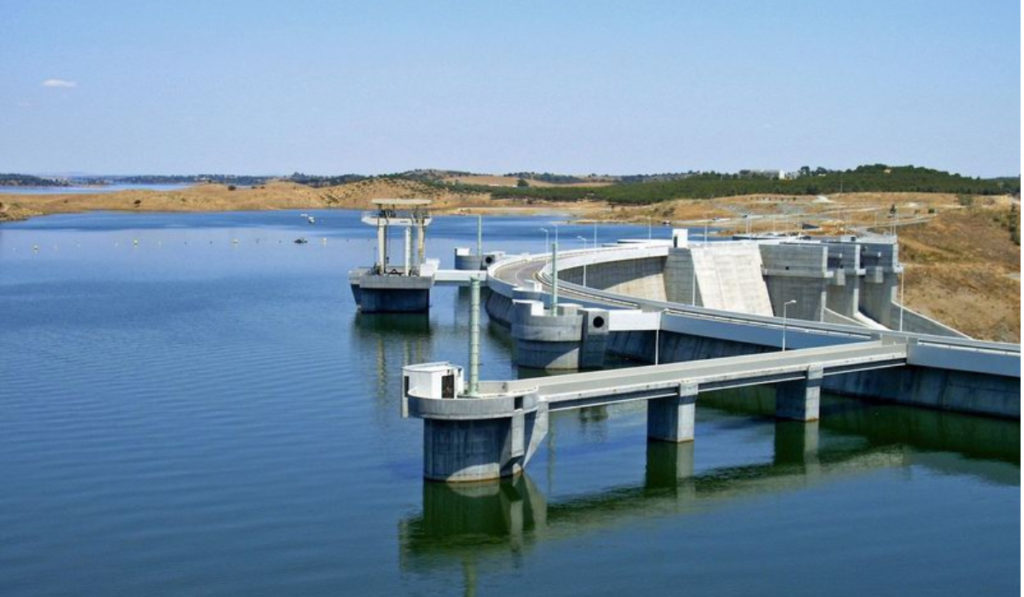
In January, renewable energy generation contributed to 88% of electricity consumption, including the exporting balance, in the southwestern Europe country. Hydropower stood out at 51%, followed by wind power at 28%, biomass at 5%, and PV at 4%.

This article requires Premium SubscriptionBasic (FREE) Subscription

Try Premium for just $1

  • Full premium access for the first month at only $1
  • Converts to an annual rate after 30 days unless cancelled
  • Cancel anytime during the trial period

Premium Benefits

  • Expert industry analysis and interviews
  • Digital access to PV Tech Power journal
  • Exclusive event discounts

Or get the full Premium subscription right away

Or continue reading this article for free

REN said that Portugal offered favourable weather conditions for renewable technologies last month. As a result, high capability indices were recorded, namely for hydropower with 1.53 (historical average of 1), but also for PV with 1.18 and wind power with 1.02. Additionally, hydropower and PV generation both reached new historic highs in the instantaneous values injected into the grid, reaching daily peaks of about 1,400MW.

The remaining 12% of consumption, including the exporting balance, was from natural gas power stations. The balance of trade, which favoured exports, was equivalent to about 4% of domestic consumption.

Moreover, in the natural gas market, consumption recorded a year-on-year decrease of 30% due to the behaviour of the power generation segment, which fell by 64% due to the high availability of renewable energy. 

In 2022, Portugal also set solar records as the share of solar electricity reached a new high. According to a report conducted by Ember, solar accounted for 6.5 percent of electricity generation, increasing by two percentage points from 4.5 percent in 2021. 

2 February 2027
London, UK
Returning in 2027 for its 14th edition, Solar & Storage Finance Europe will bring together the brightest minds representing funds, banks, developers, utilities, government and industry across Europe and the UK on a programme that is solutions-focused from top to tail. The event is designed to enable leaders at the forefront of solar and storage investment and deployment in Europe to scale, learn and land themselves industry defining partnerships.

Read Next

August 18, 2026
The Australian and New South Wales (NSW) governments have jointly committed AU$2.5 billion (US$1.63 billion) to secure the future of the Tomago Aluminium smelter.
August 17, 2026
CIP has closed at around US$3 billion to develop large-scale energy infrastructure projects across emerging markets.
August 17, 2026
Saatvik Solar has signed an MoU with the Government of Odisha for a 3.6GW solar cell manufacturing facility at Gopalpur in Ganjam district.
August 17, 2026
New South Wales (NSW) has released a Data Centre Policy Framework that ties streamlined planning approval for new data centres to commitments on renewable energy, water use and cost recovery, becoming the first state to translate Australia's national data centre policy direction into detailed operating rules.
August 14, 2026
IPP Recurrent Energy has secured US$695 million in financing to support a 330MW solar PV project in California.
August 14, 2026
Mainstream Renewable Power’s 50MW C&I Ilikwa PV Facility in South Africa’s Free State province has reached commercial operation.

Upcoming Events

Solar Media Events
October 13, 2026
San Francisco Bay Area, USA
Solar Media Events
November 3, 2026
Málaga, Spain
Solar Media Events
November 24, 2026
Warsaw, Poland
Solar Media Events
February 2, 2027
London, UK
Solar Media Events
April 20, 2027
Istanbul, Türkiye