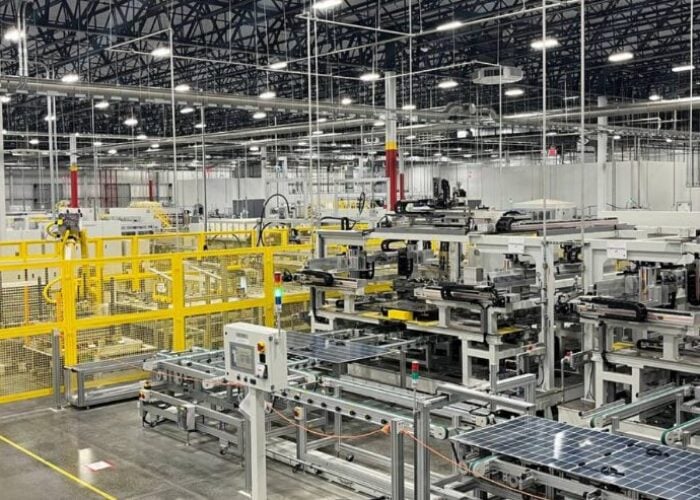
Pakistan’s attempt to support manufacturing of solar and wind energy components through a five-year tax exemption is not enough and more incentives are needed to encourage such investments in the south Asian nation, according to the director of a local firm that is planning to set up its own domestic solar module assembly production facility.
In his budget speech back in January, finance minister Asad Umar announced that Pakistan’s long experience of high energy costs, which had hit competitiveness and progress in its industrial sector, meant that renewable energy sources – now often cheaper than fossil fuel technologies – must be promoted. The five-year income tax exemption would be for newly-established industrial units involved in the solar and wind equipment manufacturing.
Try Premium for just $1
- Full premium access for the first month at only $1
- Converts to an annual rate after 30 days unless cancelled
- Cancel anytime during the trial period
Premium Benefits
- Expert industry analysis and interviews
- Digital access to PV Tech Power journal
- Exclusive event discounts
Or get the full Premium subscription right away
Or continue reading this article for free
Asad Iqbal, director of Pakistan-based conglomerate ACT Group, which plans to set up 1GW of solar PV module assembly capacity in Pakistan by the summer of 2021, told PV Tech: “The government is trying to get out of the vicious cycle of periodic balance of payments crises by encouraging manufacturing in Pakistan so the trade deficit can be reduced to manageable levels. This is one of their plans to encourage manufacturing of renewable energy equipment in Pakistan.”
However, he noted that the move was not enough – adding: “This alone, of course, is not the answer and the government needs to provide some more incentives to encourage people to invest in Pakistan.”
Only yesterday, prime minister Imran Khan, addressing the World Government Summit in Dubai, told the international community that now is the time to invest in Pakistan – adding “Don't miss the boat”.