A group of minority shareholders in Norwegian silicon firm REC Silicon has triggered an investigation into the circumstances surrounding the closure of the company’s US polysilicon production site.
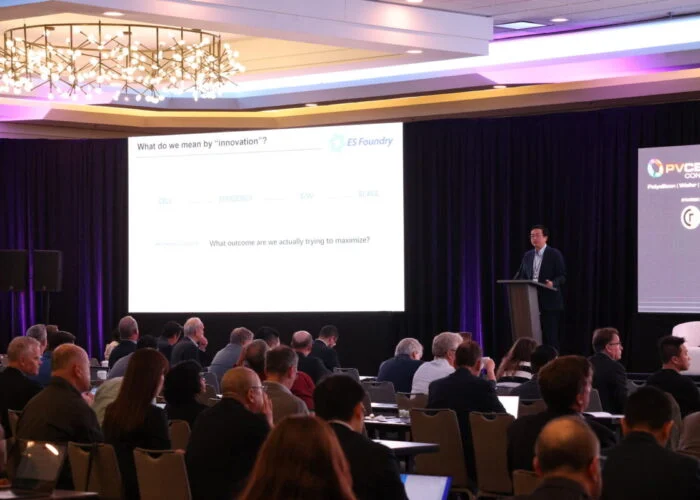
At REC Silicon’s annual general meeting (AGM) yesterday, the company’s shareholders approved an investigation into the closure of its Moses Lake facility and the termination of a supply agreement by its majority shareholder, Korean conglomerate Hanwha Solutions.
Try Premium for just $1
- Full premium access for the first month at only $1
- Converts to an annual rate after 30 days unless cancelled
- Cancel anytime during the trial period
Premium Benefits
- Expert industry analysis and interviews
- Digital access to PV Tech Power journal
- Exclusive event discounts
Or get the full Premium subscription right away
Or continue reading this article for free
The deal was with Hanwha Qcells, a solar manufacturer building a vertically integrated manufacturing hub in the US state of Georgia. Hanwha is the majority owner of Qcells and the majority shareholder in REC. It was terminated after REC said its polysilicon failed a quality test and Qcells was “unable” to wait for further improvements.
The company’s board of directors was also reformed, with the appointment of Norwegian businessman Jens Ulltveit-Moe, John Adams as chair, Jane Power, Mike Kerschen and lawyer Karina Fossmark. Fossmark was granted 111 million shares – equivalent to around 26% – as proxies from other shareholders prior to the AGM.
The developments were the result of collaboration between US hedge fund Water Street Capital, which owns 8.26% of REC Silicon shares, and a grassroots group representing minority shareholders.
The investigation will seek to clarify, among other things:
- “The conditions under which Hanwha was allowed to terminate the Supply Agreement
- the identity, location and qualifications of the entity which tested the polysilicon to be delivered under the Supply Agreement
- the actual results of the testing process; whether Hanwha had any commercial relationship with the testing entity
- whether Hanwha was in a position to exercise influence over the testing process
- whether REC Silicon ASA complied…with its information disclosure requirements in relation to the circumstances which led to Hanwha’s termination of the Supply Agreement.”
Prior to the AGM, Hanwha wrote a letter stating that it may cease funding REC Silicon if there were changes to the company’s board. Given the changes, the financial future for REC is unclear.
Minority rule
The shift of power at REC Silicon away from Hanwha follows months of questions and shifts.
In May, Water Street Capital said it was “disappointed” with Hanwha’s decision to terminate the supply agreement in late 2024 between REC Silicon and the Korean firm’s subsidiary, Qcells, to support a solar manufacturing hub in the US state of Georgia. It was this termination that led to the closure of the Moses Lake facility.
Following the closure, polysilicon market experts were sceptical of the narrative presented by Hanwha. PV Tech Premium spoke in detail with Johannes Bernreuter and a US-based market expert who both expressed surprise that quality was an issue after a report in September 2024 said the quality was “acceptable” to REC’s “customer” (presumed to be Hanwha).
In April, Hanwha moved to buy the outstanding shares in REC Silicon for US$88.8 million (NOK2.20 per share) through a subsidiary called Anchor AS, and delist the firm from the Oslo stock exchange. Minority shareholders, including Water Street, criticised the “lowball” offer and said it undervalued REC’s assets and intellectual property.
A group of minority shareholders in REC Silicon began publicly voicing concern over Hanwha’s conduct around the supply deal and the Moses Lake closure. In particular, the group alleged Hanwha was not providing transparent access to information and said there was a “black box” over the sequence of events in 2024, specifically when the quality testing took place and the deal with Qcells was abandoned.
With this investigation, the minority group may get the transparency it is looking for.
In a statement following the AGM, Water Street Capital said: “Water Street Capital would like to thank the thousands of investors who joined us in our efforts to ensure that the top priority of REC Silicon’s Board of Directors remains maximising the value of the company.
“The recent threats by the Company’s largest shareholder, Hanwha Solutions Corporation, to reassess its funding of the Company’s operations should it lose control of the Board are unfortunate. Going forward, we hope that Hanwha will work with us constructively for the benefit of all shareholders.
“Water Street Capital’s objectives are 100% aligned with our fellow shareholders. We do not believe that shareholders were given proper information regarding the value of the company and its assets when asked to vote in favour of the drastically undervalued NOK2.20 offer from Anchor AS.
“REC Silicon’s new Board of Directors will be solely focused on maximising value for all Company shareholders going forward.”
PV Tech has contacted Hanwha for comment on this situation.