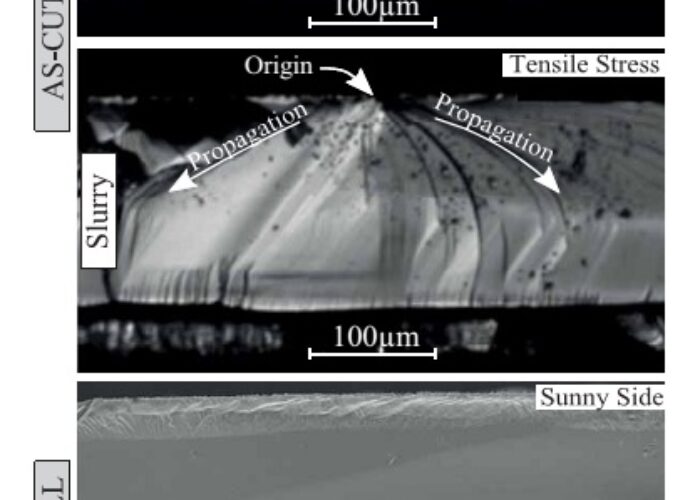
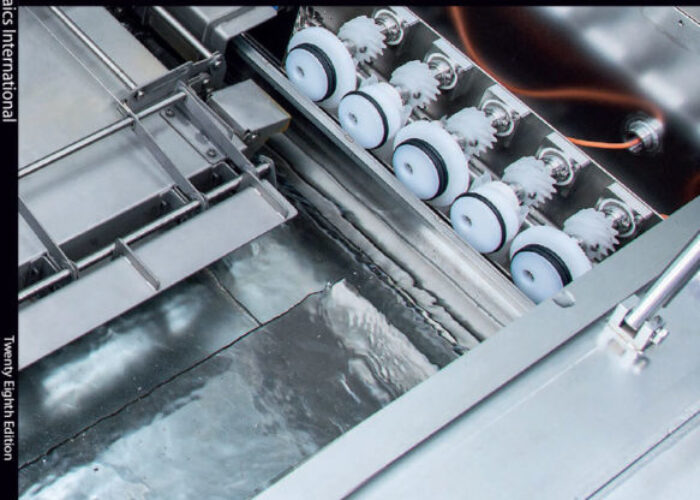
The mechanical strength of monocrystalline and multicrystalline silicon wafers is mainly dictated by the cracks induced during the wire-sawing process. Different sawing technologies, such as diamond-wire- or slurry-based processes, lead to different strength behaviours of as-cut wafers. Furthermore, the strength is strongly influenced by texturization, and at this stage can be interpreted as the basic strength of a solar cell. The metallization and firing processes determine the final strength and reliability of a solar cell, with the metallization contacts being the root cause of breakage of solar cells, depending on the particular cell concept. This paper gives a comprehensive overview of the typical ranges of strength for as-cut wafers, textured wafers and solar cells, for the two different sawing technologies. Around 100 batches with 4,253 samples were evaluated in the study.
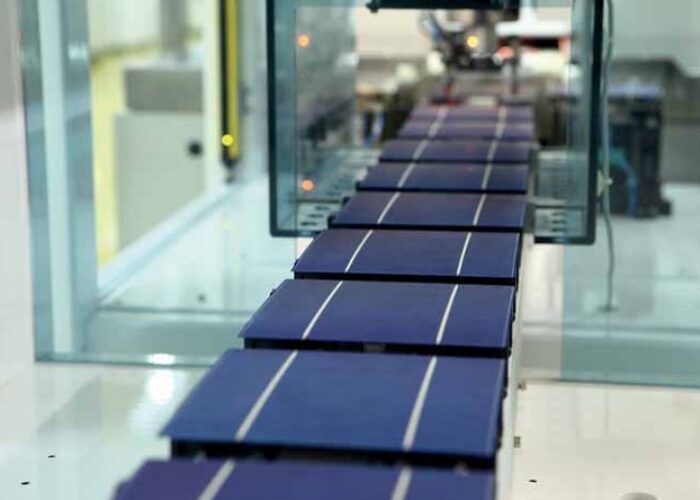
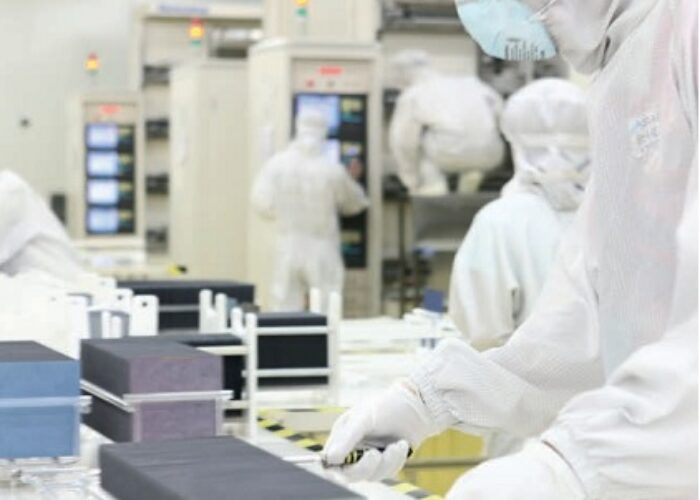
As other entrants in the solar industry scramble to build greater efficiencies into their supply chain, the leading companies focus on manufacturing strengths such as zero-defect quality along the entire supply chain. When it comes to supply chain excellence, the solar industry as a whole is playing catch-up. However, there are players who have already made substantial progress here, having already adopted ‘lean’ practices to eliminate inefficiencies at source. REC, the largest European brand of solar panels and a world leader in the industry, is maintaining its strong position. The company’s practices and principles are explained in detail in this paper.
In this quarterly report we will provide full first-half 2015 analysis that shows a massive shift in the geographical location of planned production plants, as well as details on key capacity announcements in the months of May and June. The analysis of April’s capacity announcements were reported in the previous quarterly report. Despite April announcements being so low, May proved to be a blockbuster month. The return of meaningful solar cell capacity plans reiterates the strength in the recovery and the first attempts for many years by leading PV manufacturers to rebalance cell and module production as next- generation PERC technology leads the cell rebalancing act.
R&D expenditure by major PV module manufacturers showed a remarkable turnaround in 2014. Previous reports had noted, especially in 2013, that R&D spending had not been immune to the PV industry’s period of profitless prosperity and was deemed a discretionary spend by the majority of leading producers. A return to profitability for many in 2014 resulted in a year of new record spending. There was record spending from 11 of the 12 companies covered, with Hanwha Q CELLS' spending actually declining in 2014.
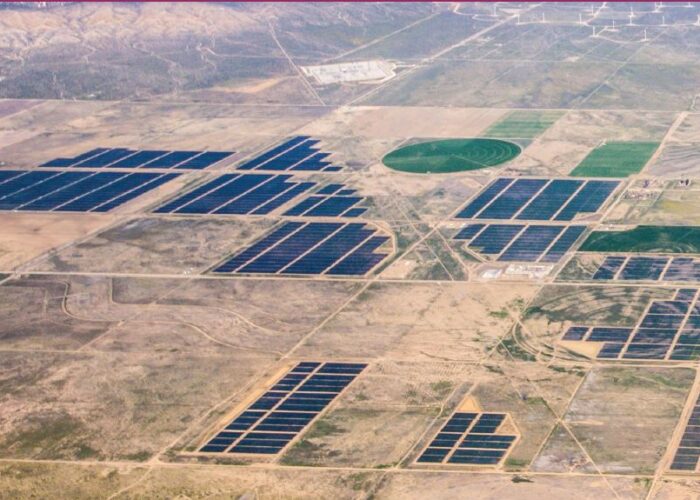
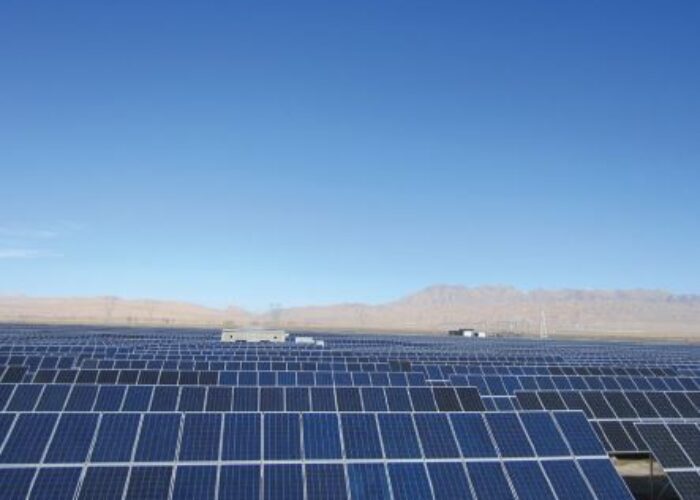
Covering a 1,295-hectare estate mostly of fallow farmland, the world’s largest solar plant sits in the Antelope Valley straddling two counties of California. The Solar Star project has been supplying its full 579MW of capacity to the grid since May this year and it will be announced as offi cially complete before the end of 2015. PV Tech Power explored the designs behind this mammoth installation near Rosamond, California, to investigate what key factors had to be considered when creating a solar plant that can supply electricity to more than a quarter of a million homes.
So far in 2015 Chinese domestic PV deployment has outstripped last year’s rates and a possible 20GW has been mooted for the year. This would set a benchmark for China’s new five-year plan for solar development due to come into effect next year, writes Frank Haugwitz.
Forecasting the evolution of a young, dynamic industry is by definition an uncertain business, and solar is no exception. Rarely, if ever, do the numbers broadcast by any of the various bodies involved in the PV prediction game tally, and even historical deployment rates remain the subject of hot debate. The paradox is that getting forecasts broadly right is going to become increasingly important over the next few years, particularly for those involved in producing the equipment that will support whatever levels of demand come to pass. As discussed by Gaëtan Masson, director of the Becquerel Institute, on p.110 of this issue of Photovoltaics International, although global PV demand appears in rude health, complex political and economic conditions in many individual markets mean the question of how vigorously it will continue to grow in the coming years is less than clear. Yet for the upstream part of the industry, correctly forecasting PV market developments will be critical to ensure the right investments are made along the value chain in technologies that will help spur PV to new levels of competitiveness and thus drive continued demand.
For those in the utility solar business, 2015 has so far offered no shortage of landmarks. Since the start of the year, the record for the world’s largest PV power plant has been both equalled and beaten, with the completion in the US of the Desert Sunlight and Solar Star projects respectively. The industry has also notched up two important pricing milestones. In January 2015, news broke that a project in Dubai had attracted what was thought to be the lowest ever bid price for a solar project, of US$0.0585/kWh. That record proved short lived, however, when, in July, US firm First Solar revealed it had agreed to a price of US$0.0387/kWh for power from its 100MW Playa Solar 2 project in Nevada.
In the past few issues of Photovoltaics International we have tracked in detail plans being implemented by the leading module manufacturers to expand production capacity. That process began tentatively last year as end-market demand began to catch up with the chronic overcapacity that had built up in the preceding years, prompting industry-wide upheaval. Our latest capacity expansion report (p.11), a unique resource in the industry, reveals that while that activity was maintained throughout much of 2014, spiking in a strong final quarter of 2014, announcements of new capacity slowed slightly in the opening quarter of this year. Nevertheless, all the signs point to the pace picking up again later this year as manufacturers look to take advantage of the surge in activity expected in the US at the back end of this year and into 2016, in anticipation of the cutting back of the solar investment tax credit at the end of that year.
In this first quarterly report of 2015 a full first-quarter analysis will be presented, as well as the planned capacity announcements for March and April. Notably this will include Tier 1 manufacturers’ plans and a special lookat Malaysia and its potential for another wave of companies planning manufacturing operations in the country.Finally, further analysis of the potential renaissance in thin-film production will be provided.