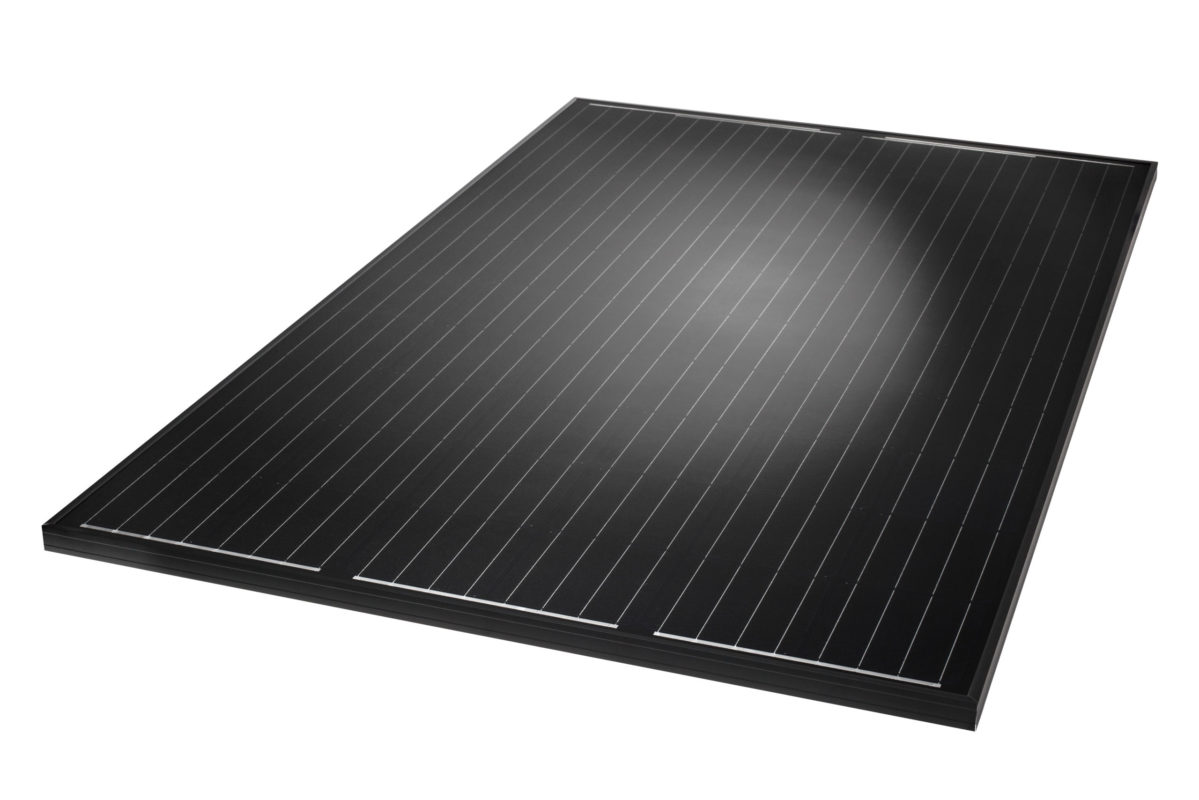
Hanwha Q CELLS has launched its first PV modules using P-type monocrystalline PERC cell technology. The Q.PEAK module series is now available for European customers in two variations: Q.PEAK-G4.1 with black frame and white back sheet and as the all black Q.PEAK BLK-G4.1. The Q.PEAK-G4.1 comes in power classes ranging from 295Wp to 305Wp and efficiencies of up to 18.6 %. The Q.PEAK module series is being showcased at Intersolar Europe 2017.
Problem
Try Premium for just $1
- Full premium access for the first month at only $1
- Converts to an annual rate after 30 days unless cancelled
- Cancel anytime during the trial period
Premium Benefits
- Expert industry analysis and interviews
- Digital access to PV Tech Power journal
- Exclusive event discounts
Or get the full Premium subscription right away
Or continue reading this article for free
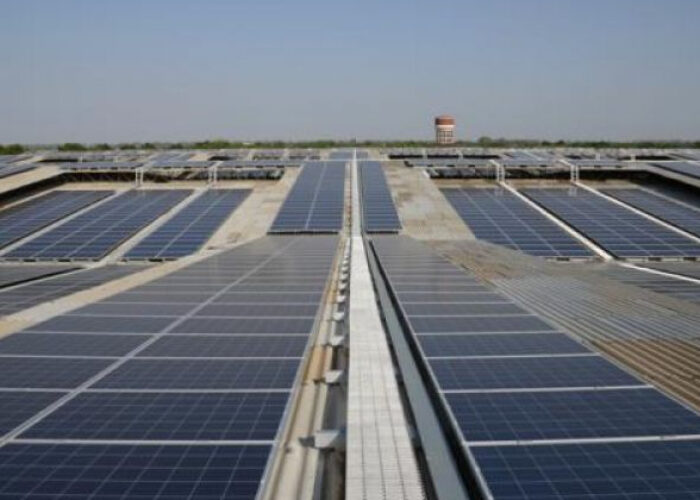
High-efficiency PV modules are increasingly being used for residential rooftop PV systems as incentives have declined under FiT (feed-in tariff) systems in the European market for several years. With a growing focus on ‘self-consumption’ PV modules providing high-efficiency, long-life at attractive price points are required. Aesthetics are also increasingly becoming a preferred choice in the residential market.
Solution
The Q.PEAK series combines high power classes, leading to low levelised cost of electricity (LCOE), primarily for residential markets. Moreover, a special anti-LID Technology (ALT) protects Q.PEAK modules against the power loss through Light-Induced Degradation (LID). LID is a common effect leading to power losses in the early operation lifetime of conventional monocrystalline solar modules.
Applications
Primarily the residential rooftop market.
Platform
Q.PEAK modules also feature excellent stability and are tested for wind loads up to 4,000 Pa and snow loads up to 5,400 Pa. At the same time the frame design has been optimized with a frame height of 32 mm, leading to 10 % reduction on logistics and storage cost compared to the previous G3 generation. The modules weigh only 18.8 kg, making them easier to handle during installation.
Availability
Initially launched in the European market from April, 2017 onwards.