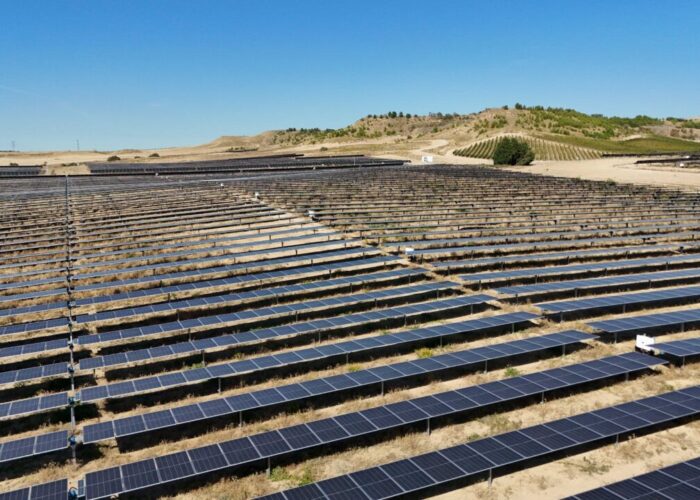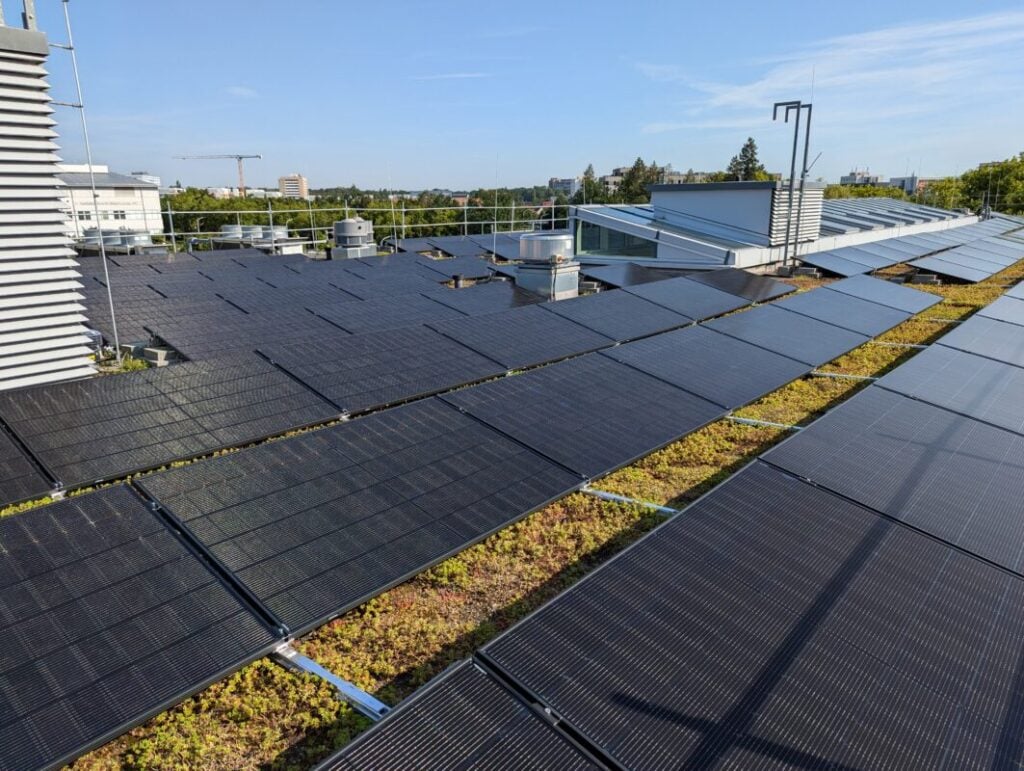
TOPCon solar modules show signs of accelerated degradation, which undermines the long warranties promised by many manufacturers, according to new findings from German researchers.
The research compared 20 tunnel oxide passivated contact (TOPCon) PV modules in a range of electrical characterisation and accelerated ageing assessments and found “significant reliability issues that remain unresolved”.
Try Premium for just $1
- Full premium access for the first month at only $1
- Converts to an annual rate after 30 days unless cancelled
- Cancel anytime during the trial period
Premium Benefits
- Expert industry analysis and interviews
- Digital access to PV Tech Power journal
- Exclusive event discounts
Or get the full Premium subscription right away
Or continue reading this article for free
The paper, published in the Progress in Photovoltaics journal, said that while TOPCon’ may be resistant to light- and temperature-induced degradation (LeTID) and light-induced degradation (LID), “concerns persist” around the technology’s vulnerability to potential-induced degradation (PID), corrosion and UV-induced degradation (UVID). The lead author of the paper, Paul Gebhardt, is a PV module reliability scientist at Fraunhofer ISE.
The authors said that TOPCon module manufacturers “often claim higher yields and lower degradation rates…compared to previous PERC modules”, despite the “potential long-term issues” posed by PID, corrosion and UVID. This “might encourage widespread adoption without full consideration of potential increased risks,” the paper continued.
Current testing standards for commercially available modules generally do not register the power loss from degradation if it does not result in safety issues or a complete failure, the researchers said, which led them to conduct “an independent evaluation of the current offerings of TOPCon-based PV modules on the market.”
In its conclusions, the paper said that degradation from UVID and moisture ingress in particular were “critical”.
For UVID, some of the modules tested displayed “significant” ageing. 40% showed a loss of more than 5% from their peak power point after a front UV irradiation of 60 kWh/m2; this is equivalent to one year of UV exposure in “moderate climates”, the report said. The authors considered this to be “strong degradation”.

The UV tests were conducted alternately and in tandem with humidity freeze (HV) testing, which tests modules’ ability to withstand moisture and extreme temperatures. This saw the modules recover some performance loss before degrading again under further UV exposure, a “W-pattern” of degradation and recovery which references the shape of the module’s performance plotted on a graph.
The US National Renewable Energy Laboratory (NREL) has also found high UV degradation rates in n-type solar modules.
TOPCon modules with polymeric backsheets saw greater levels of damp heat (DH) testing moisture ingress compared with glass-backed panels, and the overall average degradation was higher for TOPCon products than older PERC modules. “In case of moisture-related degradation, the underlying issues such as the sensitivity of current front metallization pastes is a known problem that may be mitigated in future module generations,” the report said.
TOPCon degradation has been a concern in the industry in recent months. PV Tech published an article by Kiwa PI Berlin in September arguing for greater due diligence in cell production and exploring the reliability and performance challenges of high-efficiency TOPCon and heterojunction technology (HJT) cells.