PVEL adding new solar module testing regimes including backsheet durability and LeTID sensitivity

August 28, 2019
Facebook
Twitter
LinkedIn
Reddit
Email
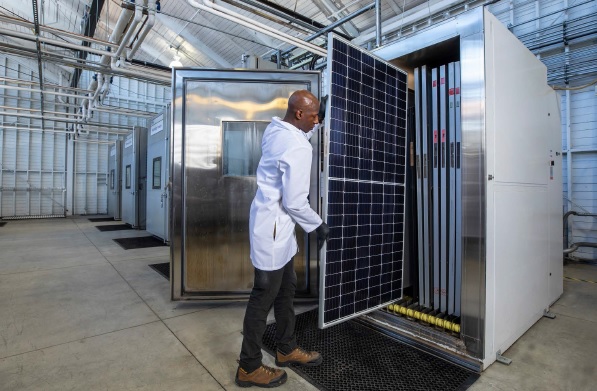
PVEL is also reducing the total number of PV module samples required, while reducing testing times by 25% for tests such as thermal cycling to provide faster reporting while maintaining data quality and integrity. Image: PVEL

PV Evolution Labs (PVEL) is including a number of key module reliability tests to its PV Module Product Qualification Program (PQP) that is more responsive to downstream market needs.

PVEL is adding new testing regimes that address growing concerns surrounding Light and elevated Temperature Induced Degradation (LeTID) sensitivity.

This article requires Premium SubscriptionBasic (FREE) Subscription

Try Premium for just $1

  • Full premium access for the first month at only $1
  • Converts to an annual rate after 30 days unless cancelled
  • Cancel anytime during the trial period

Premium Benefits

  • Expert industry analysis and interviews
  • Digital access to PV Tech Power journal
  • Exclusive event discounts

Or get the full Premium subscription right away

Or continue reading this article for free

However, PVEL will also be addressing long-standing issues surrounding PV module backsheet durability as well as solar cell microcrack susceptibility. 

PV Tech recently highlighted that DuPont Photovoltaic and Advanced Materials latest ‘Global PV Reliability Study’ which focuses on field inspection and analysis of 6.5 million modules backsheet material, noted defects have increased by a significant 47% from the 2018 report.

PVEL noted that it had updated every single sequence in its PQP in at least one area.

PVEL is also reducing the total number of PV module samples required, while reducing testing times by 25% for tests such as thermal cycling to provide faster reporting while maintaining data quality and integrity. This is partly achieved by a better intake and characterization processes, according to the company.

PV Tech undertook a detailed analysis of PVEL's 5th Edition of its PV Module Reliability Scorecard in partnership with DNV GL, noting tougher testing regimes to address limited insight into failures from standard test. 

Read Next

March 13, 2026
Current solar PV module price increases are largely dictated by five major components, according to data from Intertek CEA
March 12, 2026
PV Tech Research’s annual ranking of the top ten PV module manufacturers reveals some signs of recovery after a turbulent 2025, writes Moustafa Ramadan.
March 11, 2026
VDE Americas has updated its hail risk model with new wind data, claiming it will improve the accuracy of hail-damage predictions for PV projects.
March 11, 2026
As TOPCon manufacturing expands globally, producers are facing different cost, safety and supply-chain realities – creating an opportunity to rethink technology platforms and prepare for next-generation tandem architectures.
March 9, 2026
Spanish independent power producer (IPP) Zelestra has secured a US$176 million green financing package for its 242MWdc Babilonia solar project in Peru. 
March 9, 2026
The latest domestic solar-grade polysilicon transaction prices from the Silicon Industry Branch of the China Nonferrous Metals Industry Association show that all domestic n-type solar-grade polysilicon products have plunged, with steep declines across the board.

Upcoming Events

Solar Media Events
March 24, 2026
Dallas, Texas
Solar Media Events
April 15, 2026
Milan, Italy
Solar Media Events
June 16, 2026
Napa, USA
Solar Media Events
October 13, 2026
San Francisco Bay Area, USA
Solar Media Events
November 3, 2026
Málaga, Spain