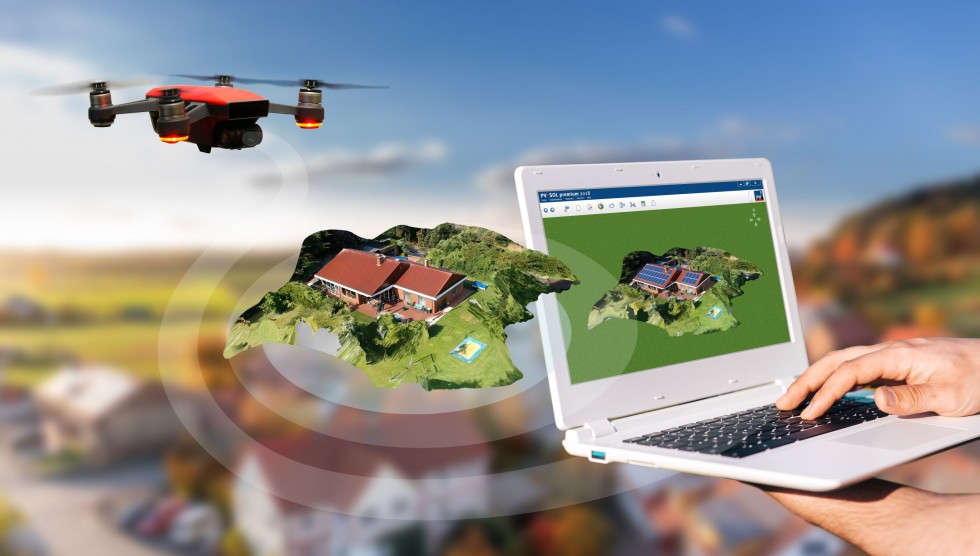
Valentin Software’s new PV system design software PV*SOL premium 2018 has been enhanced to provide the ability to input object data, 3D models in different file formats into the software via a new interface. This makes it possible to import realistic and detailed 3D objects created with photos taken from different perspectives (e.g. using a drone).
Problem
Try Premium for just $1
- Full premium access for the first month at only $1
- Converts to an annual rate after 30 days unless cancelled
- Cancel anytime during the trial period
Premium Benefits
- Expert industry analysis and interviews
- Digital access to PV Tech Power journal
- Exclusive event discounts
Or get the full Premium subscription right away
Or continue reading this article for free
The combination of PV, storage and battery systems increases the complexity of a PV system. Greater emphasis is being placed on reducing system design time, therefore design cost.
Solution
Flexibility has been significantly increased with regard to the subsequent configuration of the modules, which are automatically placed on an object. The new possibility of polystring configuration allows completely different strings to be connected parallel or in series to an MPP tracker. This is required, for example, to connect an east-west roof parallel to one MPP tracker. Even different modules in a string can now be interconnected, e.g. defective modules that are no longer available which need to be replaced by similar new ones. Modules with different orientations can now also be connected in one string via the integration of power optimizers (e.g. SolarEdge, Tigo). These new functionalities increase the flexibility of the design process enormously and allow even more detailed configuration and simulation of the PV system.
Applications
PV system designs for residential and commercial.
Platform
Other useful additions for the optimization of a system are the output of the I-V characteristics for each time step of the simulation, as well as an energy flow diagram representing the overall system including the battery system, consumers and also an electric vehicle.
Availability
Currently available in 2018.