More than half of Germany’s electricity consumption was generated by renewables in the first half of 2023, according to a study.
The Center for Solar Energy and Hydrogen Research Baden-Württemberg (ZSW) and the Federal Association of Energy and Water Management (BDEW) announced that renewables covered about 52% of gross domestic electricity consumption in H1 2023, three percentage points higher (49%) than the same period in 2022.
Try Premium for just $1
- Full premium access for the first month at only $1
- Converts to an annual rate after 30 days unless cancelled
- Cancel anytime during the trial period
Premium Benefits
- Expert industry analysis and interviews
- Digital access to PV Tech Power journal
- Exclusive event discounts
Or get the full Premium subscription right away
Or continue reading this article for free
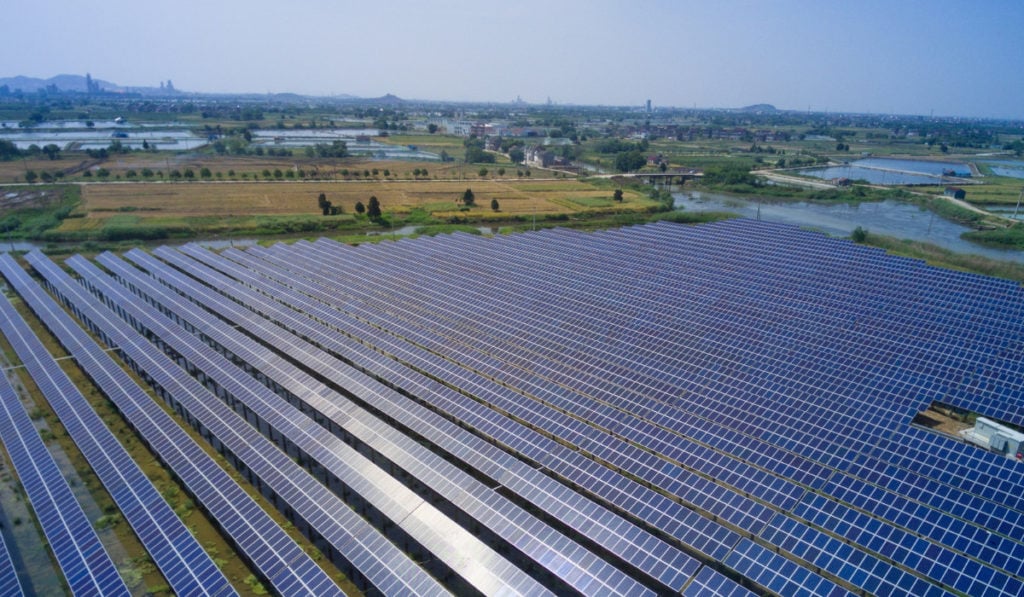
In May 2023 specifically, 57% of electricity consumption was generated by renewables due to sunny weather, before the record of 62% set in February 2022. PV systems in the country generated 8.8 billion kWh of electricity this month, higher than ever before.
Both organisations also stated that PV systems could even generate more than 10 billion kWh in June based on preliminary statistics, breaking the record set in May.
Kerstin Andreae, chair of the BDEW executive board, said that Germany needs a suitable regulatory framework to achieve climate neutrality by 2045. Recently, Germany’s Federal Ministry of Economics and Climate Protection (BMWK) launched a request for expressions of interest (EoI) to boost the country’s solar PV manufacturing supply chain.
At the same time, Andreae said skilled workers are also necessary. In late March, the German government announced to change existing immigration policies in order to attract skilled labour.
Frithjof Staiß, executive director of the ZSW, added that electricity generation must already be based entirely on renewable energies by 2035 if Germany wants to achieve climate neutrality by 2045.
The German government is targeting the installation of 215GW of solar capacity by 2030, so Germany’s solar output will need to almost triple by the end of the decade.