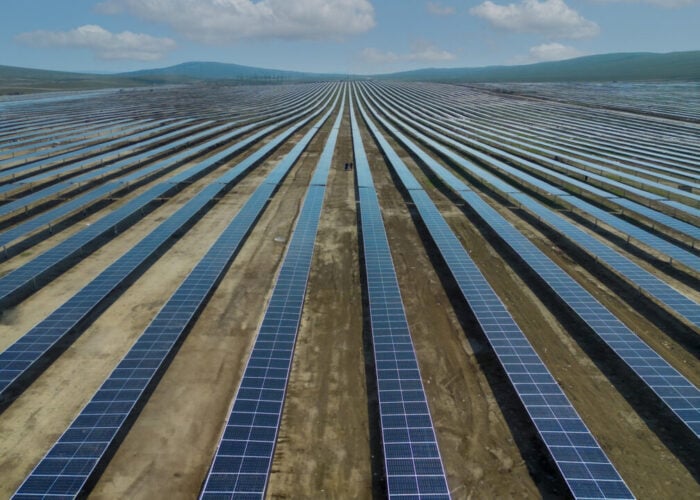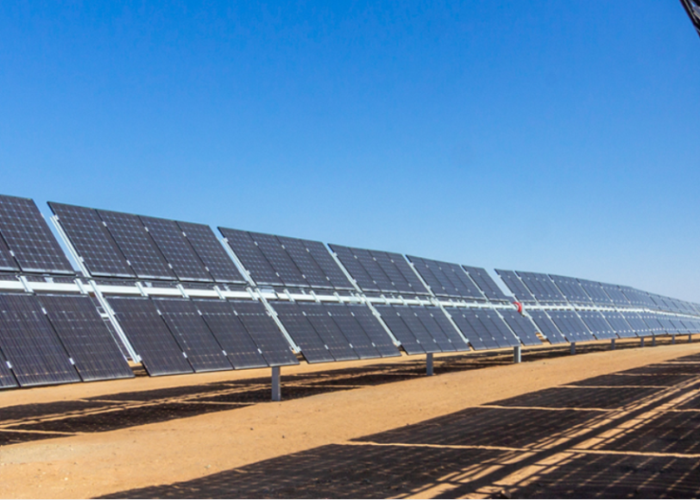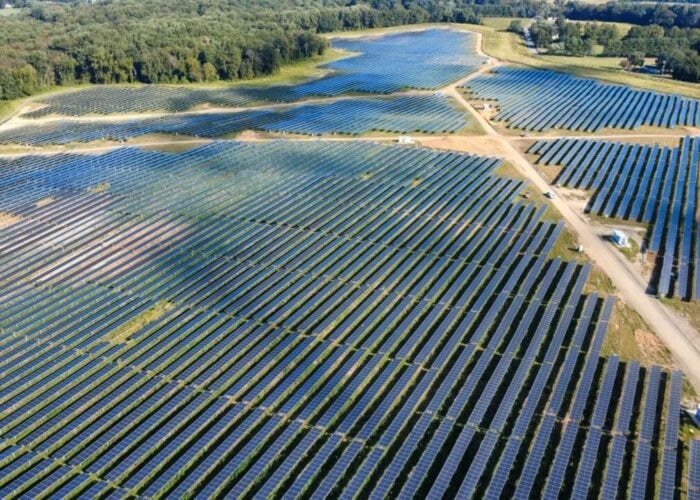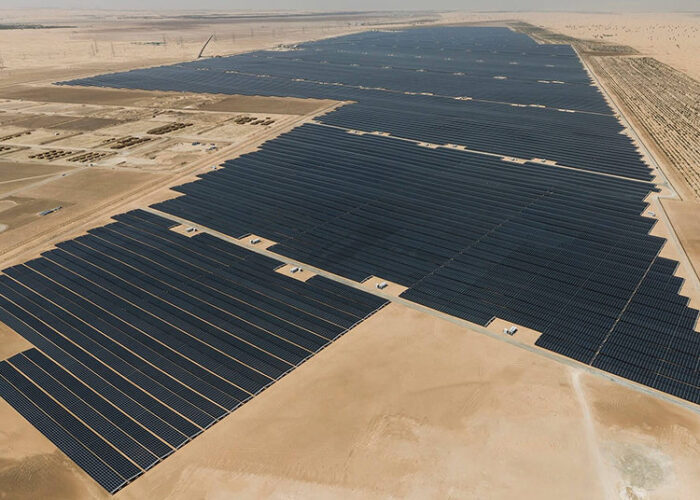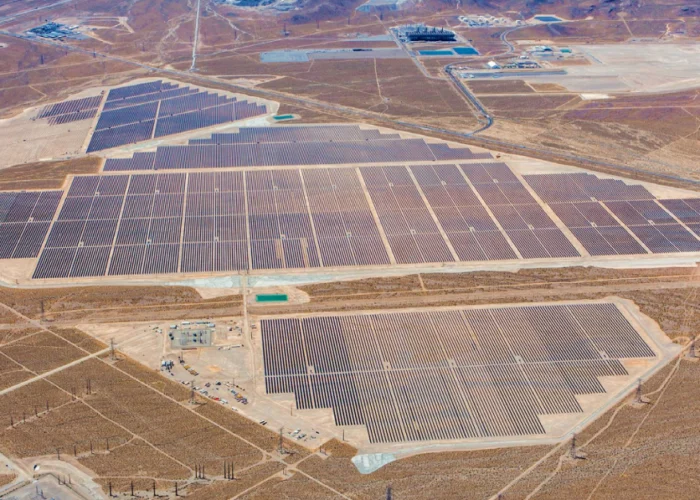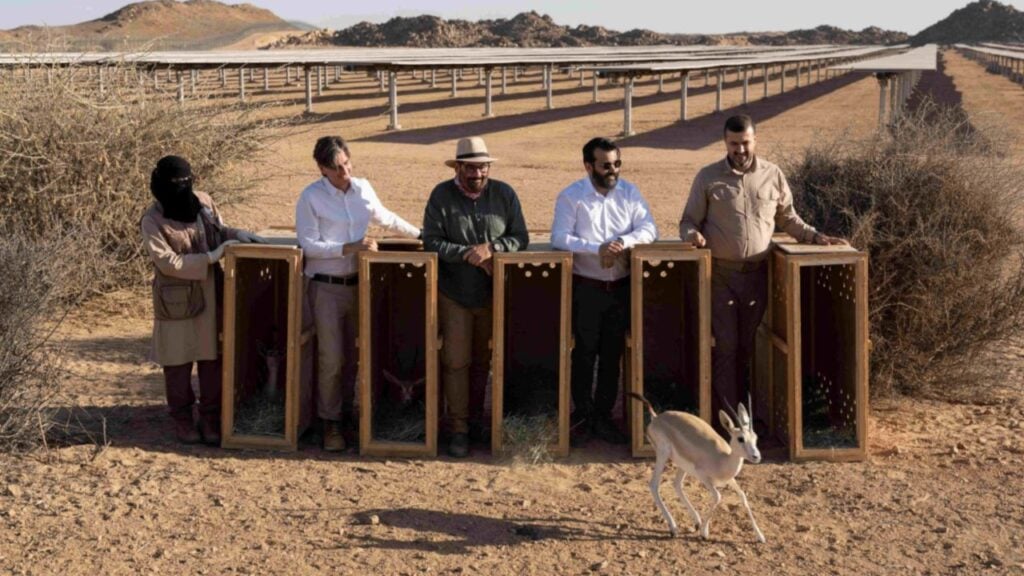
A 505 hectare operational solar park in Saudi Arabia is the site of a breeding programme for an endangered species. The 250MW solar park in the Prince Mohammed bin Salman Royal Reserve is an environment in which sand gazelles are considered to be able to establish a viable herd.
The solar PV facility is built and managed by the Amaala Sustainable Company for Energy (ASCE), a joint venture of the EDF Group, Masdar, and SUEZ and Korea East-West Power (EWP).
Try Premium for just $1
- Full premium access for the first month at only $1
- Converts to an annual rate after 30 days unless cancelled
- Cancel anytime during the trial period
Premium Benefits
- Expert industry analysis and interviews
- Digital access to PV Tech Power journal
- Exclusive event discounts
Or get the full Premium subscription right away
Or continue reading this article for free
A seven-month proof-of-concept was launched in October 2025, involving several species, and sand gazelles were selected for their ecological importance and suitability for the site’s environment. Thirty-eight sand gazelles were introduced into the solar plant in May 2026, and are expected to produce offspring by December this year.
Population modelling by the Reserve’s Scientific Services Division indicates the introduced herd will grow to around 600-head by 2031 (500 is considered to be a minimum number of animals suitable for reintroduction to the wider 24,500km² reserve).
Some 73% of the site’s area will be open to the animals, comprising of open habitat and areas under the panels where the ground temperature is 5-10°C lower. The sand gazelles will be protected by a predator-proof fence and monitored by a specialist ranger team.
Dubbed ReWildingVoltaics, the initiative’s findings will inform similar future programmes in other regions where utility-scale renewable energy infrastructure and wildlife restoration can coexist, said the Royal Reserve.
Omar AlDaweesh, CEO of Saudi Arabia and Bahrain at EDF Group, said: “This initiative demonstrates how renewable energy infrastructure can create value beyond the clean electricity it generates. By bringing biodiversity conservation into an operational solar facility, we are showing how energy infrastructure and nature can coexist.”
AgriPV projects commonly combine traditional agriculture with PV arrays, such as the introduction of sheep into facilities in France’s Cher and Charente departments. However, the Saudi initiative is said to be one of the first to target biodiversity action for endangered species in operational PV facilities.
Italy offers some of the most conducive physical and financial environments for agriPV, despite a ban on the practice in 2024, which was only partially repealed in 2025. In May this year, Danish IPP European Energy constructed a 225.5MW agriPV project in Sicily, and Austria’s renewable energy company Kelag International acquired a portfolio of agrivoltaic projects last month in the country’s Lombardy and Emilia-Romagna regions.