UAE developer Masdar has signed an agreement with Invest New Zealand to explore up to NZ$1 billion (US$585 million) of solar PV, wind and battery storage investment in New Zealand.
The memorandum of understanding (MoU), announced on 28 October, sets out how the two parties will identify and progress projects, including through co-investment with New Zealand companies and Māori businesses. It comes as utility-scale solar grows on a grid that has long relied on hydropower.
Try Premium for just $1
- Full premium access for the first month at only $1
- Converts to an annual rate after 30 days unless cancelled
- Cancel anytime during the trial period
Premium Benefits
- Expert industry analysis and interviews
- Digital access to PV Tech Power journal
- Exclusive event discounts
Or get the full Premium subscription right away
Or continue reading this article for free
Figures from the Ministry of Business, Innovation and Employment (MBIE) show solar generation rose 56% year-on-year to a record 242GWh in the second quarter of 2026. Over a rolling 12-month period, solar generated more electricity than coal for the first time, while renewables supplied 92% of electricity in the quarter.
The MoU does not name any projects, sites or capacity targets. Neither party has published a timeline, said whether the agreement is binding, nor said how the NZ$1 billion might be split between solar PV, wind and energy storage.
Masdar and Invest New Zealand, the government’s foreign investment agency, said they will set up a steering committee and project team to agree on a work programme and a pipeline of opportunities.
“Our focus now is practical,” said Robert Wall, chief executive of Invest New Zealand. He said the work would centre on identifying “a prioritised set of renewable energy opportunities” and moving them towards commercial due diligence.
Masdar would be joining a market where overseas capital is already active. In September, Anza Power, a platform backed by infrastructure investor I Squared Capital, acquired 205MWac of construction-ready solar PV plants from Auckland developer Helios Energy.
The agreement builds on the New Zealand-UAE Comprehensive Economic Partnership Agreement (CEPA), which entered into force in August 2025, and an investment agreement concluded alongside it. According to Invest New Zealand, both include commitments on decarbonisation and clean technology.
“This MoU is exactly the kind of investment we wanted to see come out of our trade agreement with the UAE,” said Trade and Investment Minister Todd McClay. He linked the agreement to the government’s goal of doubling renewable energy generation by 2040.
In April, it formed a US$2.2 billion joint venture with TotalEnergies covering renewable energy assets in nine Asian markets. Earlier this week, it agreed to acquire a 550MW solar PV project in Greece from Lightsource bp, its first strategic investment through Greek developer Terna Energy.
Masdar chief executive Mohamed Jameel Al Ramahi said New Zealand could use its renewable energy resources to strengthen energy security, and that “long-term partnerships are fundamental to unlocking this potential.”
Battery storage, also covered by the MoU, is gaining ground in the country. Contact Energy switched on a 100MW/200MWh battery storage system at New Zealand Steel’s Glenbrook site in South Auckland earlier this year.
Utility-scale solar builds out after 2024 dry year
New Zealand’s reliance on hydropower leaves it exposed in dry years. In 2024, low hydro storage and falling gas supply pushed wholesale prices sharply higher, which drove fresh interest in solar.
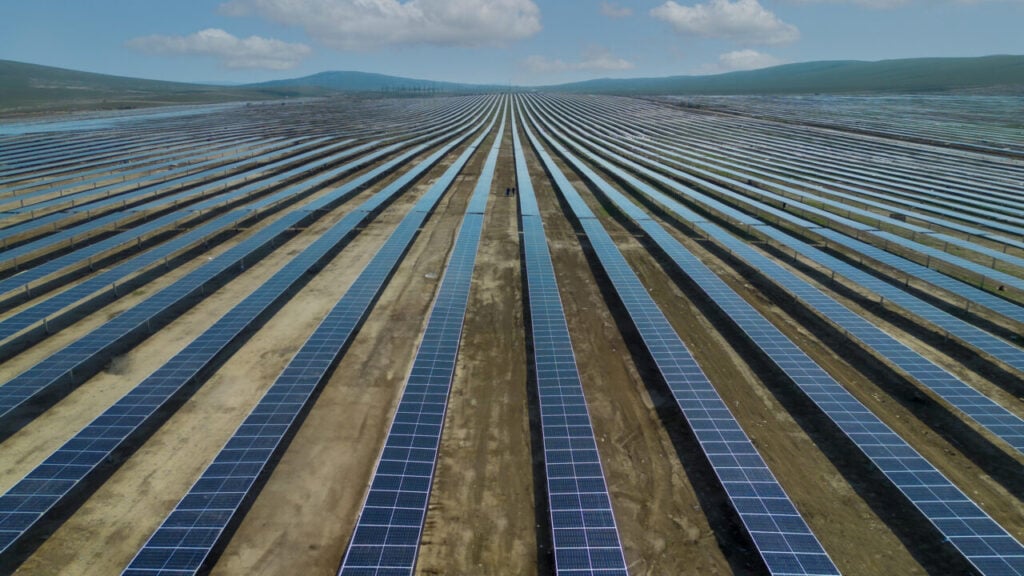
Since then, utility-scale solar has begun to scale up. Harmony Energy and Igneo Infrastructure Partners energised the 202MWp Tauhei solar PV plant in Waikato in July, making it the country’s largest.
Earlier this month, Prime Minister Christopher Luxon opened the 168MWdc Kōwhai Park plant at Christchurch Airport, the South Island’s largest. Lightsource bp and Contact Energy developed the NZ$273 million project.
More capacity is underway. State-owned Meridian Energy began building its 120MW Ruakaka solar plant in Northland last year, with first generation expected in late 2026. Lodestone Energy broke ground on a 31.5MWp plant in Central Hawke’s Bay in July, its sixth solar development in the country.
As more variable generation connects, developers are also adding firming capacity. Macquarie-backed Eku Energy entered the New Zealand market by acquiring a battery storage project in Waikato, citing a growing need for firming as renewables expand.