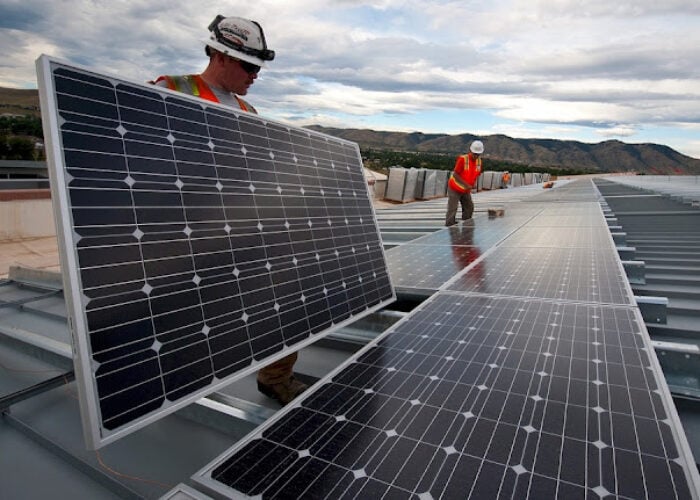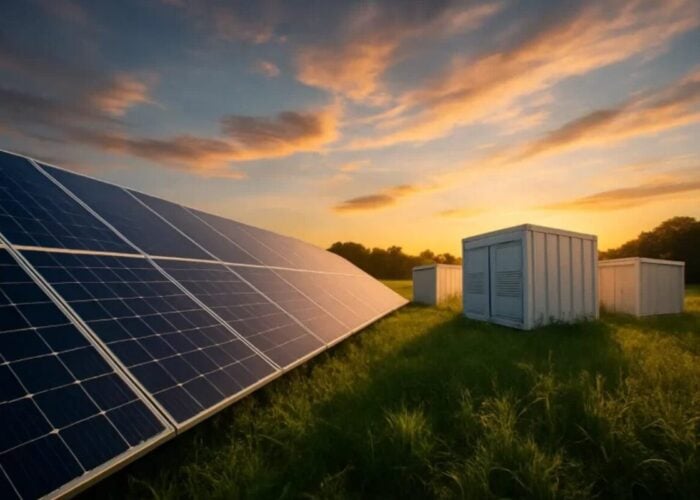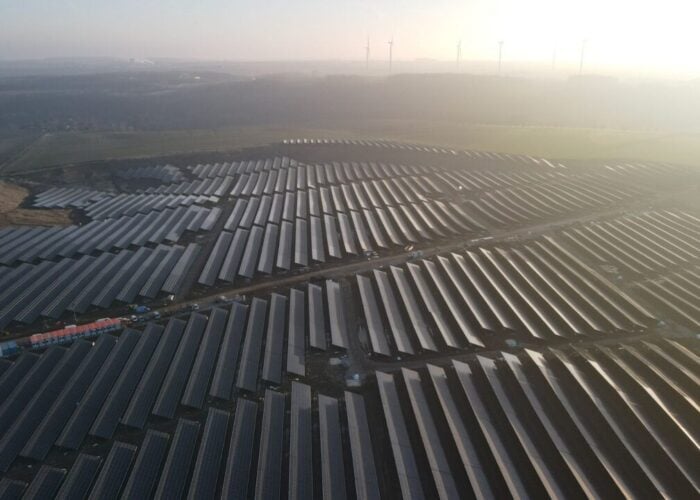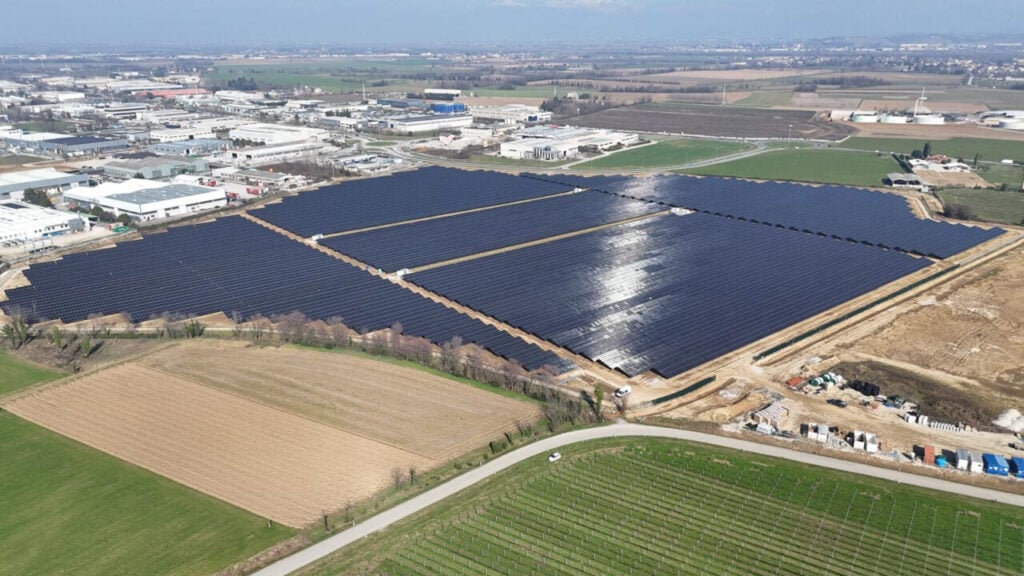
Solar racking producer Schletter Group has completed construction on a 96MWp solar PV project in northern Italy.
The company installed its steel mounting and foundation systems at the site just outside the city of Udine, northern Italy, working with engineering procurement and construction (EPC) contractor EnValue Solar. The site was developed and monitored by MSE Solar.
Try Premium for just $1
- Full premium access for the first month at only $1
- Converts to an annual rate after 30 days unless cancelled
- Cancel anytime during the trial period
Premium Benefits
- Expert industry analysis and interviews
- Digital access to PV Tech Power journal
- Exclusive event discounts
Or get the full Premium subscription right away
Or continue reading this article for free
Schletter said it used its FS Duo mounting system to install the site’s 156,700 solar modules, a two-post steel structure designed for multi-row installations. Notably, the site installed three modules vertically above one another on each row, a design which Schletter said “enables efficient land use while ensuring high structural stability and short installation times”.
It also installed driven foundations made of hot-dip galvanised steel to ensure structural integrity and stability.
These measures were necessary partly due to seismic loads in the area, Schletter said, as parts of northern Italy are classified as earthquake-prone areas. Schletter said it had to seek approval from an independent structural engineer to meet structural standards higher than those typically applied to PV projects in Italy, which it said called for higher standards in construction, material quality and structural verification.
“Projects of this scale require robust structural design, certified material quality and reliable supply chains. This is precisely where we were able to contribute our strengths,” said Fabian Madl, key account manager at Schletter Group.
“From the planning stage onwards, it was clear that we would need to work with significantly increased safety margins,” he added. “We therefore aligned the structural design with regional specifications at an early stage and closely coordinated the verification process with the independent structural engineer, the authorities and EnValue Solar.”
Italy also has sophisticated rules around land use for solar, which can complicate the construction and permitting process for ground-mounted projects.
As solar is adopted in a wider range of areas, developers, EPCs and suppliers have to account for more adverse and challenging conditions, weather and terrain. Tracker and racking firms are offering increasingly bespoke products and services for challenging terrain, steep slopes and increased structural strength. Last month, SolarPower Europe published two new reports which sought to establish technical standards for solar EPCs and suppliers.