India's solar module exports to the US and Europe will likely to peak in 2025 and experience a decline starting from 2026 as domestic manufacturing plants will be operational in these regions, according to a recent research from energy analyst JMK Reseach.
Solar Module Super League (SMSL) member and global solar manufacturer Canadian Solar will build a 5GW solar cell production facility in Jeffersonville, Indiana.
Multiple European solar associations have published an open letter, calling for the EU to develop industry strategy for the European solar PV sector and opposing the introduction of tariffs and trade barriers.
German technology group and PV component manufacturer Heraeus has acquired an undisclosed stake in French PV manufacturing startup Holosolis to support the development of its planned 5GW module assembly plant in Hambach, France.
Thin-film manufacturer Ascent Solar has received positive feedback from the US Department of Energy (DOE) for its agrivoltaics technology, and the company will now apply for funding for the development of a proposed agrivoltaics system.
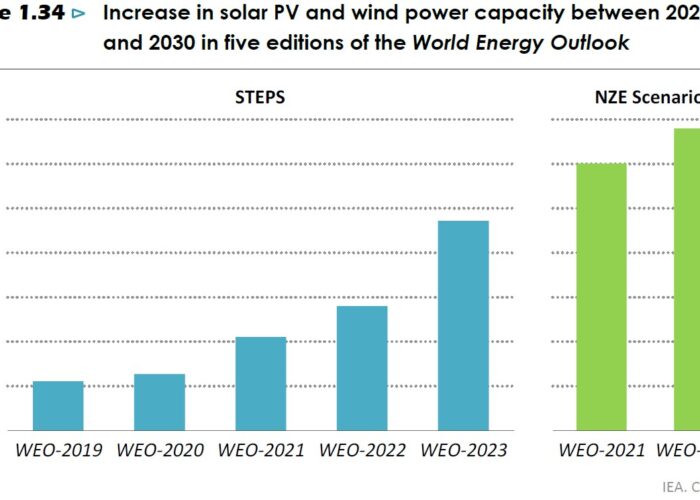
Renewables are set to contribute 80% of new power capacity to 2030 in the stated policies scenario (STEPS), with solar PV alone accounting for more than half of it, according to the International Energy Agency (IEA).