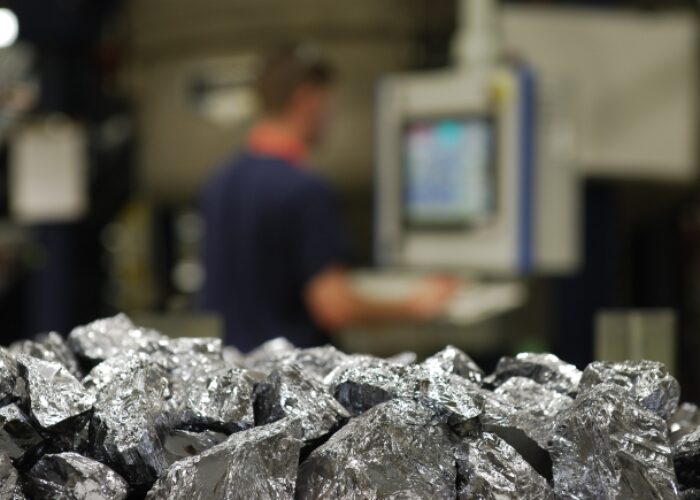
State-owned companies in India could be tasked with establishing polysilicon manufacturing facilities to help make domestic solar manufacturing more competitive, reports have claimed.
The rapid evolution of photovoltaic technology has continued, as modules with peak power outputs in excess of 550W are emerging fast. Driven by a thirst for more power and increasingly larger cells, developers and EPC now face tougher procurement decisions than ever before. But is the industry ready for such a jump? Liam Stoker investigates
Despite only being released last year, the G12 210mm large area-size wafer has quickly attracted supporters, with more than 120GW of cell manufacturing expansions announced and a solar ecosystem evolving around it. Carrie Xiao analyses the figures behind its rise.
The transportation of green hydrogen from Portugal to the Netherlands will be explored thanks to a new memorandum of understanding signed between the countries.
The rapid transition in the upstream manufacturing solar sector to significantly larger p-type and n-type monocrystalline wafers, cells and modules may be hailed as a new era for the industry in higher module performance and a leap in reducing PV power plants LCOE (Levelized Cost of Electricity) in a rapidly changing downstream market that becomes subsidy free, bidding orientated and targeting grid parity and beyond. But issues such as reliability lurk just below the surface.
Aided by falling production costs and policies encouraging a shift to green energy, renewables’ share of the global energy mix could soar from 5% in 2018 to almost 60% by 2050, BP has said in its latest energy outlook.
Australia and Germany have joined forces to fund a feasibility study into the production, storage, transport and use of hydrogen from renewable energy.
In the second part of a two-part blog series, Clean Energy Associates’ Joseph C. Johnson examines just how long volatility in polysilicon pricing can continue.
Coming out of stealth-mode, US-based integrated PV panel manufacturing start-up, Violet Power intends to disrupt the PV industry with in-house production of high-efficiency IBC (Interdigitated Back Contact) solar cells. The company will use cell-to-module ‘flex circuit’ and thermal plastic encapsulant technology in a glass/glass configuration that will have a solar panel warranty of 50 years, more than three times the average in the industry, today.