Clean energy advocates have applauded measures to expand solar and storage capacity in New Jersey and tackle rising energy bills, including a 3GW boost to the state’s community energy programme.
The New Jersey Board of Public Utilities (NJBPU) last week approved three major measures to boost clean energy provision and address energy affordability, which the state’s new governor, Mikie Sherrill, has made a priority early in her tenure.
Try Premium for just $1
- Full premium access for the first month at only $1
- Converts to an annual rate after 30 days unless cancelled
- Cancel anytime during the trial period
Premium Benefits
- Expert industry analysis and interviews
- Digital access to PV Tech Power journal
- Exclusive event discounts
Or get the full Premium subscription right away
Or continue reading this article for free
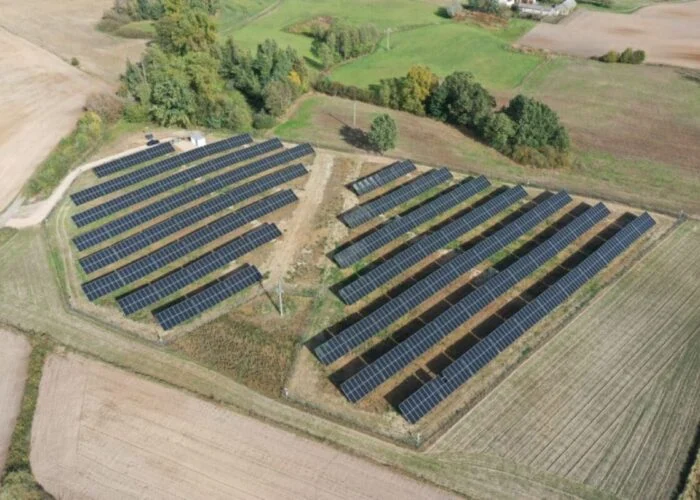
Among the measures passed by the board last week, the 3GW expansion of the New Jersey community solar programme is said to be the largest increase in the initiative in the state’s history.
The new capacity will be distributed across the state’s major utilities, with PSE&G taking the lion’s share at 1,555MW. Community solar initiatives enable residents without suitable rooftop solar installations, particularly low- to middle-income renters, to reduce their energy bills by subscribing to off-site solar projects.
So far, the New Jersey community solar programme has had 37,000 subscribers, but NJPB said the initiative’s expansion could enable as many as 450,000 users to participate. The new round will include a 300MW carve-out for projects on landfill sites.
Additionally, the board has approved three PV projects totalling 24.1MW under the third round of the state’s Competitive Solar Incentive (CSI) programme. One of the three successful projects is a 10MW floating solar array being built at the Wanaque Reservoir for the North Jersey District Water Supply Commission, which the board said would be the largest floating solar facility in the United States.
The state will also open a fourth round of the CSI programme, which awards solar renewable energy certificates to projects through a competitive tendering process, and is a key part of New Jersey’s target of 3,750MW of new solar by 2026. The fourth round will include a new tranche for projects of 20MW and over. Bidding will open this week and close on 24 April 2026.
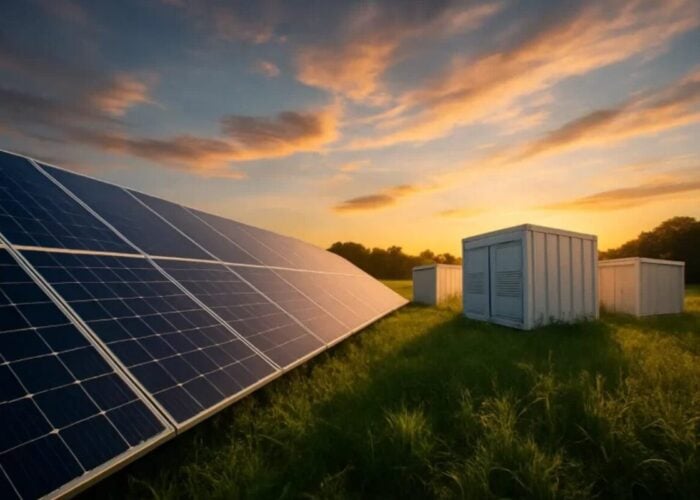
Alongside the measures to expand solar in the state, the board has also approved incentives for three large battery energy storage system (BESS) projects totalling 355MW under the first round of the Garden State Energy Storage Program (GSESP). The projects will provide flexible, on-demand power to the PJM, helping ease grid capacity constraints.
A second round of the GSESP has also been opened for bidding, with solicitations being invited for 645MW of additional storage capacity. Tranche 2 is open to standalone BESS projects and to solar-plus-storage projects that are not eligible for other state incentive programmes.
NJBPU said this action responded directly to rapid load growth, driven in part by new data centres, that is straining the grid and pushing electricity prices higher.
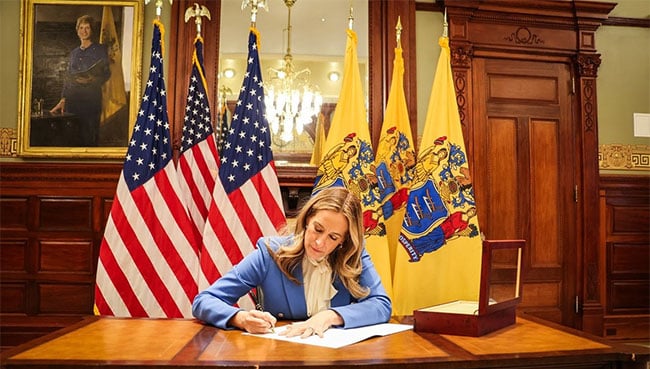
When Governor Sherrill took office at the end of January, she immediately signed a number of executive orders targeting energy affordability through expansions to New Jersey’s solar and storage fleet.
“Solar and battery storage are the fastest and most cost-effective ways to build new electricity generation. Today’s actions advance Governor Sherrill’s clean energy goals while continuing the Board’s commitment to balancing affordability and promoting clean, in-state energy resources,” said NJBPU president Christine Guhl-Sadovy.
States have emerged as key actors in advancing clean energy as federal authorities under Donald Trump’s presidency deprioritise the sector. In an interview with PV Tech last month, Sachu Constantine, executive director of the clean energy advocacy organisation, Vote Solar, identified New Jersey as one of the states that was particularly active in prioritising renewables.
Kartik Amarnath, Vote Solar’s Mid-Atlantic regulatory director, added in a statement on New Jersey’s latest actions: “Community solar is one of the most powerful tools available to ensure the benefits of clean energy reach every resident in New Jersey, allowing everyone— renters, low-income families, and those without suitable rooftops— to save money on their energy bills.
“We applaud the Sherrill administration and the BPU for taking bold action to expand battery storage and community solar at a moment when New Jersey families are facing rising electricity costs. These decisions will help build a more flexible and affordable electricity system while delivering meaningful savings for households across the state. With 51% of each project serving low- and moderate-income (LMI) households, New Jersey’s community solar programme will continue to stand out nationally by now also requiring at least a 25% utility bill discount for LMI subscribers. This historic 3,000 MW expansion will significantly broaden access to affordable clean energy and strengthen New Jersey’s leadership in the community solar landscape.
“There is still important work ahead, but these actions demonstrate the urgency New Jersey families deserve. We look forward to working with state leadership to ensure New Jersey residents receive sustainable solutions to this affordability crisis— a clean energy transition that makes the state’s electricity system affordable, resilient, and fair.”
The complexities of the US solar market will be under the spotlight at our event SolarPlus USA, due to be held in Dallas, Texas, on 24-25 March. For full details, click here.