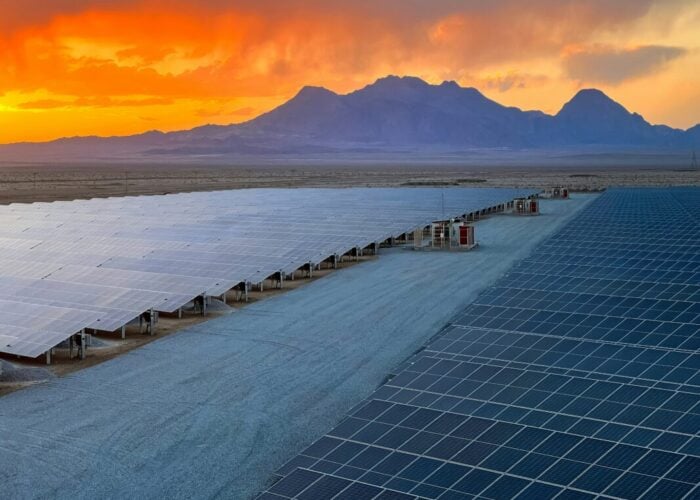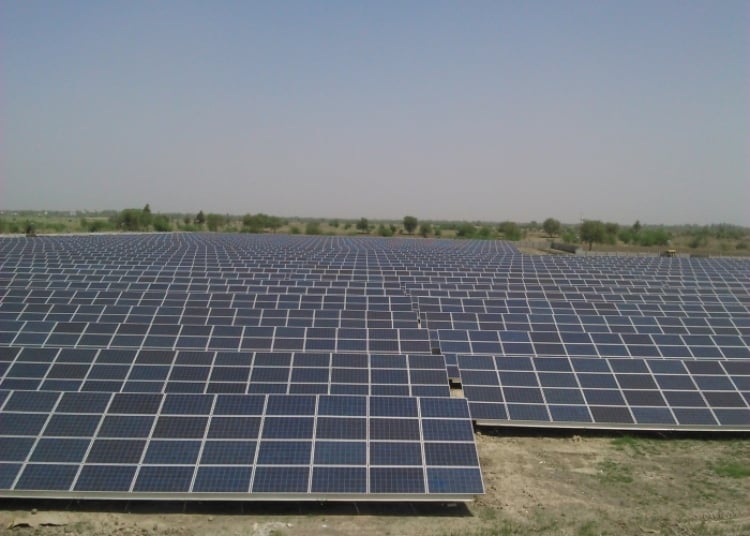
Spanish solar developer Solarpack has signed a 25-year power purchase agreement (PPA) to sell power generated at its upcoming 410MW Gorbea solar project to the Solar Energy Corporation of India (SECI).
The project, at which the company announced it would start construction “soon” in the northern Indian state of Rajasthan, will be Solarpack’s third solar project in India. The Gorbea project will also dramatically increase the company’s solar capacity in the country, from 156.6MW currently in operation to over 550MW, once it is commissioned, which Solarpack expects to do in 2025.
Try Premium for just $1
- Full premium access for the first month at only $1
- Converts to an annual rate after 30 days unless cancelled
- Cancel anytime during the trial period
Premium Benefits
- Expert industry analysis and interviews
- Digital access to PV Tech Power journal
- Exclusive event discounts
Or get the full Premium subscription right away
Or continue reading this article for free
“The signing of this PPA represents an important milestone for us,” said Sajay K. V., Solarpack CEO in India. “We are proud to work with SECI by contributing with our clean energy to help to achieve the ambitious decarbonisation commitments of the country”.
India’s climate targets have received criticism, however, as they aim to reach net zero by 2070, 20 years later than the targets of many other countries. Questions about India’s clean energy commitments come at a time where there is similar concern about the ambition of some of the targets implemented at last year’s COP28 climate conference, and whether the continued installation of new solar capacity will be necessary to meet any of these goals.
SECI first awarded Solarpack with the PPA on 9 January this year, as part of the corporation’s plan to meet 100% of its energy demand with renewables by 2030. India’s energy mix remains dominated by coal, with the International Energy Agency reporting in 2021 that India generated 1.1 million GWh of electricity from coal, by far the most of any energy source. Wind generated around 77,000GWh, while solar generated around 75,000GWh, and addressing this imbalance will be key to meeting India’s climate change targets.
The news follows an announcement by the Avaada Group and the government of the state of Gujarat to develop 6GW of new solar-wind capacity in the state, as part of India’s plan to reach these targets.