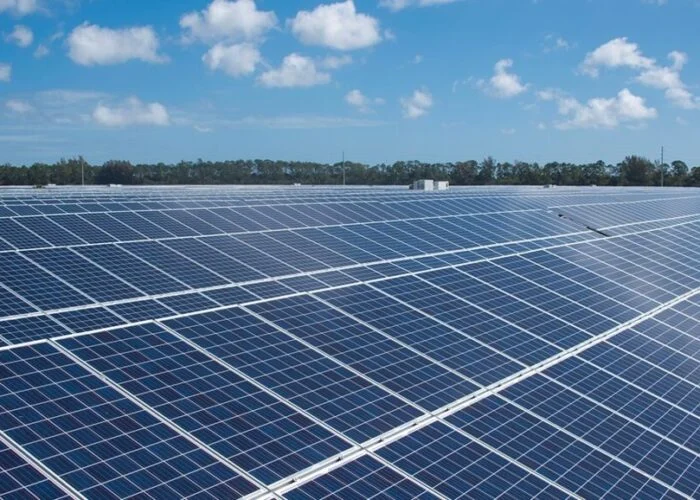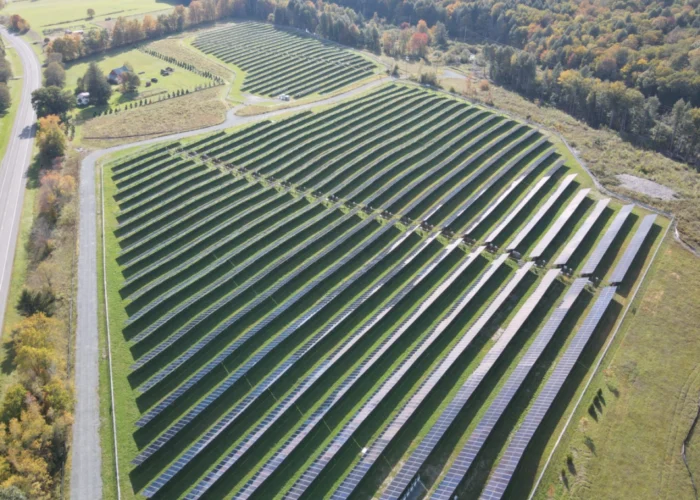
While utility-scale solar continues to account for the majority of operational solar capacity in the US, distributed solar remains an important part of the country’s solar sector. Community solar, in particular, has seen positive developments in 2025, led by the north-east, where the state of New Jersey signed legislation to build 3GW of new community solar capacity by 2029 in August.
However, federal-level policies have posed some threats, most notably the One Big Beautiful Bill Act (OBBBA), which triggered a 36% year-on-year decline in community solar installations in the first half of the year.
Try Premium for just $1
- Full premium access for the first month at only $1
- Converts to an annual rate after 30 days unless cancelled
- Cancel anytime during the trial period
Premium Benefits
- Expert industry analysis and interviews
- Digital access to PV Tech Power journal
- Exclusive event discounts
Or get the full Premium subscription right away
Or continue reading this article for free
As part of its year-in-review series, PV Tech spoke to Vihann Kong, senior executive director of enterprise acquisition at US community solar installer Ampion about its work in 2025 and positive state-level legislation the sector can expect to see in 2026.
PV Tech: What were some of the highlights for Ampion in 2025? What did you do well that you think you can take into 2026?
Vihann Kong: We announced earlier this year that to date, across the projects we manage, we had saved subscribers more than US$42 million on electricity bills. This is enabled by more than 2.2 billion kWh of clean energy production—equivalent to taking roughly 600,000 cars off the road for a year.
A second major highlight was our work with low-income communities through government partnerships. In Erie County, for example, we enrolled more than 1,400 income-qualified households in the ECLIPSE programme within the first six months, generating substantial electricity savings and avoiding more than 3,600 tons of carbon dioxide annually. These results reinforce that community solar can reach the households who need it most when developers, local governments and subscription managers join together.
We’re carrying both of these achievements into 2026: scaling responsibly, and demonstrating that well-designed community solar programmes can deliver financial, environmental and social benefits at the same time.
What challenges did you face this year, and how did you overcome them?
The community solar sector faced significant uncertainty in 2025. However, we’ve faced headwinds before and have navigated them successfully thanks to the innovations and foundational knowledge we apply to each and every project we manage.
State policies constantly shift and adopt new programme rules, site requirements and eligibility rules for low-income subscribers. This means companies like Ampion need to innovate quickly to ensure the success of projects for developers and subscribers.
For example, programmes such as New York’s Inclusive Community Solar Adder and the Massachusetts SMART 3.0 programme use different qualification requirements, increasing the importance of understanding regulatory details and securely managing customer eligibility data. Our strategy has been to further invest in the people and systems needed to interpret policies correctly, manage compliance and support developers across markets.
Utility integration also remains a challenge, again, as several states adopt different policies. Many utilities still rely on legacy billing systems, which can cause subscriber billing delays or inaccuracies. We typically address this by strengthening our automation tools and improving our ability to reconcile data between utilities and developers, ensuring that crediting, billing and revenue flows remain accurate.
These lessons are core to how we’ll continue supporting developers, utilities and subscribers in 2026.
Is there anything that you’re looking forward to in 2026, either in your own work, or in broader policy and economic trends?
We are optimistic about 2026. Corporate participation in community solar is accelerating as companies increasingly view the programme as a way to meet both environmental and social commitments under their environmental, social and governance (ESG) strategies. With data centres driving up electricity rates and those rates affecting communities across the country, community solar will remain an essential tool for supporting local affordability.
We’re also closely watching state-level reforms. Building performance standards and energy-efficiency requirements in multiple states are evolving in ways that create new opportunities for distributed renewable energy. These policies, combined with continued demand for cost savings from households and businesses, set the stage for another year of sector growth.
Are there states with more mature or robust policy frameworks that you think could provide a good precedent for other states trying to plug the gap in federal support for renewable energy projects?
Illinois offers a strong model. The state’s long-term commitment to renewable energy has created predictability for developers. The programme rules require that a percentage of sites benefit low-income utility customers. The Illinois programme has implemented strict consumer protection guidelines to ensure product transparency. These are all positive attributes that other states could incorporate.
New York remains the leader in US community solar, with over 6GW installed. The New York Inclusive Community Solar Adder (ICSA) has played a significant role in improving site economics for developers while expanding access to community solar savings.
What would be the single most significant thing that could happen in 2026 that would advance either your own organisation or the wider market, or both?
The most significant catalyst would be the passage of state-level policies that actively support community solar. As federal incentives from the Inflation Reduction Act (IRA) begin to taper off, state legislatures have a crucial opportunity to shape programmes that attract solar developers and expand access for residents and businesses.
Municipalities and counties also have an important role. Programmes like ECLIPSE in Erie County, New York, and our partnership in Brooksville, Maine, show that local governments can accelerate community solar adoption. A major state policy win, paired with constructive utility improvements, would create predictable conditions for developers and ensure that community solar remains a reliable affordability tool in 2026.
What innovations or changes are you expecting in community solar models?
We expect continued growth in models that maximise both environmental and social impact. One promising example is the corporate sponsorship model, in which companies redirect savings generated from their community solar subscriptions to low-to-moderate income subscribers. This approach increases savings for those in need and helps corporations meet their ESG objectives.
As macroeconomic pressures persist and federal incentives fade out, we anticipate that developers, utilities and policymakers will continue to build innovative billing, crediting and benefit-sharing structures. The common thread will be models that deliver clear value to subscribers while maintaining predictability and revenue stability for project owners.