Updated: Struggling renewables firm SunEdison is making drastic changes to its upstream manufacturing operations as its financial position remains precarious.
The company has announced that it will permanently close its Pasadena, Texas polysilicon production facility by the third quarter of 2016. The closure will result in one-time impairment and restructuring charges of US$363 million that will be reflected in SunEdison's fourth quarter financial results, and approximately US$10 million to US$13 million in restructuring charges that are expected to be reported in 2016.
Try Premium for just $1
- Full premium access for the first month at only $1
- Converts to an annual rate after 30 days unless cancelled
- Cancel anytime during the trial period
Premium Benefits
- Expert industry analysis and interviews
- Digital access to PV Tech Power journal
- Exclusive event discounts
Or get the full Premium subscription right away
Or continue reading this article for free
SunEdison said around 180 jobs would be lost from the closure of the plant.
The company also said it would be halting high-volume production of silicon crystal ingot at its facility in Oregon, US, which is expected to reduce operating expenses to optimise cash utilisation, according to the company. Approximately 40 jobs are expected to be affected by the changes.
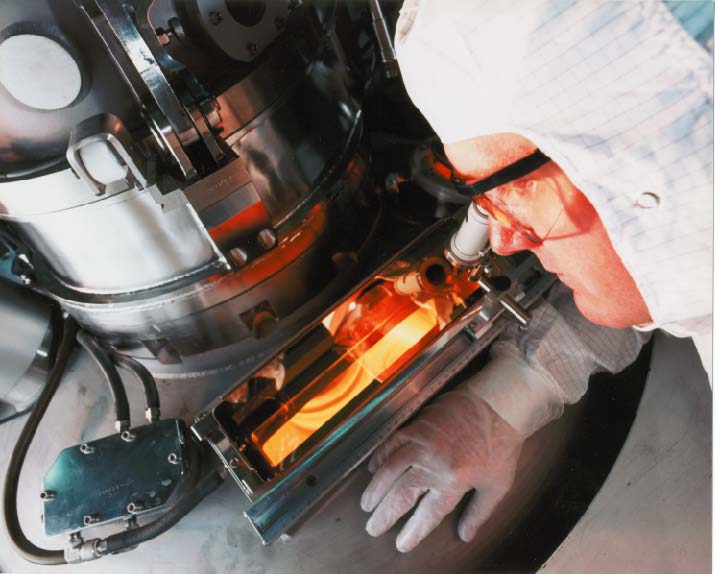
The facility has been consolidated into an R&D and technology demonstration and training center for future licensees of the company's continuous Czochralski (CCz) silicon crystal ingot manufacturing technology.
As a result, SunEdison said a one-time impairment and restructuring charges of US$39 million that would also be reflected in SunEdison's fourth quarter financial results.
Longi to buy Malaysia wafer operations
SunEdison also announced that it had signed a definitive agreement to sell its silicon wafer manufacturing plant in Kuching, Malaysia to China-based Longi Silicon Materials, with the sale expected to close in March, 2016.
The deal with Longi will also allow SunEdison to move to an asset-lite model, securing a multi-year supply agreement for up to 3GW of high-efficiency monocrystalline solar panels from Longi’s PV cell and module assembly subsidiary, Lerri Solar which last year unveiled plans to expand monocrystalline module production by 2GW.
SunEdison said that it would also supply polysilicon produced by its proprietary high pressure fluidised bed reactor (HP-FBR) process in SMP, its joint venture facility in Korea, to Longi, which has not had access to the low cost polysilicon in the past.
The sale of the facility will result in one-time impairment and restructuring charges of US$35 million that will also be added to SunEdison's fourth quarter financial results.
“We are moving forward on several fronts with our asset-light strategy for the upstream solar materials business,” said Ahmad R. Chatila, SunEdison's chief executive. “We believe our actions to re-engineer this business will maximise the value of our world-leading silicon production technologies, enabling SunEdison's long term downstream growth and curtailing headwinds caused by trade actions and the commoditisation of certain products.”
Ongoing downstream difficulties
The extensive restructuring of SunEdison's upstream business comes as the company continues to experience severe difficulties with its downstream operations. In the most recent turn of events, Hawaiian utility Hawaiian Electric last week filed documents with the US island state's utility commission requesting the termination of three PV project PPAs it had with SunEdison.
The papers filed by the utility said the company had “significant concerns” over SunEdison's “apparently precarious financial condition”, to the extent that it wanted to terminate PPA contracts it had for the Waipio, Kawailoa and Lanikuhana solar projects. Together the projects total some 109MW.
SunEdison is reportedly urging the commission not to terminate the PPAs, and instead proposing a sale of the assets to hedge fund D.E. Shaw Group, a shareholder in SunEdison's yieldco vehicle, TerraForm Power.
Update
Soon after SunEdison announced the manufacturing restructuring, SunEdison Semiconductor announced that it would be building a significant amount of polysilicon inventory from the Pasadena facility ahead of the closure, while also negotiating backup supply agreements for polysilicon from additional suppliers at acceptable prices.
Fortunately for SunEdison Semiconductor the overcapacity in polysilicon supply still exists but PV Tech recently highlighted that shortages in 2017 and beyond are possible, given the lack of new plant construction and closure of operating plants due to ASPs below production cash cost economics, especially for smaller-scale producers using older Siemens method processes.
SunEdison Semiconductor went further in a second press release that said the company was in receipt of unsolicited offers to acquire the company. As a result the management had ‘authorized a process to explore a range of strategic alternatives.’
“We have not received a definitive offer for the sale of the Company, but we have received unsolicited preliminary indications of interest and so our Board believes it is in the best interest of the Company and its shareholders to conduct a thorough evaluation of our strategic alternatives,” said Shaker Sadasivam, SunEdison Semiconductor's President and Chief Executive Officer. “As we conduct this evaluation we will continue to focus on executing to our business plan.”