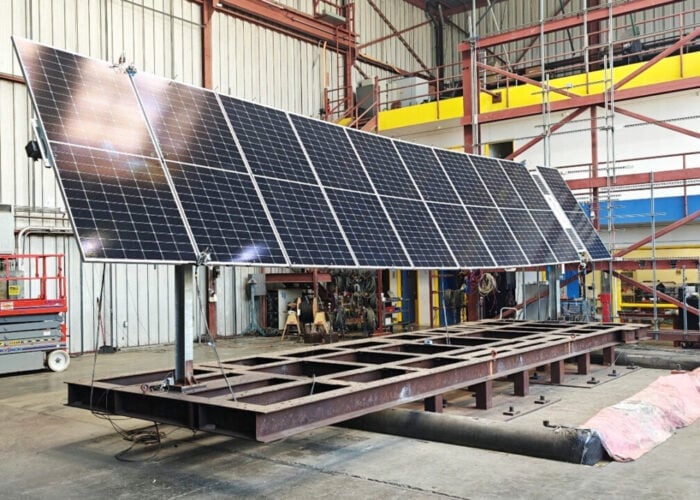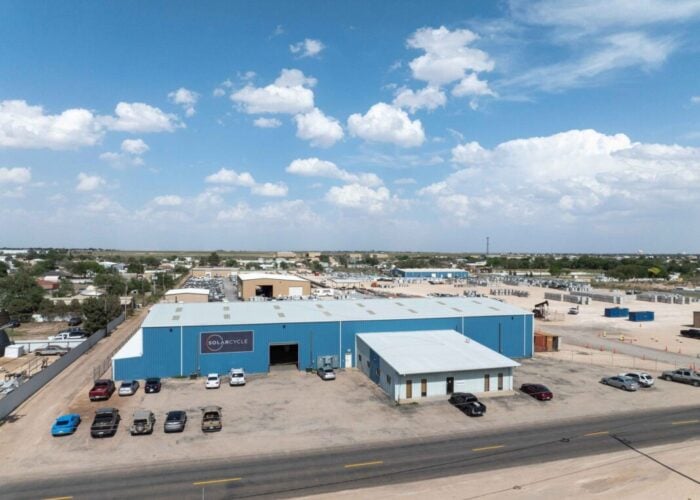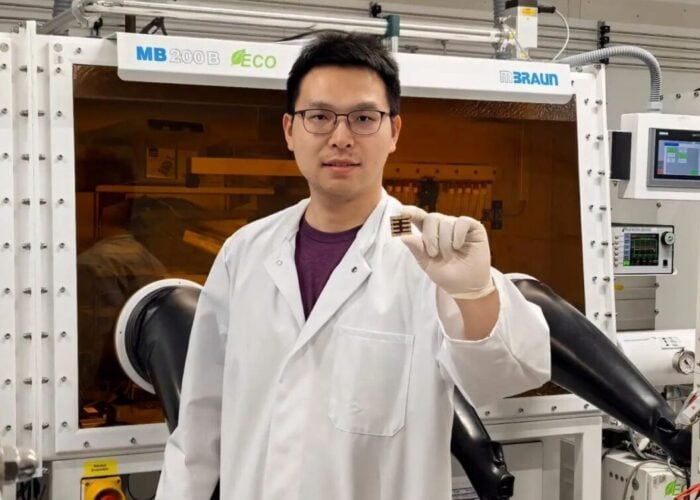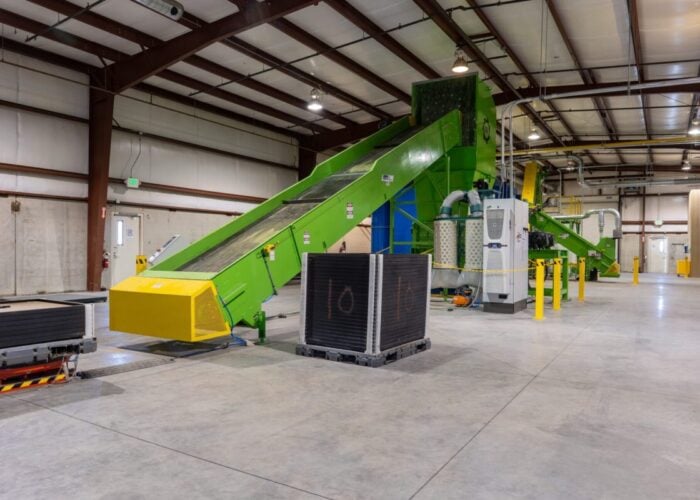
Today, California-based perovskite-silicon tandem cell manufacturer Swift Solar acquired manufacturing assets in the US formerly belonging to Swiss-based manufacturer Meyer Burger.
The veteran Swiss manufacturer has slowly but surely sold off many of its assets since filing for insolvency last June, but the acquisition of some of its US assets by a US company adds a new twist amid the ongoing efforts to bring the solar supply chain onto US shores.
Try Premium for just $1
- Full premium access for the first month at only $1
- Converts to an annual rate after 30 days unless cancelled
- Cancel anytime during the trial period
Premium Benefits
- Expert industry analysis and interviews
- Digital access to PV Tech Power journal
- Exclusive event discounts
Or get the full Premium subscription right away
Or continue reading this article for free
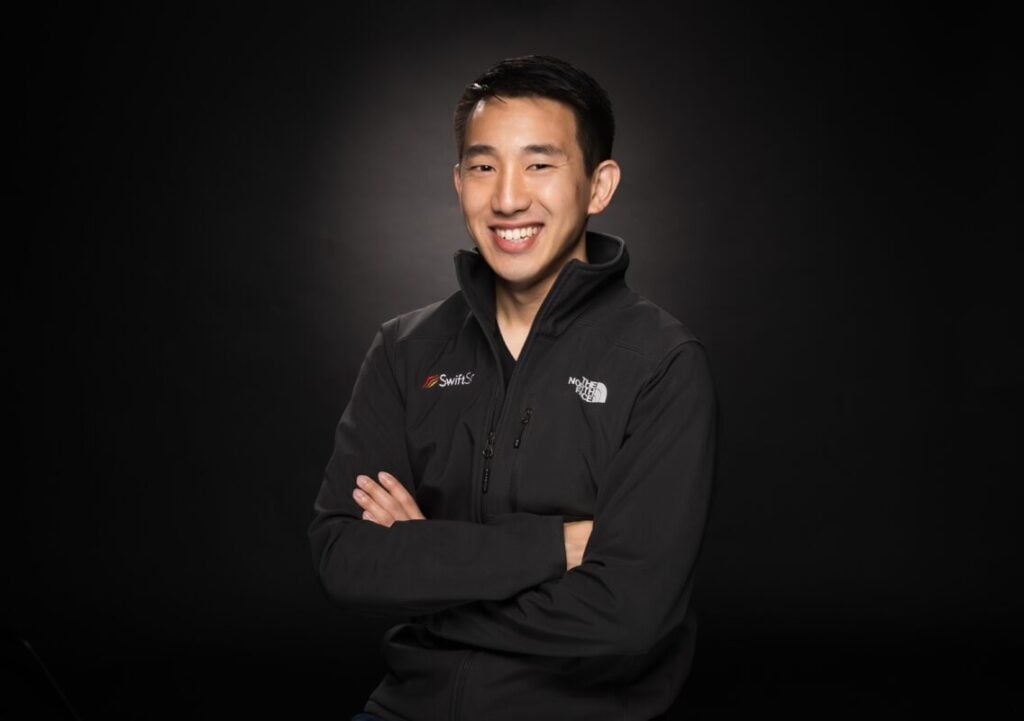
“The US is entering a pivotal moment for domestic solar manufacturing,” said Swift Solar CEO Joel Jean, who spoke to PV Tech Premium this week. “Demand for electricity is rising sharply due to AI data centres, electrification, and industrial reshoring, and solar remains the fastest, most scalable way to bring new clean power online.
“But the US still lacks a competitive domestic supply of high‑efficiency solar cells—there’s a multi-gigawatt gap between cell manufacturing capacity and end-market demand, and we’re relying on imports to fill it.”
This disparity is perhaps best illustrated by figures from the Solar Energy Industries Association, which reported this month that the US’ operational solar cell manufacturing capacity of 3.2GW is but a fraction of the 66.6GW of module manufacturing capacity currently in operation. Building a more robust foundation, and building it quickly, will be priority for the US solar manufacturing sector.
“Acquiring Meyer Burger’s assets allows Swift to accelerate that foundation immediately,” added Jean. “It lets us rapidly vertically integrate the silicon platform needed for tandem manufacturing rather than waiting years to build it from scratch.”
Acquiring patents and expertise
As was reported by PV Tech earlier today, the deal includes two components. Swift Solar will acquire Meyer Burger’s heterojunction technology (HJT) intellectual property (IP) portfolio, alongside absorbing its personnel, and integrate its silicon technology into its own perovskite research and development (R&D).
While the companies did not specify how much manufacturing capacity and industrial equipment would change hands as part of the deal, Jean suggested that the expertise offered by the Meyer Burger staff, and the IP portfolio owned by the company, were among the most important parts of the acquisition.
“There’s an important nuance: Meyer Burger was already intending to manufacture in the US. They had equipment designed and built for US production, but never had a chance to install and ramp it,” he said. “Bringing that capability in‑house gives Swift the full tandem value chain under one roof and allows us to move faster from breakthrough to production.”
Swift Solar named Gunter Erfert and Marcel Keoning, Meyer Burger’s former CEO and global head of R&D, respectively, as two industry veterans that would join Swift Solar as part of the move. This kind of industry expertise will be important as Swift Solar looks to grow its perovskite-silicon offerings, which are yet to reach major commercial-scale production compared with other cell technologies such as passivated emitter rear contact (PERC) and tunnel oxide passivated contact (TOPCon).
“The HJT IP portfolio is strategically important,” said Jean. “Heterojunction is the natural and best bottom cell for perovskite-silicon tandems—it’s the architecture we would have preferred regardless.
“In a sector where freedom to operate and litigation risk can shape entire manufacturing strategies, having a robust, well‑established IP foundation gives Swift a combined portfolio—coupling Meyer Burger’s HJT patents with our own perovskite IP—that is greater than the sum of its parts, covering the full tandem stack from bottom cell to top cell to manufacturing processes and equipment.”
‘Freedom to operate’ from a legal perspective
Minimising what Jean called “litigation risk” is particularly important in the global solar industry, where the emphasis on technological innovation has led to a number of patent infringement lawsuits. While some have been resolved amicably, such as those between Astronergy and JA Solar that ended with the companies signing a cross-licencing agreement, others have become protracted legal battles.
“HJT produced with Meyer Burger’s extensive patent portfolio—one of the strongest globally in this space—gives us clear freedom to operate,” said Jean. “We’re confident in our ability to manufacture at scale because of the strength of our combined IP portfolio.”
“We will not comment on the specific IP challenges facing other architectures. What I can say is that HJT is well positioned to be the foundation of the next generation of solar in the US and the West.”
Perhaps this strong legal footing has become a priority for Swift Solar because some of Meyer Burger’s physical assets have already found new owners. Last year, Waaree Solar Americas and Babacomari Solar North acquired some of Meyer Burger’s cell and module production machinery for nearly US$29 million; Jean did not provide PV Tech Premium with further details on how much manufacturing capacity Swift Solar acquired, or how much was spent on this investment.
Building a US supply chain
The deal is also significant as the US looks to build a more robust domestic solar supply chain. Jean said Swift Solar aims to build “large-scale tandem manufacturing capacity in the US”.
“The Meyer Burger acquisition accelerates that trajectory,” Jean explained. “It brings together the best of European silicon manufacturing with the perovskite foundation we’ve built over many years—giving Swift the industrial foundation to bring tandems to market at scale, and creating the strongest Western solar manufacturer positioned for the future of PV technology.”
His emphasis not only on US manufacturing, but that of ‘the West’ more broadly, speaks to the global imbalance in the solar supply chain. China’s dominance of global solar manufacturing capacity is nothing new—the latest figures from the International Energy Agency (IEA) forecast that China will account for 93% of global wafer manufacturing, 85% of global cell manufacturing and 77% of global module manufacturing by 2030—but Jean argued that there is a geographic and technology-based discrepancy when it comes to manufacturing output.
“HJT is one of the few high‑efficiency silicon technologies whose core equipment design and process expertise were developed largely outside China,” he said. “For PERC and TOPCon, the equipment, materials, and process capabilities are heavily centred in China—building those technologies at best-in-class quality outside China essentially requires Chinese equipment vendors.”
“Meyer Burger built gigawatt‑scale manufacturing equipment and know-how in Europe,” Jean continued. “They were a stalwart of the Western solar industry—one of the leading silicon solar equipment manufacturers globally, providing core equipment to customers across North America, Europe and Asia.”
Jean also noted that perovskite-silicon tandem cells have particular potential for improvements in conversion efficiency, claiming that modern silicon cells have a hard efficiency ceiling of around 30%, but the integration of tandems could raise this to around 45%. He argued that Meyer Burger’s machinery would require “minimal modifications” to work with Swift Solar’s own technology, as the company looks to build up a manufacturing base in the US.
“Our tandem technology is compatible with multiple silicon architectures, but Meyer Burger’s HJT is a particularly strong partner,” Jean explained. “The heterojunction cell requires minimal modifications to serve as a tandem bottom cell—we can take a best-in-class HJT cell and deposit our perovskite directly on top to produce a high-performance tandem.”
After five editions of Large Scale Solar USA, the event becomes SolarPLUS USA to mirror where the market is heading. The 2026 edition, held in Dallas, Texas, on 24-25 March, will bring together developers, investors and utilities to discuss managing hybrid assets, multi-state pipelines, power demand increase from data centres and AI as well as the co-location of solar PV with energy storage in a complex grid. For more details and how to attend the event, visit the website here.