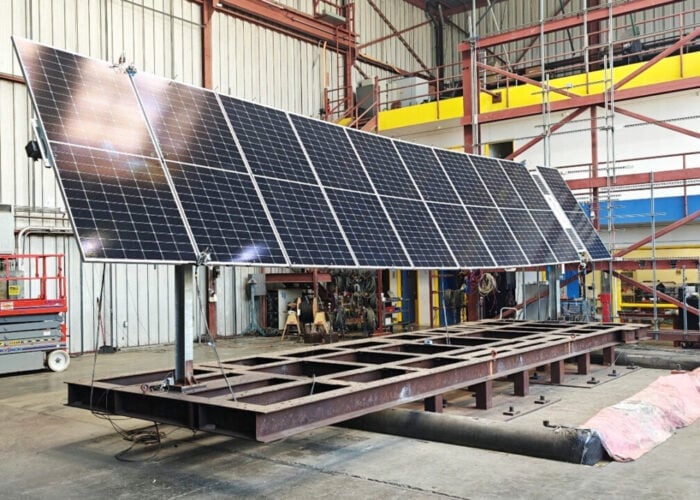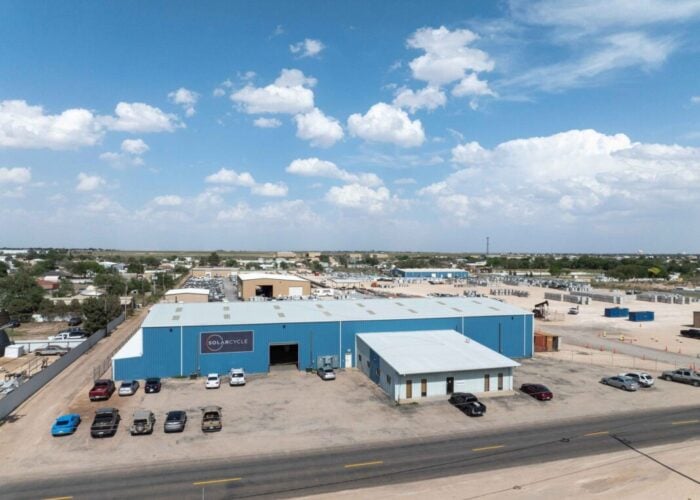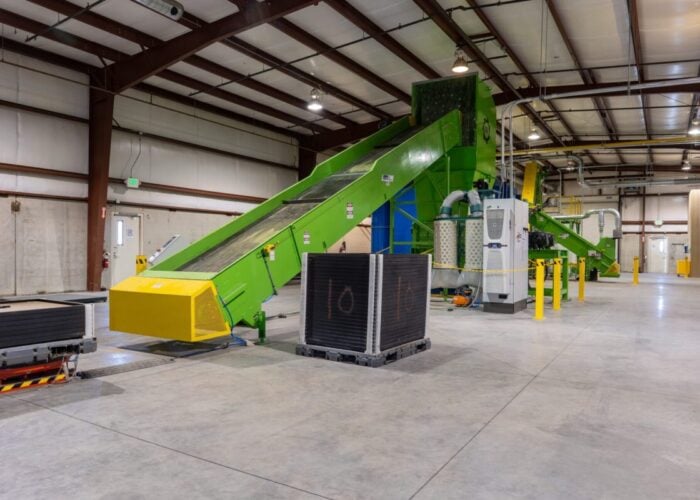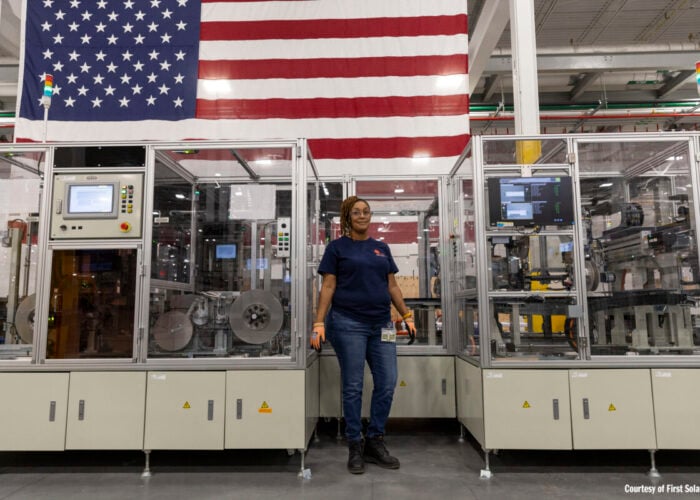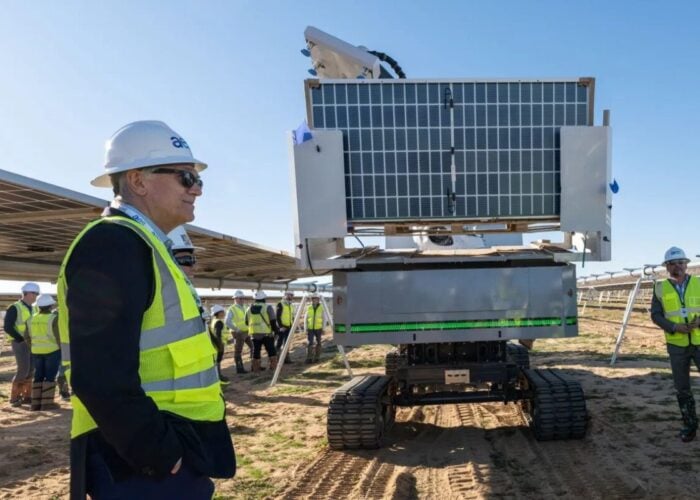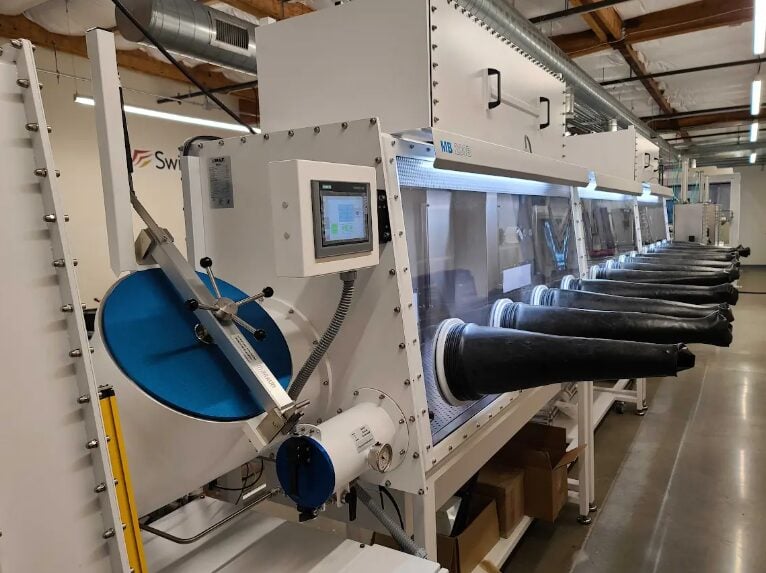
California-based perovskite-silicon tandem solar cell manufacturer Swift Solar has acquired manufacturing assets formerly belonging to Swiss PV manufacturer Meyer Burger.
Under the terms of the deal, Swift Solar will acquire Meyer Burger’s heterojunction technology (HJT) intellectual property (IP) portfolio and absorb its personnel, as Swift Solar looks to integrate the Swiss manufacturer’s silicon technology with its perovskite research and development (R&D).
Try Premium for just $1
- Full premium access for the first month at only $1
- Converts to an annual rate after 30 days unless cancelled
- Cancel anytime during the trial period
Premium Benefits
- Expert industry analysis and interviews
- Digital access to PV Tech Power journal
- Exclusive event discounts
Or get the full Premium subscription right away
Or continue reading this article for free
Swift Solar CEO Joel Jean told PV Tech this week that the acquisition of Meyer Burger’s patents “gives us clear freedom to operate” in the US as it looks to scale up its tandem cell manufacturing capacity.
The company tested its perovskite-silicon tandem cells in a US Department of Defense pilot project in January of this year. Jean claimed that the efficiency ceiling of silicon cells could be raised from 30% to 45% by the addition of perovskite to the cell architecture.
Meyer Burger shut down its module manufacturing facilities in Arizona last yaer and then sold off part of its remaining US manufacturing machinery and equipment to Waaree Solar Americas and Babacomari Solar North. While neither Swift Solar nor Meyer Burger provided further detail on the manufacturing capacity that has changed hands, nor for how much money, Jean said that his company is keen to take advantage of the full range of Meyer Burger’s US offerings.
“There’s an important nuance: Meyer Burger was already intending to manufacture in the US. They had equipment designed and built for US production, but never had a chance to install and ramp it,” he said. “Bringing that capability in‑house gives Swift the full tandem value chain under one roof and allows us to move faster from breakthrough to production.”
Looking ahead, Jean highlighted three key priorities for Swift Solar in the future: increasing the production of HJT cells and modules in the US to the gigawatt-scale; incorporating perovskite manufacturing into the same production line; and scaling tandem manufacturing capacity to “match the HJT capacity”.
While US solar module manufacturing capacity has increased rapidly in recent years, cell manufacturing has grown at a slower rate. Last year, ES Foundry delivered US-made passivated emitter rear contact (PERC) cells to modules producer by Bila Solar, while more advanced cell technologies, such as perovskite-silicon, remain in the testing phase, rather than the commercial-scale production phase.
After five editions of Large Scale Solar USA, the event becomes SolarPLUS USA to mirror where the market is heading. The 2026 edition, held in Dallas, Texas, on 24-25 March, will bring together developers, investors and utilities to discuss managing hybrid assets, multi-state pipelines, power demand increase from data centres and AI as well as the co-location of solar PV with energy storage in a complex grid. For more details and how to attend the event, visit the website here.