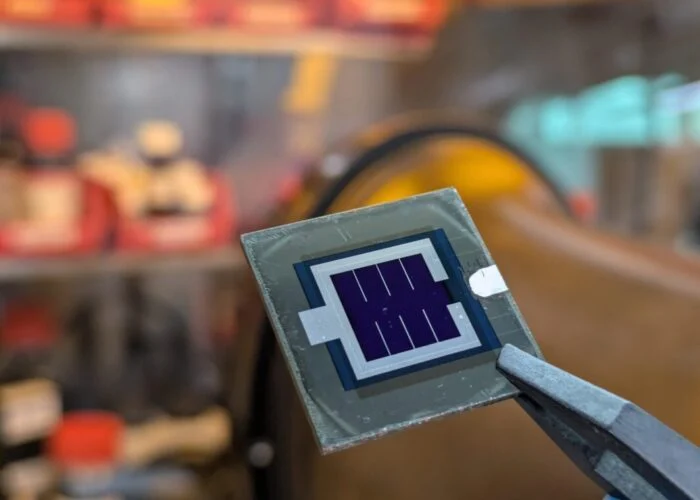
German researchers at the Technical University of Munich have identified and developed a solution to prevent weather-induced deterioration of perovskite solar cells.
As TOPCon manufacturing expands globally, producers are facing different cost, safety and supply-chain realities – creating an opportunity to rethink technology platforms and prepare for next-generation tandem architectures.
US solar technology company Swift Solar has deployed perovskite solar technology as part of a Department of Defence cyber warfare exercise in the state of Virginia.
Scientists from Germany and Saudi Arabia have discovered that perovskite thin-film cells are compatible with current industry standard silicon solar cells, which they claim is a “crucial step toward the industrialisation of perovskite silicon tandem solar cells”.
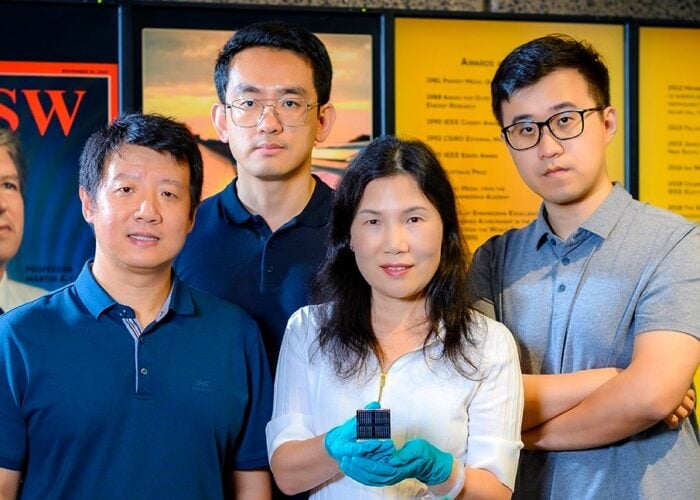
PV Talk: University of New South Wales professor Xiaojing Hao discusses her hopes for the potential of kesterite, an emerging alternative PV technology.
Researchers from the Helmholtz-Zentrum Berlin (HZB) and Humboldt University Berlin have achieved an efficiency of 24.6% with a copper indium gallium selenide (CIGS) and perovskite tandem solar cell.