For the past two years, China’s PV manufacturers have been locked in a cycle of intense competition and price wars. Carrie Xiao speaks to four of them – Tongwei, Trinasolar, Astronergy and AIKO – about how they are looking to get back on the front foot.
China’s PV industry reached a critical turning point in 2025 amid the interplay of price competition and technological breakthroughs. Leading companies are gradually transitioning from scale competition to value competition through technological upgrades, products targeting differentiated scenarios in specific regions and markets, and expanding their global footprints. Recently, senior executives from four leading PV companies – Trinasolar, Tongwei, Astronergy and AIKO – sat for an interview with PV Tech Power. They reviewed the key breakthroughs in 2025, forecast industry trends for 2026 and outlined a roadmap for the industry’s future development.
Try Premium for just $1
- Full premium access for the first month at only $1
- Converts to an annual rate after 30 days unless cancelled
- Cancel anytime during the trial period
Premium Benefits
- Expert industry analysis and interviews
- Digital access to PV Tech Power journal
- Exclusive event discounts
Or get the full Premium subscription right away
Or continue reading this article for free
Looking back at 2025: technological breakthroughs solidify leadership, value competition takes shape
In 2025, despite ongoing pressures from declining value chain prices and a complex international trade environment, China’s PV industry saw leading companies striving for counter-cyclical breakthroughs by pursuing technological innovation, expanding markets and strengthening industry chain collaboration. These efforts propelled the industry’s transition from vicious competition towards value creation.
The past year saw PV technology upgrades enter a deep-water zone. Competing technical routes, such as TOPCon 2.0-5.0, heterojunction technology (HJT), back contact (BC), perovskite and tandem, flourished. Leading companies were leveraging technological upgrades to break the cycle of price declines and thinning profits. In the interviews, all four senior executives highlighted technological innovation as a core factor enabling their companies to navigate industry cycles. Each of the four companies made breakthroughs in distinct technical pathways, collectively pushing the industry’s efficiency ceiling to new heights and further reducing the levelised cost of energy (LCOE).
Samuel Zhang, vice president and CMO of Astronergy, sees technological innovation as a key lever to proactively drive down costs across the industry. The ASTRO N7 2.0 module launched by his team became a key breakthrough. This module, based on TOPCon 5.0 and integrating processes such as zero busbar (ZBB) and light redirecting film application, directly brings customers a reduction in LCOE of over 0.7% and a substantial decrease in BOS costs, Zhang claims.
In his view, technological innovation should not only stay at the parameter level but must be translated into tangible economic benefits for customers. The mass production of the ASTRO N7 2.0 cements Astronergy’s leading position in bringing TOPCon 5.0 to the market, Zhang said.
AIKO, on the other hand, has leveraged n-type BC innovation to navigate the cycle. Staying committed to technological innovation is the only way for the PV industry to emerge from its cyclical downturns, says senior VP of AIKO, Xia Hengliang. The year 2025 marked a pivotal breakthrough for AIKO, with a return to profitability in Q2 being a direct payoff from its ten-year dedication to n-type BC.
According to Xia Hengliang, AIKO’s ABC modules have achieved a mass production efficiency of 24.8%. By the end of 2025, the company will commence batch deliveries of 25%-efficient modules. These modules can also deliver a 6-10% scenario-specific power generation boost. More crucially, there have been breakthroughs in supporting technologies. Its copper interconnection technology has achieved mass production ahead of the industry, tackling the industry’s pain point of silver consumption. Meanwhile, the Separatech process redefines BC cell manufacturing, finally making back-contact technology viable for mass production, says Xia.
This technological edge has allowed AIKO’s ABC modules to establish an advantage in high-value markets such as Europe and Australia. The commissioning of what is said to be Europe’s first grid-connected power plant employing n-type BC (the Stolac Solami Park in Bosnia and Herzegovina) stands as a testament to this.
Trinasolar, meanwhile, has pursued a dual-track strategy of technological breakthroughs in the PV and energy storage sectors. Helena Li, President of Trinasolar, says that in the first three quarters of 2025, the company made significant progress in TOPCon, perovskite and energy storage technologies.
In the PV module sector, the large-scale delivery of Trinasolar’s Vertex N i-TOPCon Ultra module heralded the official dawn of the TOPCon 2.0 era. The perovskite field witnessed even more record-breaking milestones: in June, a perovskite/silicon tandem module achieved an efficiency of 30.6%, making it the world’s first tandem module to exceed 30% efficiency. The power output of industrial-standard size products increased from 808W to 841W in June.
On the energy storage front, Trinasolar’s Elementa 3 platform boasts a capacity of over 6MWh, with its LCOS cut by 12.5% compared to the previous generation. Features such as one-click upgrades and real-time monitoring boost operational and maintenance efficiency by 90%, while integrated containerised transportation shortens lead times, Li says. These innovations are all designed to create more value for customers in a market-oriented power system, laying the foundation for energy storage to participate in power market operations. Simultaneously, they better empower diverse scenarios such as zero-carbon parks, PV-storage-charging hubs, AI data centres, direct green power supply, integrated generation-grid load-storage systems and virtual power plants.
Tongwei consolidates its position through technological leadership and reliable products, a strategy that forms the underlying rationale for navigating market cycles. In the TOPCon sector, its TNC-G12 module reached a maximum power of 778.5W and an efficiency of 25.06%, pushing power and efficiency to industry-leading levels. Concurrently, the company has established a multi-technology R&D structure covering TOPCon, HJT, xBC and perovskite tandem technologies.
Allen Xue, vice president of sales and marketing at Tongwei, says: “Since the start of 2025, Tongwei has fully launched the TNC 2.0 series of high-efficiency modules based on four core technologies, delivering greater value to customers through higher power output and superior performance. The TNC 2.0 modules are making significant inroads globally, with stable supply and project rollouts in Europe and Australia. Their high power and high reliability combo is garnering broad praise across the supply chain.”
Penetrating emerging markets and deepening presence in premium markets: global layout reflects resilience
In 2025, amid a complex international trade environment, leading companies achieved counter-cyclical growth in market share through a strategy of incremental growth in emerging markets and value enhancement in premium markets, with notable progress in international cooperation and niche application scenarios.
Astronergy’s dual-line breakthrough is a notable example. “Domestically, we secured bids in centralised procurement projects by leading central enterprises, validating our acceptance in the mainstream market,” Zhang Wei explains. “Internationally, our market share is on the rise in emerging markets such as Pakistan and Saudi Arabia, and we have also forged deep cooperation with energy giants in markets including Germany, the UK, Greece and Australia.”
In his view, these project rollouts in key markets are more than just sales growth; they demonstrate international brand acceptance and product competitiveness endorsed by leading global customers.
AIKO found a breakthrough through differentiated competition in targeted scenarios. Xia Hengliang highlights the significance of securing a bid to supply 650MW of modules for the Shanghai Lingang #1 offshore PV project: “Offshore PV power plants face complex operating conditions and high maintenance costs. Ten months of continuous testing at the CPVT (National PV Product Quality Inspection Centre) maritime PV demonstration base has confirmed the high efficiency and stability of our ABC modules, earning us the title of ‘Offshore PV King’!”
Furthermore, in traditional centralised ground-mounted PV power plants, while ensuring high front-side output, AIKO’s ABC products have achieved a bifaciality rate of over 80%. This performance has been certified by three authoritative testing institutions: the China Academy of Metrology, TÜV Rheinland and CPVT, which confirms the products’ leading comprehensive power output advantage under various ground reflectivity conditions.
Meanwhile, AIKO is expanding into the domestic commercial and industrial (C&I) market by establishing a joint venture with installer Hebei Saihang, with plans to boost its module market share in Hebei to 25% by the end of 2027. Xia Hengliang says this is not merely a simple partnership, but a model innovation of product customised solutions, which underscores the industry’s transition from price competition to value creation.
Trinasolar’s energy storage business has emerged as a new engine driving market expansion. According to Helena Li, as of the end of June 2025, Trinasolar’s cumulative deliveries of energy storage systems reached 12GWh, spanning six continents. “Relying on integrated full-stack capabilities from battery cell to container to AC side, along with a localised service network, we have entered the era of GWh deliveries,” Li says.
Li adds that as the company’s global delivery capabilities continue to strengthen, Trina Storage aims to double its shipments in 2025. Having already secured multiple GWh-level orders this year, it is projected that annual shipments will reach 8GWh, with the target for next year planned to roughly double from this year’s figure. The company will continue to step up efforts to secure overseas orders, supporting the scaled expansion and enhancing the profitability of its energy storage business.
In the PV sector, Trinasolar has been steadily securing orders and deepening cooperation in emerging markets, including Uzbekistan, Pakistan and Sri Lanka. Simultaneously, by offering scenario-based solutions for applications such as AI data centres, it is accelerating progress toward its goal of becoming a global leader in smart solar and energy storage solutions.
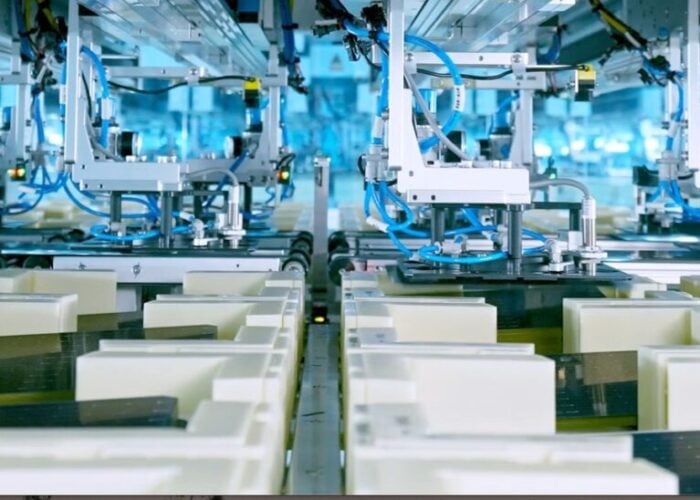
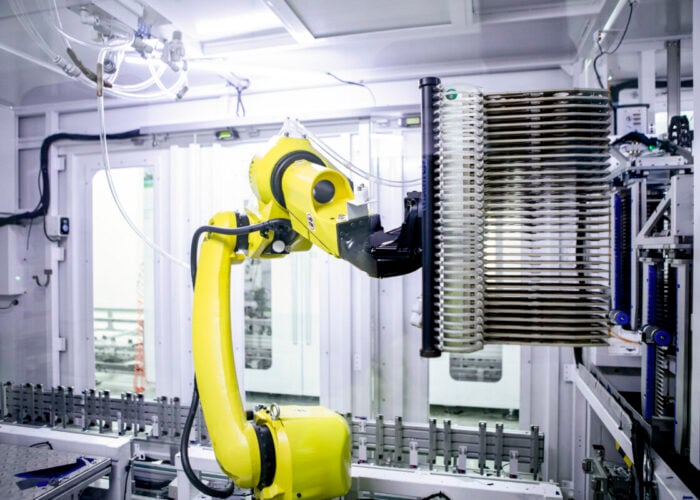
Tongwei, on the other hand, leverages its full industry chain advantage to support market expansion. Allen Xue points out that Tongwei is one of the few companies achieving a full industry chain layout from polysilicon to modules. As of H1 2025, Tongwei’s high-purity polysilicon maintained its global top ranking in both market share and shipment; its cell shipments have been the world’s largest for eight consecutive years; and module shipments consistently rank among the global top five. In September 2025, Tongwei’s Meishan facility was selected as a World Economic Forum Lighthouse Factory, the first of its kind in the global PV cell manufacturing sector. Market leadership across these core production stages endows Tongwei’s module products with intelligent manufacturing advantages derived from industrial chain synergy and robust quality assurance, while also supporting the company in securing a place on the Fortune Global 500 for the third time.
In Allen Xue’s view, the full industry chain resembles a system engineering project: the upstream polysilicon determines cost flexibility, the midstream cell production dictates efficiency and yield, and the downstream module operations underpin long-term power generation performance and customer experience. “Only by integrating these three links can we apply a unified set of process standards, a consistent quality system and shared data systems to manage price volatility, ensure supply security and control carbon footprint,” Xue says.
He mentions that as overseas projects increasingly demand traceability, ESG compliance and long-term operation and maintenance, the marginal effect of a single point of advantage is diminishing. “What truly wields discourse power is a manufacturing system capable of achieving stable control across multiple links simultaneously,” Xue says. “Behind every module the customer purchases is an entire set of verifiable, traceable manufacturing and governance capabilities.”
These leading companies have also strengthened their operational foundations and bolstered resilience against market fluctuations through lean management, ESG certification, and industry chain collaboration. Astronergy’s adjustment of its business strategy is quite representative. Zhang Wei notes that the complex international trade environment and intensified industry competition this year have prompted the company to proactively adjust its strategy, prioritising cash flow security and profit quality over merely pursuing scale.
Beyond strengthening its core operations, Astronergy’s achievements in ESG are noteworthy. The company’s ASTRO N series modules have been awarded the French Carbon Footprint PPE2 certificate, with figures far below the industry average. Furthermore, Astronergy’s Haining and Yancheng facilities have been certified under the European Solar Stewardship Initiative (SSI) ESG standard, and its science based carbon targets have passed the Science Based Targets Initiative(SBTi) validation.
Zhang Wei says that this signifies the company’s low-carbon commitment is aligned with international standards, further enhancing its eligibility for access to high-end markets, such as the European Union. Meanwhile, the company has also established a green full-lifecycle management system, driving upstream and downstream carbon reduction through its Green Supplier Evaluation Indicator List and promoting collaborative development.
Trinasolar has also continued to invest in lean management, particularly in enhancing supply chain resilience. According to Helena Li, the commissioning of the company’s factories in Indonesia and Saudi Arabia has further enhanced its supply chain resilience. Trinasolar has also built robust supply chain, service and compliance systems to deliver more reliable services to customers. On the ESG front, Trina was awarded the 2025 EcoVadis Silver Sustainability Rating and led the industry by securing the highest AA rating for full-link traceability across the PV supply chain, from polysilicon to modules, showcasing its sustainable development capabilities.
Outlook for 2026: intensifying anti-vicious competition and the industry’s potential profit recovery
On the industry’s development trends in 2026, the senior executives interviewed generally hold a cautiously optimistic stance. The core logic rests on the implementation of China’s “anti-vicious competition” policies and the phase-out of outdated capacity.
When discussing the upcoming market trends, Astronergy’s Zhang Wei judges that starting from July 2025, anti-vicious competition policies have been continuously intensified, and industry chain prices have rebounded to varying degrees. He further predicts that in 2026, as outdated capacity is phased out at a faster pace, the competitive landscape will improve further, paving the way for a return to profitability and sustained growth.
AIKO’s Xia Hengliang predicts that value-driven competition will accelerate. He notes that the Ministry of Industry and Information Technology is promoting anti-vicious competition policies. The previous business model that relied solely on low-price competition has become unsustainable. Customers will attach greater importance to product efficiency, reliability, and long-term returns. Companies with technological advantages and brand strength will gain more opportunities. AIKO has proactively aligned with the demand-centric market trend and tailored scenario-specific solutions to meet the needs of different customers. In his view, 2026 will not only be healthier than 2025 but will also be a crucial year for AIKO to further solidify its leading position in the industry.
Tongwei’s Allen Xue expresses confidence from a long-term demand perspective. The Chinese state has proposed surpassing 3,600GW of total installed wind and solar capacity by 2035, requiring average annual additions of over 180GW in the next decade. As of 2025, the total installed wind and PV capacity had reached 1,696GW. With PV as the primary segment, long-term demand is assured, and the industry remains optimistic about its prospects in 2026. He further asserts that future growth is unlikely to be distributed evenly across all companies. Instead, it will rapidly concentrate towards high-quality capacity that demonstrates advantages in efficiency, cost control, supply capability and brand credibility. Curbing vicious competition and phasing out outdated capacity are essentially about repricing advanced and high-quality capacity.
Trinasolar’s Helena Li points to structural opportunities as the PV industry transitions from rapid growth to quality-driven, stable development, with demand growth slowing yet high-value and emerging markets remaining promising. In energy storage, she says: “We are targeting 8GWh this year (doubling from 2024) and will continue to capture opportunities in scenario-based solutions in 2026.”
Based on their industry assessments, all four companies have outlined their strategic priorities for 2026, which are centred around three core dimensions: technology, market and ecosystem.
Zhang Wei proposes three key expectations. The first is a leap in quality, translating technological advantages into product advantages for all scenarios, focusing on premium customers, optimising the order structure and driving quality growth. The second is advancing the global localisation strategy, specifically by bolstering local teams, services and supply chains in key markets. The third is expanding the industrial ecosystem by addressing the segmented needs of distributed, ground-mounted, and floating scenarios, creating differentiated value through a combination of products and solutions.
Xia Hengliang says that AIKO will concentrate on three fronts: technology, market and ecosystem. First, it will consolidate its market share in premium overseas segments to enhance profitability. Second, it will accelerate R&D in perovskite tandem and next-generation BC technologies to maintain a leadership position in efficiency records. Third, it will deepen its industrial ecosystem layout by addressing the segmented needs of distributed, ground-mounted and floating PV scenarios, creating differentiated value through integrated product-and-solution packages.
Helena Li emphasises the dual focus on technological leadership and real-world application. In 2026, she says Trinasolar will leverage its technological edge and global partnerships to further promote scenario-based smart energy solutions, including solar and storage, delivering greater value to customers. Concurrently, the company will continue to scale up the energy storage business to solidify its position as the company’s second growth curve.
Allen Xue identifies product upgrade and global service as the core focus. In 2026, Tongwei will continuously launch TNC 3.0 high-efficiency modules, further optimising power output, conversion efficiency and carbon footprint. Simultaneously, Tongwei will strengthen its global market layout and service capabilities, enabling high-efficiency and reliable products to deliver superior system returns across large-scale ground-mounted power plants, C&I projects and residential installations, thereby contributing to the global clean energy transition.
Regarding the expectations for 2026 and 2027, Yishu Yan, China utilities and new energy analyst at UBS Securities, also expresses a relatively optimistic attitude towards the PV industry’s development in an interview with PV Tech. She says it is predicted that global PV demand in 2026 and 2027 will likely maintain single-digit growth. The trajectory will depend on solutions for grid connection bottlenecks and the stabilisation and improvement of IRRs for PV projects in China.
“From a supply-demand perspective, a reduction in supply is only a matter of time,” says Yan. “If demand can return to stable growth, it will provide considerable support to the industry’s profitability. Currently, we are already seeing early signs of a profitability turnaround. From Q4 2025 to Q1 2026, several leading companies are likely to return to break-even or even generate modest profits. Second- and third-tier manufacturers might still incur losses, but the extent of their losses is expected to narrow further by early next year. The worst time is indeed behind us; from the perspectives of profitability, supply and demand, there will be a gradual recovery going forward.”
As 2025 winds down, the PV industry is poised for a new round of competition in 2026. The perspectives from the management of the four leading PV companies above reveal clear market strategies and objectives for each, while analysis from third-party institutions has bolstered industry confidence. The year 2026 promises to be even more remarkable—let’s wait and see.