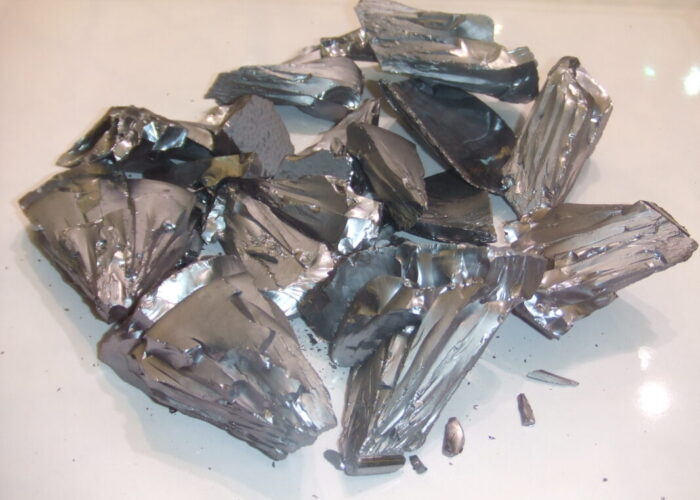
Japanese cell and module manufacturer Toyo Solar has secured a supply agreement to source US-made polysilicon capacity.
Although Toyo did not name the company with which it signed the agreement, the two leading companies currently with operational solar-grade polysilicon manufacturing capacity are Germany’s Wacker Chemie and US-based Hemlock Semiconductor, a subsidiary of chemical giant Corning, which started producing wafers during the third quarter of 2025.
Try Premium for just $1
- Full premium access for the first month at only $1
- Converts to an annual rate after 30 days unless cancelled
- Cancel anytime during the trial period
Premium Benefits
- Expert industry analysis and interviews
- Digital access to PV Tech Power journal
- Exclusive event discounts
Or get the full Premium subscription right away
Or continue reading this article for free
This supply agreement aligns with Toyo’s existing non-Foreign Entity of Concern (FEOC) overseas supply, as FEOC legislation came into effect at the beginning of the year. The company has also expanded into the US, where it acquired a 2.5GW module assembly plant, back in 2024.
Outside the US, the solar manufacturer began production of solar cells in April 2025 at its 2GW plant in Ethiopia, at which it aims to double the annual cell manufacturing capacity to 4GW.
“Partnering with a leading polysilicon supplier in the US, gives TOYO a strategic advantage in building a robust and policy‑aligned supply chain,” said Junsei Ryu, CEO and Chairman of TOYO. “This agreement strengthens our US expansion by increasing access to domestic materials, positioning TOYO to deliver cost‑effective and sustainable solar solutions to the American market.”
According to Toyo, the sales contract has a term of one year. The signing of domestic polysilicon from Toyo comes as FEOC compliance has entered into force and domestically-made polysilicon and ingots/wafers are scarce, with manufacturing capacity not matching the operational manufacturing capacity for modules, as shown in the chart below.
Currently, the US has more operational polysilicon capacity than solar cells, however there is a disparity with annual module nameplate capacity.
Last year saw green shoots of new US polysilicon production, as covered in this review article, but also a negative development with REC Silicon ceasing polysilicon production at its Moses Lake plant in Washington.