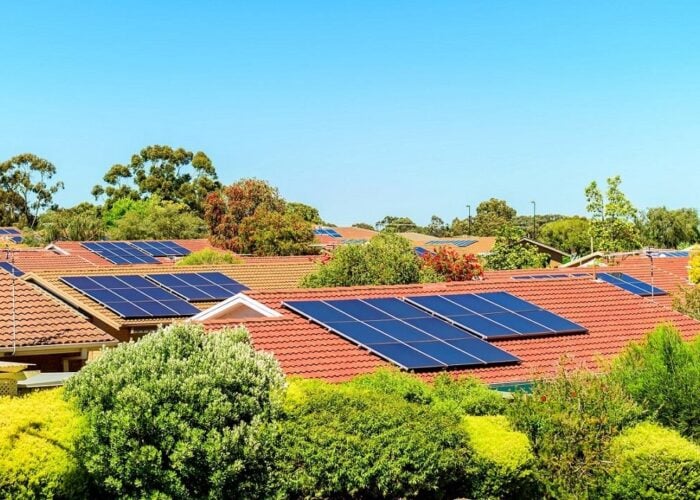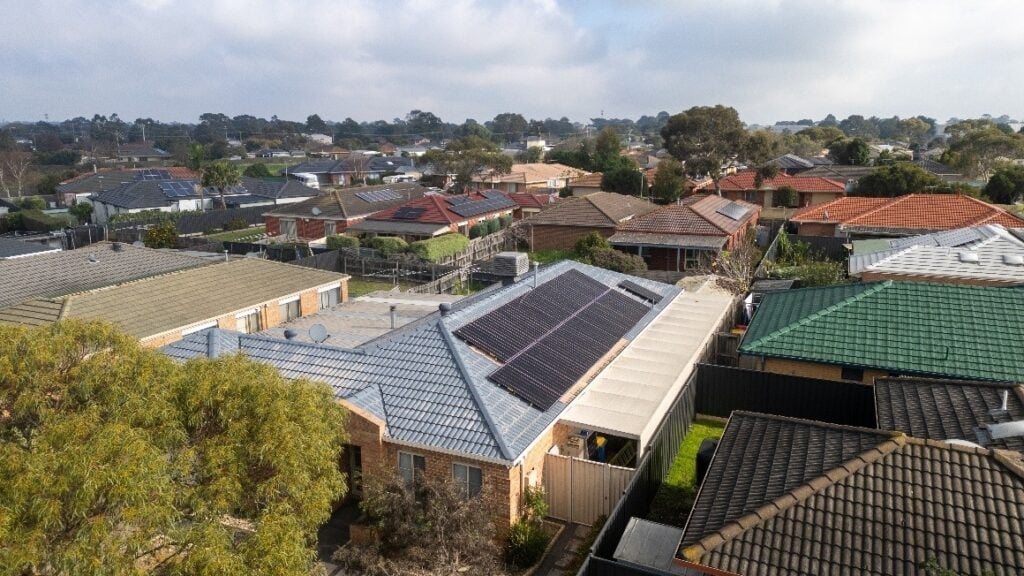
Vertically integrated solar equipment manufacturer Trinasolar has started mass production of a 515W solar PV module developed exclusively for the Australian residential and commercial rooftop market, with first deliveries expected this month.
The module, the Vertex S+ G3 515W (NEG10R.28Z), has received certification from the Clean Energy Council (CEC), the module and product listing body under the Small-scale Renewable Energy Scheme (SRES), for use in the scheme.
Try Premium for just $1
- Full premium access for the first month at only $1
- Converts to an annual rate after 30 days unless cancelled
- Cancel anytime during the trial period
Premium Benefits
- Expert industry analysis and interviews
- Digital access to PV Tech Power journal
- Exclusive event discounts
Or get the full Premium subscription right away
Or continue reading this article for free
It is built on China-headquartered Trinasolar’s n-type i-TOPCon Ultra cell technology, the same underlying platform used across the Vertex S+ G3 range launched in Europe earlier this year, which uses tunnel oxide passivated contact technology to improve charge collection and reduce energy losses at the cell surface.
According to Trinasolar, the module delivers 24.7% efficiency within a 1,842mm by 1,134mm footprint, a size it says keeps it comparable to modules rated around 475W, despite the higher output. A zero-gap, high-density cell layout and low-voltage design are intended to support flexible string sizing, allowing installers to connect 18 to 20 modules per string.
The module carries a low temperature coefficient of -0.26%/°C, a dual-glass structure, and mechanical load ratings of 5,400 Pa for snow and 4,000 Pa for wind, intended to support performance in Australia’s climate extremes. Trinasolar backs the product with a 25-year product warranty and a 30-year power warranty.
Edison Zhou, head of Australia at Trinasolar Asia Pacific, said the module was developed to address specific conditions in the Australian rooftop market.
“In Australia, smaller lots, higher density housing and more complex roof designs are increasing the need for modules that can maximise energy generation from limited rooftop space, while remaining practical for installers to handle,” he said.
The Australian product launch comes as Trinasolar navigates a difficult financial period shared across the Chinese module manufacturing sector.
As previously reported by PV Tech, listed Chinese PV companies reported a combined deficit exceeding RMB10 billion in the first half of 2026, driven by persistent overcapacity and low module prices across the supply chain.
Trinasolar has fared relatively better than some peers, with its H1 2026 net loss narrowing by 88-94% year on year, and the company has attributed part of that improvement to a deliberate shift toward high-value markets and premium product orders.
The Vertex S+ G3 515W module sits within that broader strategy. The move to develop a market-specific variant for Australia, with CEC certification and tailored string design parameters, reflects an approach Trinasolar has been pursuing across the Asia Pacific region.
In June 2026, Trina Solar secured what it described as the first commercial order for a perovskite/crystalline silicon tandem solar module in New Zealand, a deal the company framed as a step toward establishing the Oceania region as a testing ground for its next-generation product pipeline.