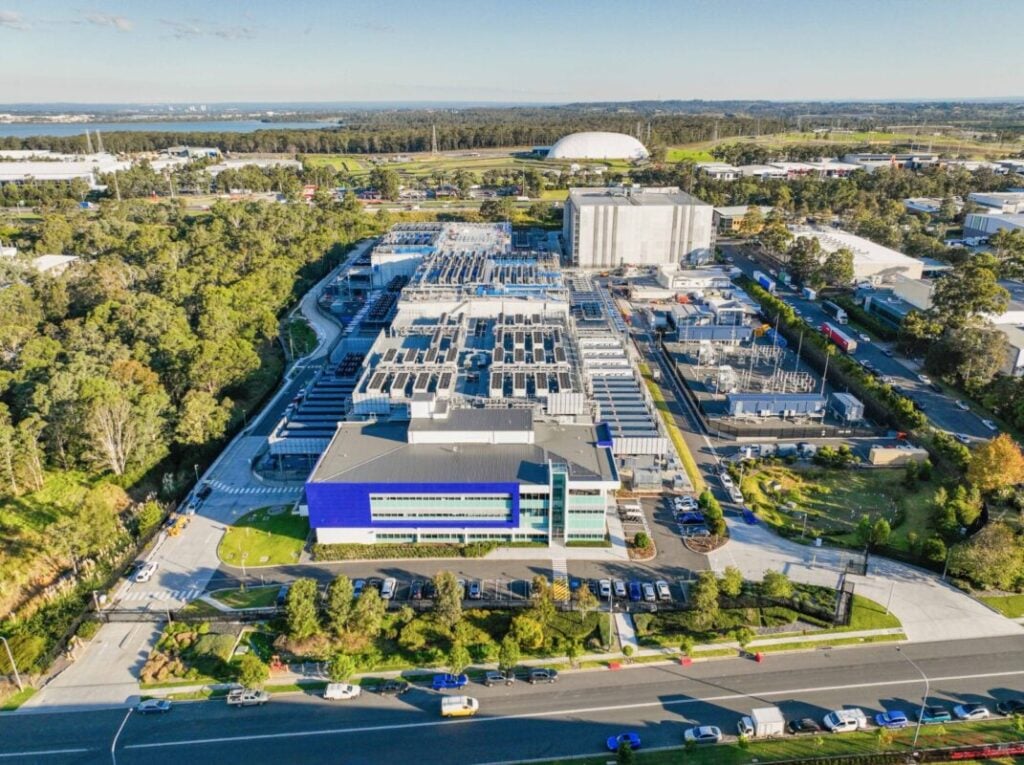
It has been a busy week for data centres in Australia and 5 August was no exception.
The Australian Energy Market Commission (AEMC) published a four-point framework requiring large data centres to invest in new renewable energy generation and contract for firming capacity.
Try Premium for just $1
- Full premium access for the first month at only $1
- Converts to an annual rate after 30 days unless cancelled
- Cancel anytime during the trial period
Premium Benefits
- Expert industry analysis and interviews
- Digital access to PV Tech Power journal
- Exclusive event discounts
Or get the full Premium subscription right away
Or continue reading this article for free
Meanwhile, the New South Wales (NSW) government introduced legislation to accelerate approvals for the projects that those data centres will need to fund.
The two instruments together paint a picture of how Australia intends to manage the energy implications of a data centre pipeline, which the federal government values at AU$150 billion (US$99 billion).
Prime Minister Anthony Albanese announced on 15 July that large-scale data centres would be legally required to become net generators of renewable energy, putting at least as much power into the grid as they draw from it. The AEMC advice and the NSW bill represent the regulatory and legislative machinery being built behind that commitment.
A coalition of climate groups, unions and renewable energy organisations had warned earlier in 2026 that a social backlash was inevitable if data centres were allowed to draw from Australia’s existing renewable energy supply rather than fund new build.
AEMO has forecast that data centre demand could reach 10% of total NEM demand by 2050, up from around 2% today.
Australia is becoming one of the largest markets for data centre development globally, with many facilities already operational. You can find a breakdown by state and territory below:
What the AEMC is recommending
The AEMC, the rule-maker for the National Electricity Market (NEM), delivered its advice to the Energy and Climate Change Ministerial Council (ECMC) on 28 July 2026, following an 8 May request to develop regulatory pathways for a data centre energy obligation. The findings were publicly released on 5 August.
The AEMC set out four recommendations intended to work together as a package.
The first requires data centres to offset their electricity consumption using certificates linked to new renewable energy generation through the existing Renewable Electricity Guarantee of Origin (REGO) scheme.
This additionality requirement closes the loophole that would otherwise allow a data centre to purchase certificates from existing wind or solar PV plants without triggering a single new megawatt of generation.
The second recommendation requires data centres to contract for firming capacity alongside their renewable energy certificates.
Raw generation certificates do not guarantee dispatchable supply. A data centre that offsets its demand with solar certificates but draws heavily from the grid during evening peak periods creates exactly the kind of grid stress the framework is designed to prevent.
The third recommendation requires data centres to register as NEM market participants.
This improves AEMO’s real-time visibility into large inverter-based loads and provides the regulatory hook needed to enforce the firming obligation. Without registration, grid operators have limited ability to forecast when and where large data centre loads will draw on the system.
This also connects to a separate AEMC initiative. The AEMC proposed new technical standards in March 2026 requiring large data centres to remain connected during grid faults rather than disconnecting, following international incidents where simultaneous disconnections caused cascading blackouts. The draft standards apply to facilities with loads of 30MW or more.
The fourth recommendation supports demand flexibility and the co-location of generation and storage through connection agreements, providing a pathway for data centre operators to contribute to active grid services rather than function purely as passive loads.
The AEMC described the recommendations as based on preliminary analysis, with further work required before implementation. National Electricity Rule change requests are expected to be considered by the ECMC in September 2026, with federal legislation targeted for introduction to Parliament in early 2027.
As reported by PV Tech, Queensland and the Northern Territory broke ranks at the 28 July ECMC meeting, opposing the nationally consistent framework backed by the other six jurisdictions.
As a consequence, Energy Minister Chris Bowen subsequently warned that states could add more rigorous requirements but could not water down the national floor in a speech this week.
NSW introduces REZ-style grid access controls for data centres
At the state level, the NSW government introduced the Electricity Infrastructure Investment Amendment Bill 2026 to the NSW Legislative Assembly on 5 August, giving the state energy minister renewable energy zone (REZ)-style powers to control grid access for large load infrastructure.
For readers unaware, a REZ is a designated geographic area where the government controls which projects can connect to the network, sets access fees and allocates the costs of network upgrades between connecting participants rather than passing them to consumers.
NSW has used this model to manage large-scale renewable energy development across zones, including Central-West Orana and New England. The 5 August bill applies the same framework to data centre connections across the state.
Indeed, the bill defines large-load infrastructure as any facility with a network connection capable of transmitting 5MW or more of electricity instantaneously, or a higher threshold set by regulation.
The second reading speech confirms the intent is to manage the impact of data centres rather than other large energy users, such as hospitals or transport networks, with that distinction to be defined in regulation.
Under the bill, the minister can declare a large load infrastructure access scheme that applies to all or part of NSW, authorising or prohibiting access to specified network infrastructure by large load facilities.
Before making a declaration, the minister must consider a report from the secretary on potential effects on electricity costs for NSW customers and consult the planning minister.
The cost-allocation framework is the bill’s most consequential provision. When determining access fees, the consumer trustee must ensure that data centres are responsible for the cost of network infrastructure required to supply them, and that NSW electricity customers do not pay those costs.
The consumer trustee is expressly prohibited from maximising financial value for NSW electricity customers when setting fees for large load infrastructure access schemes.
The bill also substantially broadens the definition of network operator to include any person who owns, controls, operates or provides network infrastructure, as well as anyone involved in planning, financing, developing or constructing it.
This is intended to enable innovative financing and delivery models for major network infrastructure projects involving multiple entities.
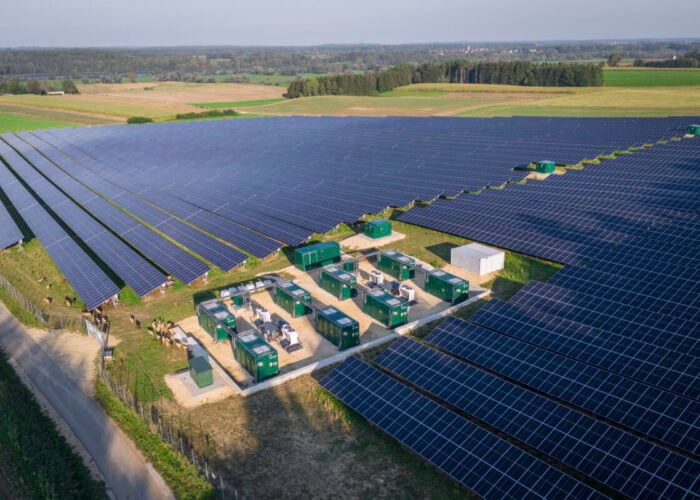
The firming obligation across all three regulatory streams is expected to drive battery storage co-location alongside data centre renewable energy procurement.
As our sister site ESN Premium exclusively reported, Fluence has argued that co-located battery storage can address three distinct commercial problems for data centres simultaneously: load smoothing, cold-start backup and speed to power, with battery storage co-location also enabling a streamlined grid connection pathway under the AEMC’s fourth recommendation.
Implementation timelines vary across the three instruments. The AEMC estimates 12 months to implement the REGO obligation and 24 to 36 months for the market registration and connections reforms after ministerial endorsement.
For NSW, the bill was introduced on 5 August, and several steps remain before an access scheme could be established, though the government said it would announce further details shortly.