US safety verifier UL Solutions has awarded its ‘Carbon Footprint of Products Verification’ to the Vertex series of modules developed by Chinese solar manufacturer Trina Solar.
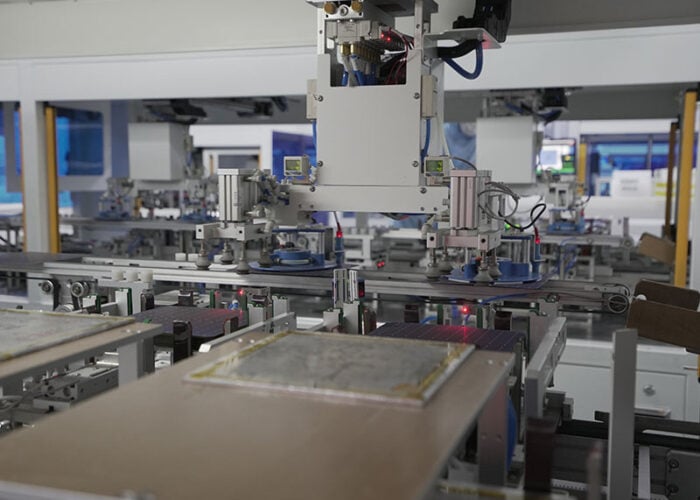
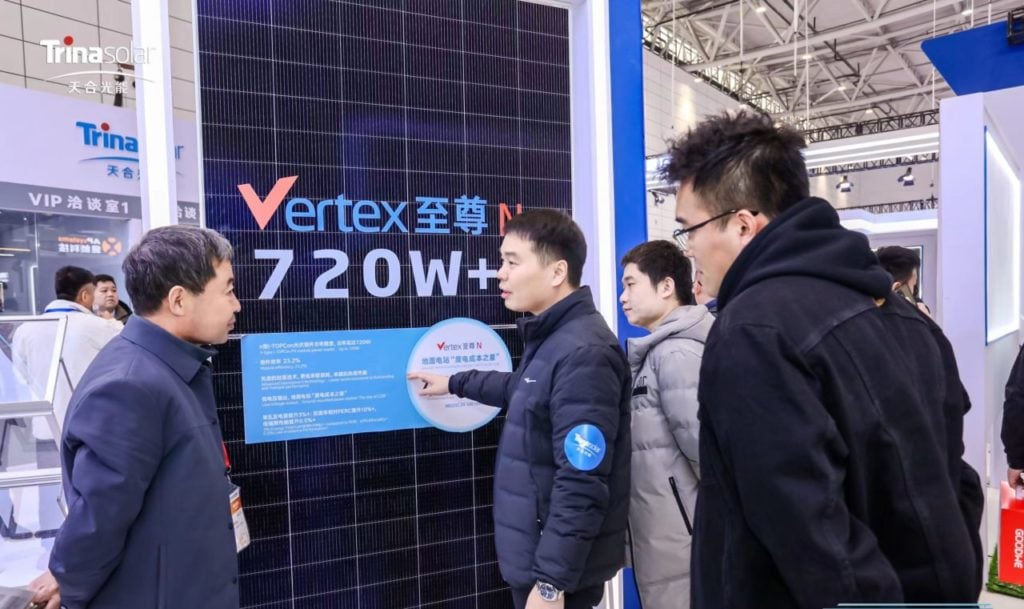
Trina Solar noted that the award demonstrates the company’s “commitment to sustainable practice” by building the Vertex modules in a way that minimises carbon emissions. The company said that production of the modules, which includes its Vertex N 720W, Vertex N 625W and Vertex S+ series of modules, has a carbon footprint as low as 400kg/kW.
Try Premium for just $1
- Full premium access for the first month at only $1
- Converts to an annual rate after 30 days unless cancelled
- Cancel anytime during the trial period
Premium Benefits
- Expert industry analysis and interviews
- Digital access to PV Tech Power journal
- Exclusive event discounts
Or get the full Premium subscription right away
Or continue reading this article for free
This compares favourably to the carbon emissions of 1,500kg/kW for a “standard” solar cell, estimated by the Renewable Energy Hub UK in January of this year. Trina Solar also highlighted that its Vertex N 625W series is the first n-type medium-format module to achieve CFP certification since it standardised the size of its rectangular silicon wafer modules last July.
“Trina Solar is continuously improving its environmental, social and governance (ESG) structure,” said Zhao Jinqiang, president of Trina Solar’s cell and module business unit. “The ESG committee at corporate-level will provide guidance for corporate strategy, products, low-carbon management, labour rights and sustainable procurement.”
Trina Solar has made ESG compliance a priority recently, winning the Bloomberg Green ESG-Enterprises award and earning a spot on the Forbes China ESG 50 list. The Chinese government’s Ministry of Industry and Information technology has also recognised its Suqian plant as a “national green factory”.
This story has been edited for clarity since it was originally published yesterday.