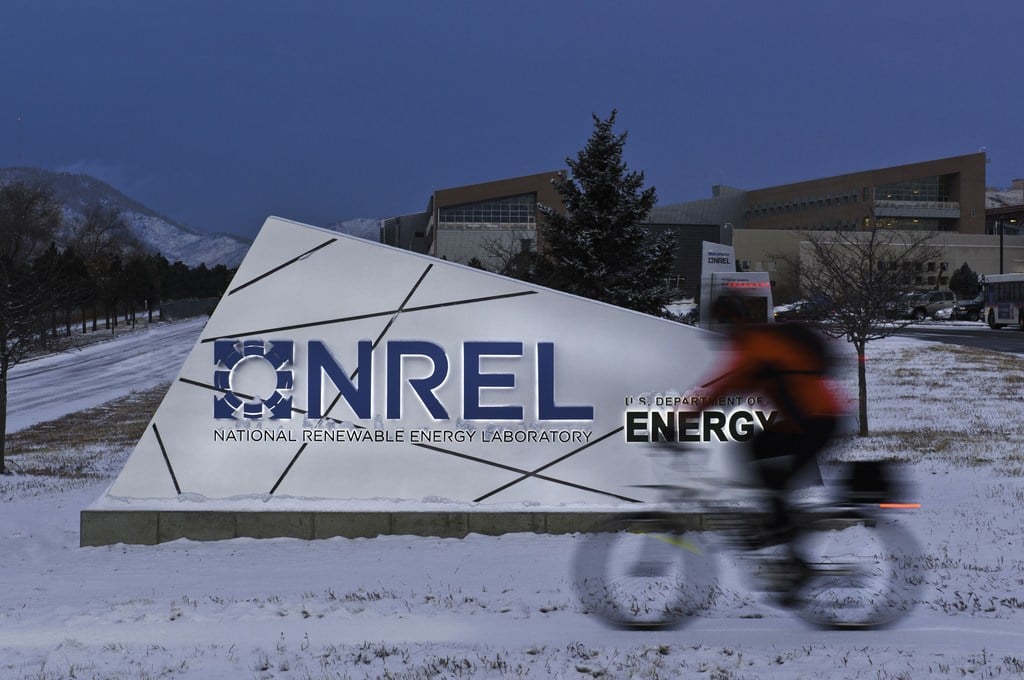
The US Department of Energy (DOE) has proposed sweeping cuts to its research laboratories, including the National Laboratory of the Rockies (formerly the National Renewable Energy Laboratory).
The DOE issued its Budget Justification proposal for the financial year (FY) 2027 last week, which included a roughly US$264 million cut to the National Laboratory of the Rockies’ budget, representing a 52% reduction in its overall funding.
Try Premium for just $1
- Full premium access for the first month at only $1
- Converts to an annual rate after 30 days unless cancelled
- Cancel anytime during the trial period
Premium Benefits
- Expert industry analysis and interviews
- Digital access to PV Tech Power journal
- Exclusive event discounts
Or get the full Premium subscription right away
Or continue reading this article for free
It also proposed cuts to the Lawrence Berkeley National Laboratory of roughly 20%, and similar cuts to the Oak Ridge, Pacific Northwest and Argonne National Laboratories.
As well as cuts to research, the White House’s 2027 budget aims to cut US$15.2 billion from the Infrastructure Investment and Jobs Act (IIJA), often known as the Bipartisan Infrastructure Law (BIL), one of the Biden administration’s tools for offering incentives for renewable energy projects and infrastructure.
The budget proposes to expand DOE defence spending, specifically boosting backing for the National Nuclear Security Administration (NNSA), the body that manages the US nuclear weapons programme. It also proposes to expand the department’s artificial intelligence (AI) programmes through the formation of the Office of Artificial Intelligence and Quantum, which would install seven new supercomputers at National Laboratories.
Fossil fuels saw a bump in support, with a proposed US$1.94 billion to support the coal, oil and gas industries and extend the life of retiring assets.
The budget is yet to be approved by Congress, and its proposals may not come to fruition as Congress has previously resisted some of the president’s budget proposals.
But the proposal runs largely along the same lines as the federal Budget Reconciliation Bill (the “Big, Beautiful Bill”) of 2025, which saw increased focus on fossil fuels and nuclear reserves and a gutting of incentives for renewable energy projects under what the Trump administration has dubbed the Biden era’s “green new scam”. In its budget document, the White House claimed that renewable energy projects “promote radical leftist policies”
The National Laboratory of the Rockies—particularly under its previous name, NREL—has been a major part of the research & development (R&D) of solar PV and other clean energy technologies. In an article reacting to the DOE’s 2027 budget proposal, the DOE Alumni Network—a group of former DOE employees—said: “Cuts of this magnitude would likely lead to significant staffing reductions at labs and a loss of energy-related technical expertise.”