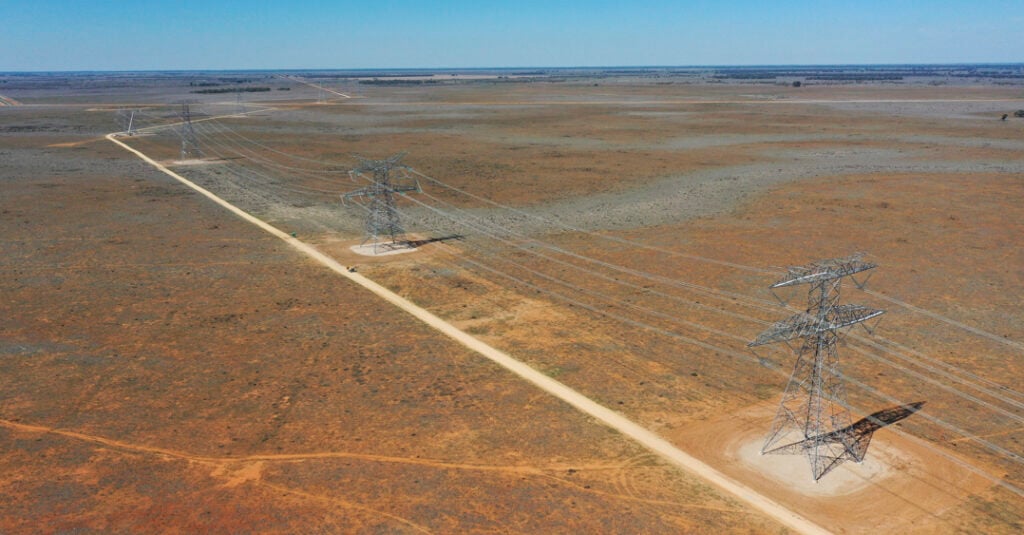
Transgrid has confirmed that Project EnergyConnect, Australia’s largest transmission project, is being fully energised following completion of construction on its New South Wales (NSW) section.
The 900km interconnector comprises three stages. The first, a 160km line running from the South Australian border to Buronga and into Victoria, became operational in 2025.
Try Premium for just $1
- Full premium access for the first month at only $1
- Converts to an annual rate after 30 days unless cancelled
- Cancel anytime during the trial period
Premium Benefits
- Expert industry analysis and interviews
- Digital access to PV Tech Power journal
- Exclusive event discounts
Or get the full Premium subscription right away
Or continue reading this article for free
The second and final NSW stage, a 540km line between Buronga and Wagga Wagga, is now being energised following detailed commissioning checks.
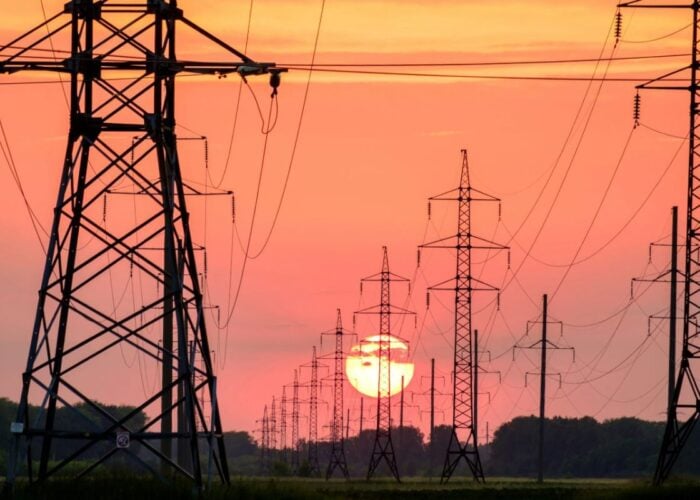
Transgrid and delivery partner Elecnor Australia have completed construction of the full 700km NSW section, featuring more than 1,500 towers and monopoles and over 10,000km of high-voltage conductor cabling.
The Australian Energy Market Operator (AEMO) is expected to begin inter-network testing on the second stage later in 2026 to confirm the reliability and performance of the new infrastructure.
Transgrid Group CEO Brett Redman said the project will form the backbone of the modern power system the National Electricity Market (NEM) will need by 2035.
“NSW is well advanced in the deep transition, and Transgrid has been getting on with the job of delivering more than 2,000km of critical transmission lines that will provide millions of consumers with access to lower-cost renewable energy,” Redman said.
“Energisation of EnergyConnect marks the culmination of one of the nation’s most significant transmission builds and is a defining moment in the delivery of Australia’s clean energy future.”
Transgrid estimates that EnergyConnect will reduce the generation component of typical household energy bills by up to AU$30 (US$21.15) per year in NSW, AU$45 in Victoria, and AU$75 in South Australia, by giving consumers access to the lowest-cost wholesale generation available across the three connected states.
Net household bill savings, after accounting for the project’s cost, are projected at up to AU$15 per year in NSW, AU$45 in Victoria, and AU$65 in South Australia through to 2050. Transgrid puts the project’s gross market benefits at AU$4.2 billion, with net market benefits of AU$964 million for energy consumers.
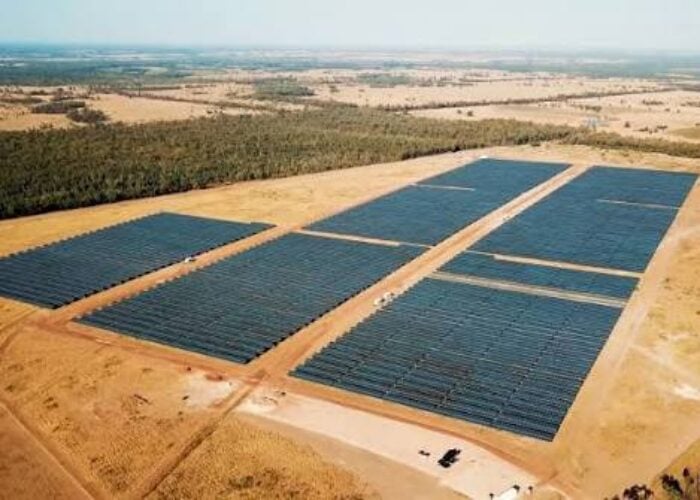
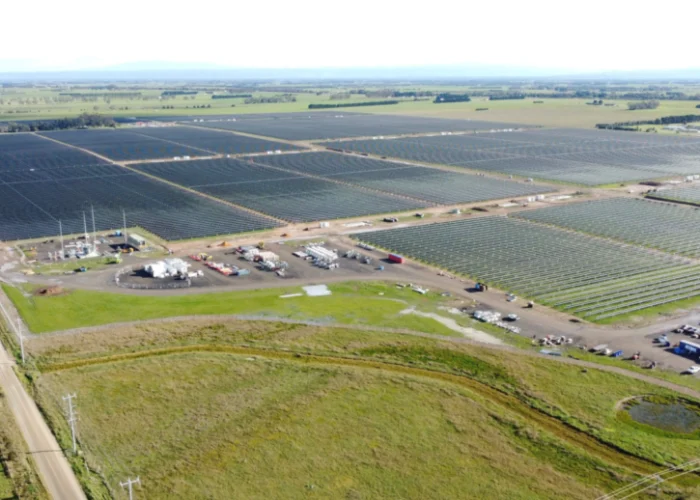
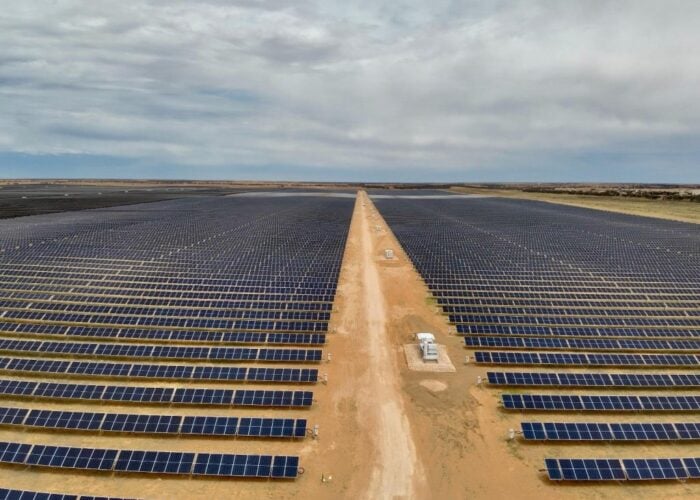
Beyond bill impacts, the interconnector is designed to integrate new renewable energy generation in the Riverina and South West NSW into the NEM, an area that overlaps with the NSW South-West renewable energy zone (REZ), where projects such as RWE’s recently opened 400MWh Limondale battery energy storage system (BESS) and 314MW solar PV power plant are located.
The stronger three-state connection is also intended to improve reliability and supply security as NSW’s coal-fired power stations progressively retire.
The scale of the construction effort reflects the project’s status as nation-critical infrastructure. More than 10 million worker hours were invested in the NSW section alone, with 1,508 towers and monopoles requiring 46,068 tonnes of steel, and 10,385km of conductor cabling, described by Transgrid as enough to span from Sydney to Perth three times.
The project includes a 15-hectare substation at Buronga, housing synchronous condensers, phase-shifting transformers, shunt reactors, and capacitor banks, alongside a 4-hectare substation at Bundure and an expansion of the existing Wagga Wagga substation.
Part of a broader transmission build
EnergyConnect is one component of a transmission programme that spans multiple states. Transgrid’s 365km HumeLink project, which will connect the Snowy 2.0 pumped hydro scheme to the grid, is proceeding in parallel, while planning continues on the 240km NSW section of the Victoria-New South Wales Interconnector West (VNI West).
Redman framed EnergyConnect’s completion as evidence that the broader transmission build is achievable on a practical timeline.
“The energy transition is not a distant ambition – it is a build that is happening now – and it is demonstrably achievable. Transgrid is playing our part to strengthen the critical energy backbone – EnergyConnect is done, HumeLink is well underway, and the rest of the build is moving at pace,” Redman said.
EnergyConnect’s completion arrives alongside transmission investment commitments in other states.
In Western Australia, the state government has increased its investment in the Clean Energy Link transmission programme to AU$1.6 billion, with contracts signed for the Clean Energy Link-North project to expand the northern section of the South West Interconnected System (SWIS) and connect resource-rich solar and wind regions to Perth and the state’s main grid.
In Queensland, the government has committed AU$3.2 billion to the CopperString transmission project, which aims to extend the NEM into the North West Minerals Province and connect new renewable energy generation in the state’s north and north-west to the NEM.