Technical advisory VDE Americas has updated its hail risk model with new wind data, claiming it will improve the accuracy of hail-damage predictions for PV projects.
VDE said its recent analysis of meteorological data showed that winds during hailstorms can be stronger than previously thought, potentially increasing the risk of damage to PV plants.
Try Premium for just $1
- Full premium access for the first month at only $1
- Converts to an annual rate after 30 days unless cancelled
- Cancel anytime during the trial period
Premium Benefits
- Expert industry analysis and interviews
- Digital access to PV Tech Power journal
- Exclusive event discounts
Or get the full Premium subscription right away
Or continue reading this article for free
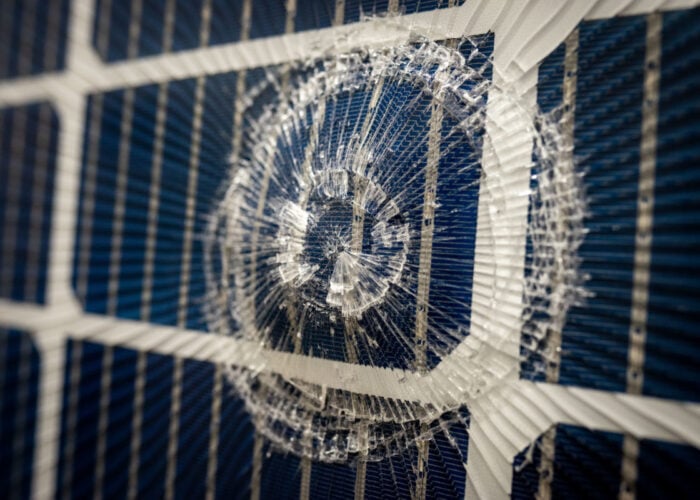
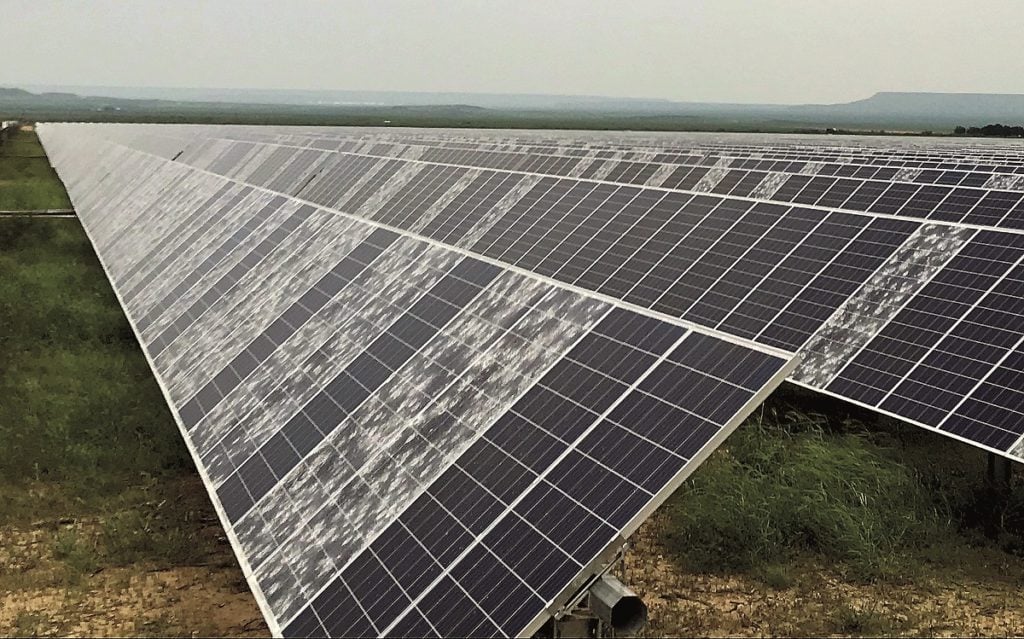
Hail has emerged as a major risk to PV power plants, as more and larger projects are built in hail-prone regions such as the United States. Hailstorms are also becoming more severe as a result of climate change, thereby increasing the risk.
VDE said that by filtering weather records to focus on events in which hailstorms passed directly over weather stations across the US, it had been able to determine that wind speeds in some locations were twice as high as earlier estimates.
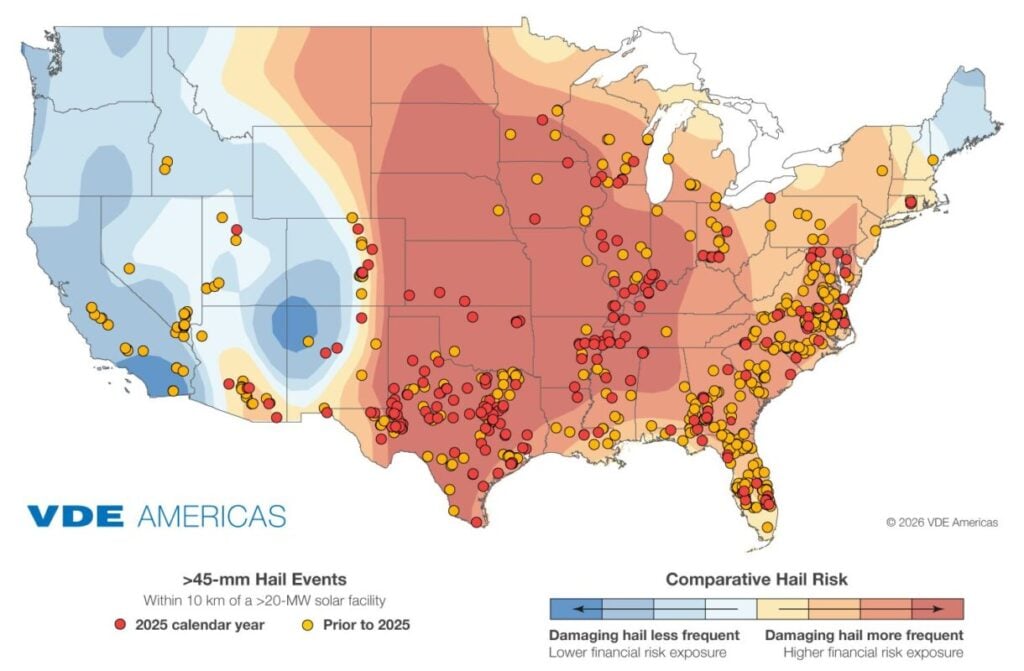
By incorporating more accurate wind speeds into its Hail Risk Model, VDE said its risk assessments would better reflect real-world storm conditions.
“Wind speed and direction modify both the fall angle and impact energy of hail,” said Central Michigan University’s Dr. John Allen, an expert on hail meteorology and loss modelling, and a consultant to VDE. “To effectively predict damage in the field, hail loss models need to account for the influence of wind. VDE’s improved loss model better informs this extremely important piece of the puzzle by more accurately characterising representative wind speed and direction during hail events.”
According to VDE’s analysis, very severe convective storms characterised by greater than 45mm hail, considered a typical threshold for solar panel damage, occurred at or near dozens of utility-scale solar facilities.
“Despite the relatively high frequency of events, reported catastrophic losses were lower in 2025 than in previous years, potentially due in part to project operators’ increased adoption of hail stow protocols and severe weather alert services. Still, hail remains the number one catastrophic peril facing the solar industry,” VDE said in a statement on the mode upgrade.
VDE Americas chief executive Brian Grenko said the enhanced model would enable PV project stakeholders with the data to optimise asset resiliency and mitigate potential financial losses.
“Solar is the largest source of new electricity capacity globally, but without adequate planning, the combination of wind and hail represents a significant threat to the operation of these facilities,” Grenko said.