US-based PV recycling company Solar Panel Recycling (SPR) has expanded its US footprint with a fifth recycling facility in Porterville, California.
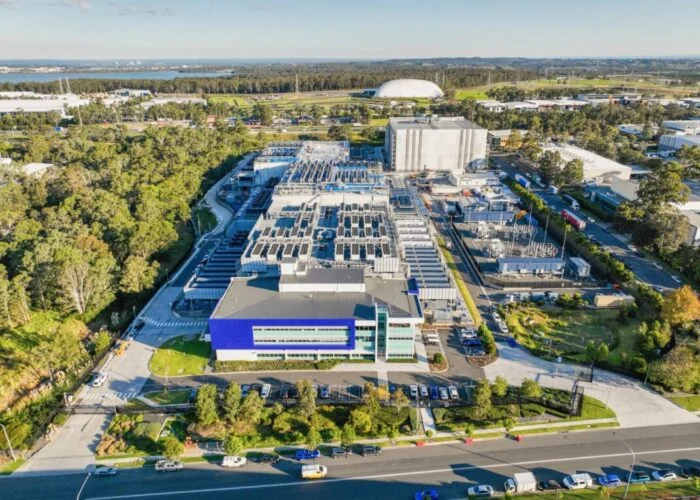
For its first recycling facility on the West Coast, the company acquired a 42,000-square-foot facility on nearly seven acres to build the solar panel recycling facility, which will initially process 1.05 million panels annually. According to the company, the capacity is expected to treble in the first 24 months of operation.
Try Premium for just $1
- Full premium access for the first month at only $1
- Converts to an annual rate after 30 days unless cancelled
- Cancel anytime during the trial period
Premium Benefits
- Expert industry analysis and interviews
- Digital access to PV Tech Power journal
- Exclusive event discounts
Or get the full Premium subscription right away
Or continue reading this article for free
PV Tech reached out to SPR regarding the commercial operation date (COD) of the new facility.
The selection of Porterville is due to the concentrated number of utility-scale solar projects, which SPR said it is at the “the epicentre to some of the largest concentrations of utility-scale solar installations in the country”.
“California sets the highest bar in the country for how end-of-life solar is managed, and operating here is a major milestone for SPR and the industry,” said Brett Henderson, CEO and co-founder of SPR.
“Each facility we add places us closer to more utility-scale projects, which shortens transport distances, lowers costs for our customers and reduces emissions. Broader coverage across the US is how we make responsible recycling accessible wherever it is needed,” added Henderson.
Once the California facility begins commercial operations, the company will be able to process up to 6.5 million solar panels per year. The other facilities are located in North Carolina (with two recycling facilities), Texas and Georgia.
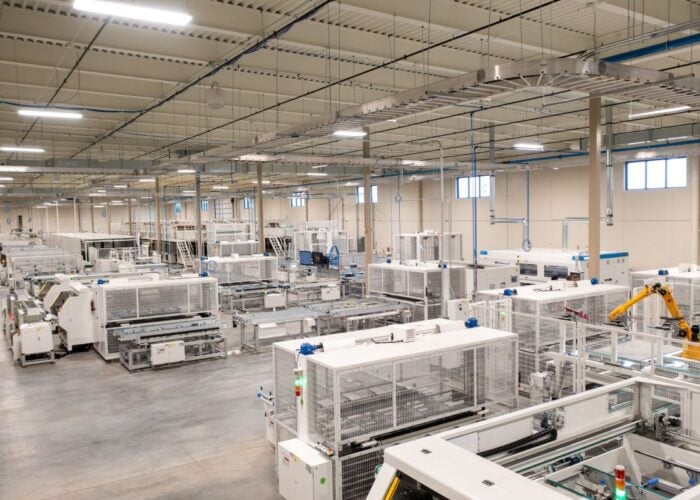
Both the Georgia facility and one in North Carolina had an automated bifacial module recycling line added to its process in January last year. At the time, SPR said it had experienced an uptick in bifacial solar panels requiring recycling due to solar panels damaged during transportation, installation or extreme weather events.
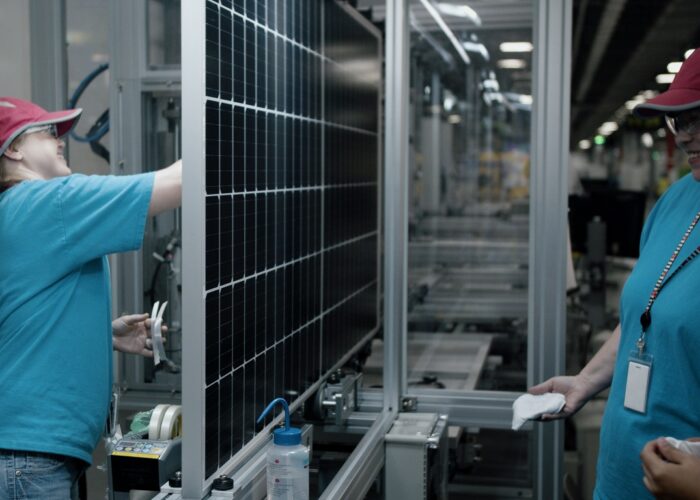
SPR’s recycling process uses a clean commodity separation technology, which recovers each commodity in a panel one by one, including more than 99% of the glass, which was recovered as a clean glass cullet, explained Henderson.
“Much of what is called solar panel recycling today starts by shredding whole panels into mixed material. That ends any chance of recovering pure, manufacturing-grade glass cullet, and the output struggles to find scalable offtakers, if any.”
The importance of recycling modules continues to grow in the US (subscription required) and globally as more solar panels are decommissioned. Germany alone is set to produce over 600,000 tonnes of solar PV waste material by 2030, according to a study from the Fraunhofer Centre for Silicon Photovoltaics (CSP) published last month.
A recent report from the International Energy Agency Photovoltaics Power Systems Programme (IEA PVPS) found that recycling solar PV modules could reduce reliance on critical materials and was key to the sustainable growth of solar PV.
An example of this is the recycling of silver (subscription required), which could be an important source for the industry, even though it has been trying to reduce its use in modules.