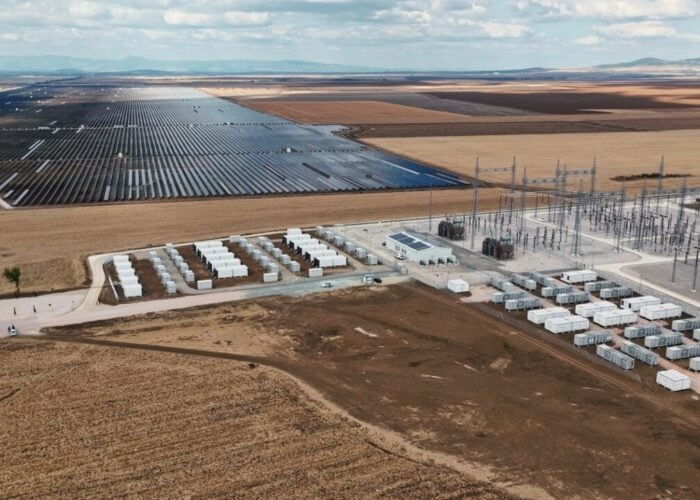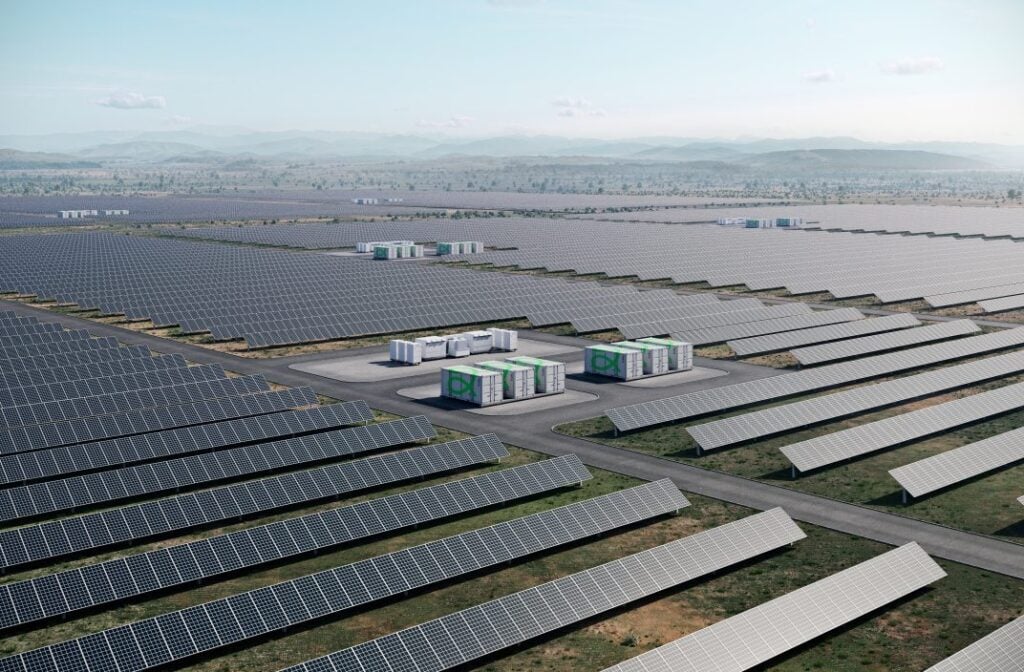
Edify Energy has referred its 800MW Glenarbon Solar Power Station in Queensland, Australia, for assessment under the country’s Environment Protection and Biodiversity Conservation (EPBC) Act.
The project would pair the solar PV power plant with an 800MW/3,200MWh battery energy storage system (BESS). Power would flow into the National Electricity Market (NEM) via an existing transmission line that runs across the site.
Try Premium for just $1
- Full premium access for the first month at only $1
- Converts to an annual rate after 30 days unless cancelled
- Cancel anytime during the trial period
Premium Benefits
- Expert industry analysis and interviews
- Digital access to PV Tech Power journal
- Exclusive event discounts
Or get the full Premium subscription right away
Or continue reading this article for free
The referral places the project about 65km east of Goondiwindi in the Southern Queensland Renewable Energy Zone (REZ). Southern Queensland is one of three sub-regions in the state government’s roadmap for 12 REZs, published in 2024.
Edify’s project page locates the site in the Darling Downs, about 26km south-west of Inglewood, on the traditional lands of the Bigambul People.
The project area covers 1,973.1 hectares, with a disturbance footprint of up to 1,543.2 hectares and a further 429.9 hectares left undeveloped. The referral describes the vegetation to be cleared as “largely non-remnant, degraded, and fragmented”.
The solar PV modules would be mounted on single-axis trackers. A new T-connection would link the plant to Powerlink’s existing 330kV transmission line, via an on-site 330kV/33kV substation. The referral states that the final form and design of the BESS will be determined at a later stage.
Edify says the plant could generate up to 1,555GWh of renewable energy a year. The company expects construction to take about 30 months, with around 600 full-time jobs at peak and about 12 once the plant is operating. The referral does not give a construction start date and sets the operating life at about 50 years.
The Australian developer is also preparing a Queensland development application, to be assessed by the State Assessment and Referral Agency (SARA).
Glenarbon adds to a run of solar-plus-storage projects for Edify in the state. In August, the company reached financial close on its Ganymirra and Majors Creek projects near Townsville, which combine 360MWp of solar PV with 300MW/1,200MWh of battery storage.
That followed financial close in May on the Smoky Creek and Guthrie’s Gap projects in Banana Shire, which pair 720MWp of solar PV with 600MW/2,400MWh of battery storage. Rio Tinto will take 90% of their output under a 20-year agreement, a deal that underpinned Edify’s decision to proceed with the two sites.
Edify appointed DT Infrastructure as preferred EPC contractor for both pairs of projects in March, covering more than 1GW of solar PV.
A syndicate of 14 lenders has committed about AU$3.2 billion (US$2.26 billion) across the four projects, with Chinese manufacturer CATL supplying the battery storage. Edify has used the federal process before.
The company secured federal approval for a 600MW solar PV plant in Banana Shire in 2023, and referred a solar-plus-storage site in New South Wales in 2025.
Solar PV in Australia’s EPBC Act
Edify lists the likely impacts as vegetation clearing; the risk of injury to threatened fauna from traffic, trenches, and fencing; and temporary obstruction of waterways. The project also includes an upgrade of the Bosnjaks Road crossing over the Macintyre Brook to allow access for large trucks.
Glenarbon follows other solar-plus-storage referrals this year. In August, Windlab and Squadron Energy referred the 500MW Bungaban Solar Project in Queensland’s Western Downs, about 50km northeast of Wandoan.
Mint Renewables then submitted its 375MW Magpie Hill solar PV plant in New South Wales in September. That project includes a 375MW/3,000MWh BESS and sits near Tarago, northeast of Bungendore.
Large solar PV plants in southern Queensland have cleared the process before. In 2024, the federal government approved SkyLab’s 800MW Punchs Creek solar PV plant near Toowoomba, which includes co-located battery storage.
These referrals come as the federal government implements its EPBC reforms. The Environment Protection Reform Act 2025, passed in November 2025, created a National Environmental Protection Agency and a 30-business-day assessment pathway for non-fossil fuel projects.
In July, the Clean Energy Investor Group (CEIG) called for urgent implementation of the amended Act to unlock renewables. The investor body said national environmental standards, an offsets calculator and the definition of “net gain” were still under development.
CEIG also found that only one of the 10 recommendations from its 2024 review of the EPBC Act, covering referral processing timeframes, had been fully implemented.