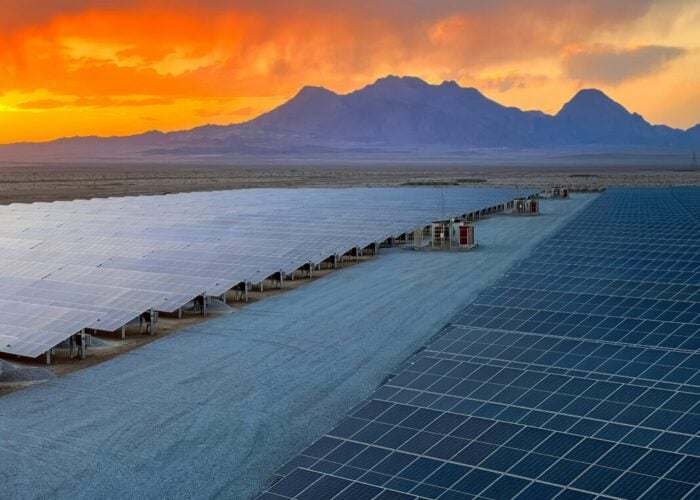
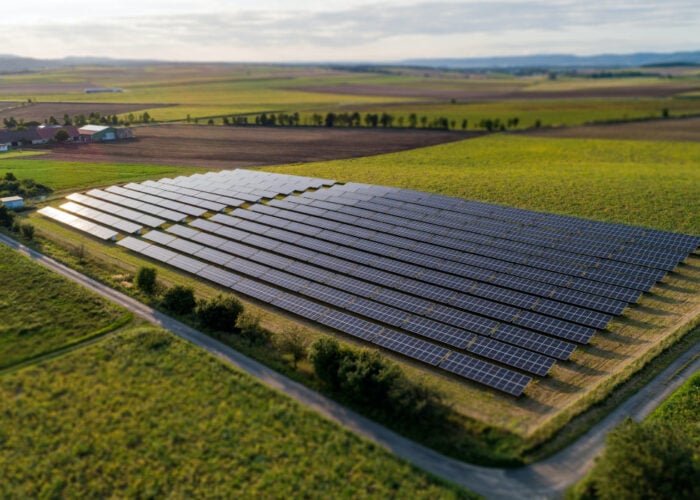
Last year, the Israeli Ministry of Interior approved a plan for an 8MW solar PV plant to be built adjacent to the Bedouin community of Tarabin in the Abu Basma region of the north west of the Negev Desert and has now finally been given the go-ahead. This will be a joint project between the Tarabin tribe and Arava Power Company, costing approximately US$30 million. The plant will cover 15 hectares of privately owned agricultural land.
The US government’s Overseas Private Investment Corporation will be providing 80% of the US$30 million of financing. OPIC’s mission statement says its aid “mobilizes private capital to help solve critical world challenges and in doing so, advances US foreign policy.” According to the Green Prophet, in case Americans were concerned why the government would put money into foreign energy, it is because “OPIC actually generated net income of $269 million in Fiscal Year 2011, making a profit for the 34th consecutive year. In addition to generating revenue with its loans, OPIC recorded a three-fold increase in the amount of capital the agency’s financing mobilized, rising to US$4.4 billion.”
Try Premium for just $1
- Full premium access for the first month at only $1
- Converts to an annual rate after 30 days unless cancelled
- Cancel anytime during the trial period
Premium Benefits
- Expert industry analysis and interviews
- Digital access to PV Tech Power journal
- Exclusive event discounts
Or get the full Premium subscription right away
Or continue reading this article for free
The Jerusalem Post reported the Israeli Public Utility Authority delayed granting approval for the project, stating “Abramowitz [president of Arava] had feared [this] would put the Tarabin family at a disadvantage, as more and more of the 300MW cap for medium-sized fields was being claimed in the meanwhile.”
There has been a great deal of bad press directed towards the Israeli government regarding its treatment of the Bedouins. The Guardian reported last year that Israel “forcibly” removed communities from around Jerusalem and Jericho – about 125km from Tarabin. Arab News reported last week that Israeli bulldozers demolished five homes in the Desert.
Arava Power Company asserts it is in discussions with Israeli regulatory officials to make sure the Bedouin community can capitalize on solar energy investments. The company seeks to lease Bedouin land to install solar power plants, with financial backing from companies like Siemens. EPC contractor Siemens invested US$15 million in Arava to construct Israel's first solar PV plant of 5MW at Kibbutz Ketura.
“If Israel’s government doesn't allocate a significant quota for Bedouin solar fields, it will be difficult for these citizens of Israel to genuinely participate in the domestic solar industry, as they are in a disadvantaged position compared with other landowners,” Yosef Abramowitz, president of Arava, said. “Solar power for Beduin in Israel can be a positive example for all indigenous peoples around the world, from Native Americans to First Nations, Aboriginals and others with historic land claims.”
Abramowitz continued, “60% of the country happens to be desert, and 30% of the [desert] inhabitants happen to be Bedouin.” Arava Power also states it has appealed to the government to provide special caps to the Bedouin
Arava states that it is planning to invest approximately US$1.5 billion to build a proposed pipeline totalling over 400MW, spread among similarly small rural ectrification projects as this one.