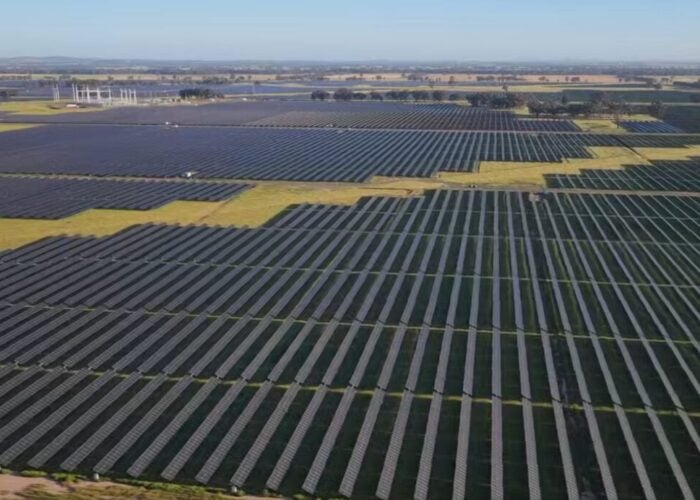
What is claimed to be Europe’s first PV system to use robotic trackers to follow the sun’s path has been completed and connected at a community college in Northern Ireland.
UK-based PV project developer Castillium has connected the 48kW project at South West College, in Enniskillen, Northern Ireland. It will supply power to the CREST (Centre for Renewable Energy & Sustainable Technology) Passive Pavilion and, following a deal announced in January this year, has been equipped with robotic tracking made by US start-up QBotix. The system is designed to meet the entire annual energy demand of the building, making CREST Passive Pavilion carbon neutral.
Try Premium for just $1
- Full premium access for the first month at only $1
- Converts to an annual rate after 30 days unless cancelled
- Cancel anytime during the trial period
Premium Benefits
- Expert industry analysis and interviews
- Digital access to PV Tech Power journal
- Exclusive event discounts
Or get the full Premium subscription right away
Or continue reading this article for free
The robotic tracking system travels on rails between the system’s photovoltaic (PV) panels, in theory capturing the maximum available solar irradiation throughout the day. According to Castillium, the system has already drawn interest from other countries including Australia.
CREST Passive Pavilion, meanwhile, we be used to provide industry and research and development (RnD) testing facilities for renewable energy products and technologies. Small companies in the region with new products but without the means to put them through rigorous testing will be able to use the CREST facilities.
Castillium’s UK deal with QBotix covers 45MW of PV projects in total, with QBotix claiming that its tracking systems can increase performance by up to 40% over existing fixed mount systems and lower the levelised cost of electricity (LCOE) by up to 20%. The systems use autonomous robots, which travel on a track and adjust each mounting system to optimally face the sun in succession, which replaces conventional tracker technology use of multiple individual motors and controllers. The chief executive officer of mounting systems company, Zep Solar, left to head up QBotix in September. While the 45MW deal with Castillium remains QBotix's biggest deal on the table to date, the company also announced further deals at Intersolar North America this year.