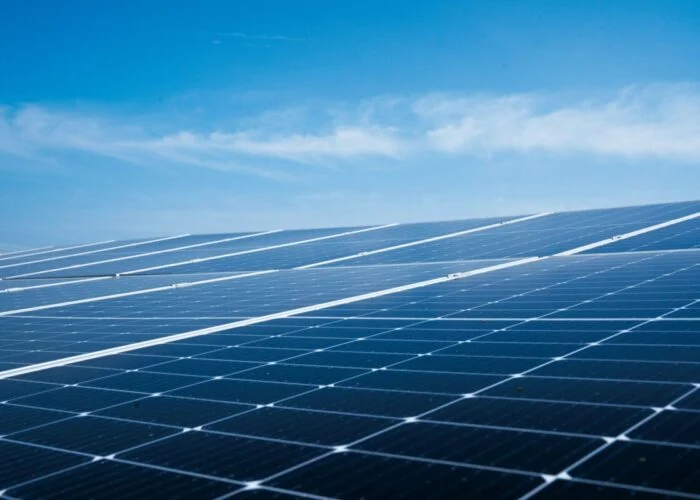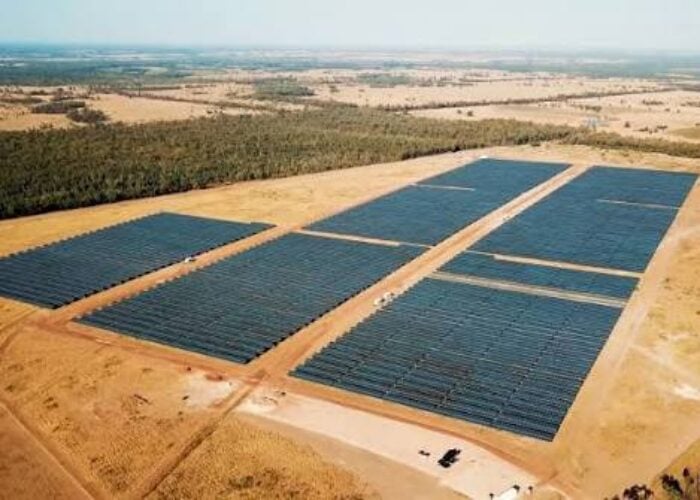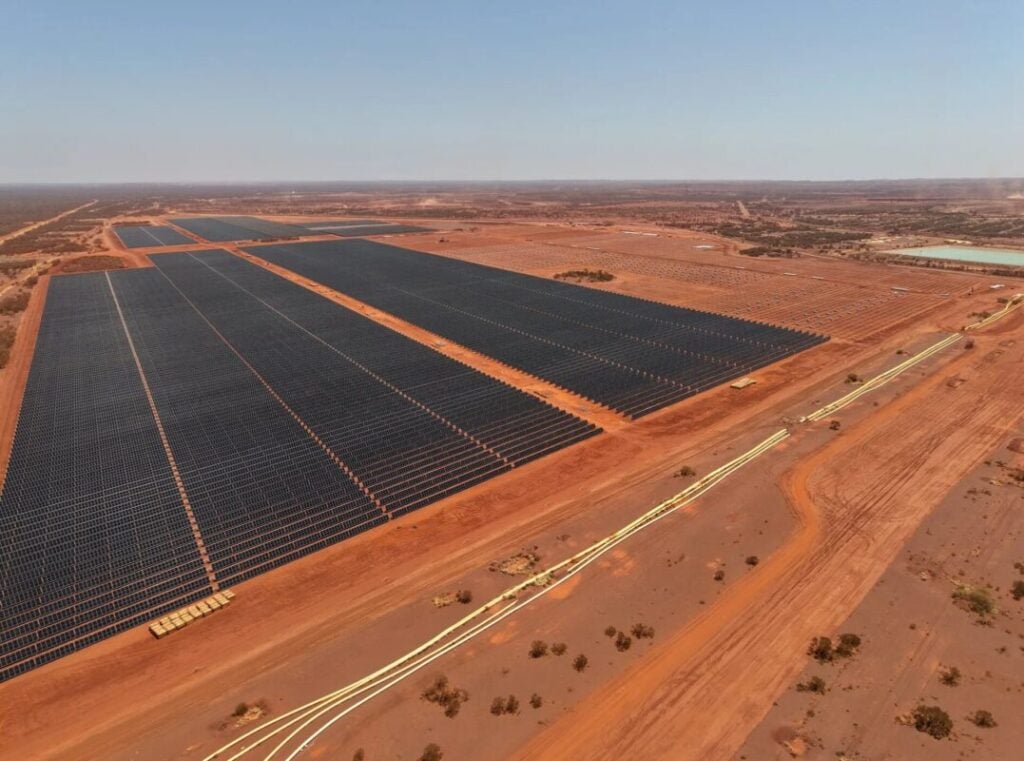
Mining giant Fortescue has begun construction on the 690MW Turner River solar PV power plant in Western Australia’s Pilbara region.
The project forms part of Fortescue’s rapidly expanding “Pilbara Green Grid”, an integrated renewable energy ecosystem designed to power the company’s iron ore operations with renewable energy by 2030.
Try Premium for just $1
- Full premium access for the first month at only $1
- Converts to an annual rate after 30 days unless cancelled
- Cancel anytime during the trial period
Premium Benefits
- Expert industry analysis and interviews
- Digital access to PV Tech Power journal
- Exclusive event discounts
Or get the full Premium subscription right away
Or continue reading this article for free
Turner River is also seen as the final solar installation required to deliver the mining company’s “Real Zero” decarbonisation plan.
Construction of Turner River is expected to be completed in 2028, with over one million solar panels to be installed during the build.
Once operational, the facility will combine with Fortescue’s existing and under-construction solar assets, including the 440MW Solomon Airport solar PV plant, 190MW Cloudbreak solar PV plant, and 100MW North Star Junction solar PV plant, to deliver more than 1.4GW of renewable energy capacity.
The Turner River project, located approximately 120km south of Port Hedland on a 1,400-hectare site, received federal environmental approval in January 2026 under the Environment Protection and Biodiversity Conservation (EPBC) Act.
This was subject to conditions including limits on land clearing and a minimum payment of AU$3.39 million (US$2.43 million) to compensate for impacts on habitats of the Greater Bilby and Northern Quoll.
The facility will connect to Fortescue’s existing Pilbara Energy Connect transmission system via 220kV transmission line spurs.
Fortescue Metals and Operations CEO Dino Otranto said the company is moving ahead while others debate whether decarbonisation is possible.
“The technology is here. The economics are improving every year. And anyone watching global fuel markets can see exactly why electrification and renewable energy matter more than ever,” he said.
Accelerated timeline and fleet electrification
Fortescue has accelerated its decarbonisation timeline, bringing forward its “Real Zero” target from December 2030.
The company expects to complete 290MW of installed renewable energy capacity by early 2026 to meet the fixed energy requirements of its ore processing facilities, enabling daytime “green processing” across its Pilbara operations.
The Pilbara Green Grid, when complete by 2028, will feature 1.2GW of solar, 600MW of wind, 4-5GWh of battery storage and 620km of transmission lines.
Alongside Turner River, Fortescue also confirmed that it has commenced construction of a 650MWh battery storage system at Cloudbreak, with completion expected in FY27.
The system will deliver 74MW of power for approximately 8-hours and features 124 battery units co-located at the Cloudbreak solar PV plant.
The company’s battery storage systems have demonstrated advanced grid-forming capabilities, with chairman Andrew Forrest revealing at the Smart Energy Conference earlier this month that AI-supported battery storage stabilised the mining grid during a recent disruption by reversing electron flow in nanoseconds.