‘A victory for clean energy’: SEIA code proposals approved by ICC members

November 14, 2022
Facebook
Twitter
LinkedIn
Reddit
Email
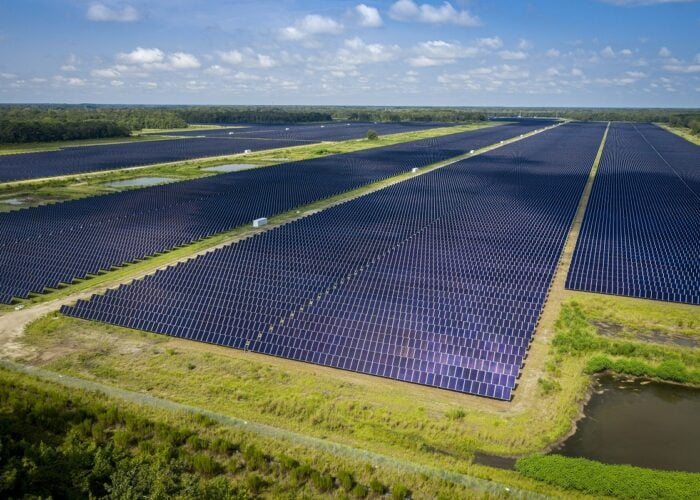
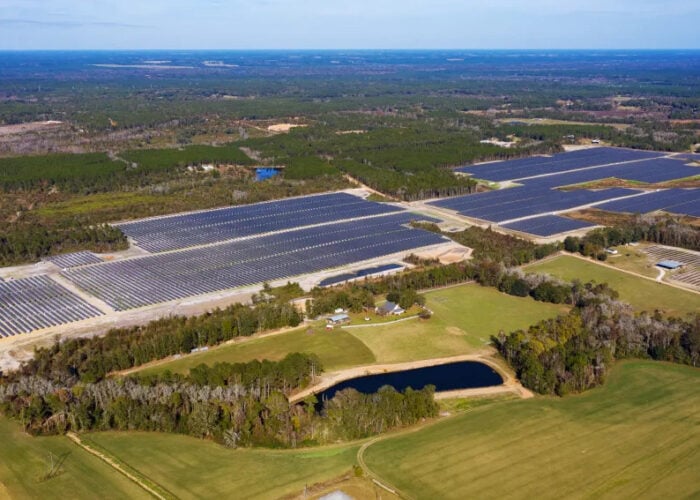
SEIA’s compromise framework includes a carve-out for solar projects to be designated as Risk Category 2. Image: Avantus.

The International Code Council’s (ICC) members have approved proposals from trade body the Solar Energy Industries Association (SEIA) that designate US solar and storage projects as Risk Category 2 infrastructure, instead of the most stringent category.

SEIA said that without its intervention, a proposal from the Federal Emergency Management Agency (FEMA) would have required solar, storage and wind projects to meet Risk Category 4 requirements and be built to withstand damaging natural disasters far beyond what is needed, resulting in a dramatic spike in construction costs.

This article requires Premium SubscriptionBasic (FREE) Subscription

Try Premium for just $1

  • Full premium access for the first month at only $1
  • Converts to an annual rate after 30 days unless cancelled
  • Cancel anytime during the trial period

Premium Benefits

  • Expert industry analysis and interviews
  • Digital access to PV Tech Power journal
  • Exclusive event discounts

Or get the full Premium subscription right away

Or continue reading this article for free

Abigail Ross Hopper, CEO at SEIA, said the ICC members’ decision “is undoubtedly a victory for clean energy deployment” in the US after more than 300 companies signed a letter last month urging approval of SEIA’s compromise proposals.

“The extreme and overly burdensome code measures that would have been required under the FEMA proposal could have stifled clean energy growth without improving grid resilience,” Ross Hopper said. “The resulting effect, whether intended or not, would have been a disastrous decrease in renewable energy projects while we aggressively strive to meet important climate goals.”

While the goal of FEMA’s proposal is to increase grid reliability, SEIA’s compromise framework includes a carve-out for solar projects to be designated as Risk Category 2, which the trade body said balances a significant increase in the structural requirements for solar facilities with enough breathing room for project construction to move forward.

In the letter sent to ICC governmental member voting representatives last month, 318 clean energy companies expressed their “deep concern” around FEMA’s proposals, which they said could “negatively impact the deployment of job-creating clean energy projects nationwide”.

In a statement published on Friday, Ross Hopper called for the taxpayer-funded process managed by government agencies such as FEMA to develop building codes proposals to allow more collaboration, transparency and participation from stakeholders.

“In this case, it did not include input from the day-to-day experts on real world economic impacts, electricity grid reliability, sustainability and climate change,” she said.

16 June 2026
Napa, USA
PV Tech has been running PV ModuleTech Conferences since 2017. PV ModuleTech USA, on 16-17 June 2026, will be our fifth PV ModulelTech conference dedicated to the U.S. utility scale solar sector. The event will gather the key stakeholders from solar developers, solar asset owners and investors, PV manufacturing, policy-making and and all interested downstream channels and third-party entities. The goal is simple: to map out the PV module supply channels to the U.S. out to 2028 and beyond.
13 October 2026
San Francisco Bay Area, USA
PV Tech has been running an annual PV CellTech Conference since 2016. PV CellTech USA, on 13-14 October 2026 is our third PV CellTech conference dedicated to the U.S. manufacturing sector. The events in 2023, 2024 and 2025 were a sell out success and 2026 will once again gather the key stakeholders from PV manufacturing, equipment/materials, policy-making and strategy, capital equipment investment and all interested downstream channels and third-party entities. The goal is simple: to map out PV manufacturing in the U.S. out to 2030 and beyond.

Read Next

April 10, 2026
Signed into law by governor Janet Mills on 6 April 2026, LD 1730 allows the installation of plug-in systems of up to 1,200 watts.
Premium
April 10, 2026
Despite PV’s maturity, a new paper argues that its growing global significance makes ongoing research essential.
April 9, 2026
Origis Energy has secured US$118 million in tax equity financing for the Chalan solar-plus-storage project in Kern County, California.
April 8, 2026
kWh Analytics subsidiary, Solar Energy Insurance Services, has launched a data-sharing initiative that rewards renewable energy assets for efforts in extreme weather mitigation.
Premium
April 8, 2026
PV Tech Premium examines the recent challenges facing California's rooftop solar industry and what lies ahead for VPPs and balcony solar.
April 8, 2026
PV manufacturing capital expenditure is expected to rebound this year, following two years in the doldrums as the industry weathered a global oversupply of modules, new figures show.

Upcoming Events

Solar Media Events
April 15, 2026
Milan, Italy
Solar Media Events
June 16, 2026
Napa, USA
Solar Media Events
October 13, 2026
San Francisco Bay Area, USA
Solar Media Events
November 3, 2026
Málaga, Spain
Solar Media Events
November 24, 2026
Warsaw, Poland