While the Asian solar industry has been hit by COVID-19 fueled disruption, the pandemic has also boosted interest from offtakers, industries and governments alike.
This was a key takeaway of a panel debate delving into the market view of a variety of developers at this week’s Solar & Storage Finance Asia event, organised by PV Tech publisher Solar Media.
Try Premium for just $1
- Full premium access for the first month at only $1
- Converts to an annual rate after 30 days unless cancelled
- Cancel anytime during the trial period
Premium Benefits
- Expert industry analysis and interviews
- Digital access to PV Tech Power journal
- Exclusive event discounts
Or get the full Premium subscription right away
Or continue reading this article for free
Panelists agreed that the ongoing COVID-19 impact has caused disruption to solar projects worldwide, with the pandemic having “taken a toll” on the project development business of Sembcorp, Jen Tan, head of integrated solutions, Singapore & SEA, with it impacting on the actual installation work, logistics and the prices of commodities, which have gone up.
Indeed, the supply chain challenges that have been facing the industry are “absolutely unprecedented”, according to Sunil Gupta, regional head for SEA & South Asia at Vena Energy.
“It almost feels like a perfect storm of four or five things all coming together on the supply side,” he said, with several panelists pointing to challenges surrounding sourcing various materials including glass and polysilicon.
These supply chain constraints have been much-discussed since they first emerged in the latter half of last year, with major module manufacturers lobbying for the Chinese government to intervene in November, claiming prices for solar-grade glass were “out of control” after more than doubling in four months.
The lack of glass in particular has resulted in panel prices going up “by a tremendous amount”, Tan said.
However, the disruption caused by COVID-19, which has affected huge volumes of businesses alongside daily life, has led to an opening of people’s minds to new ideas and a greater awareness of climate change.
“When I talk to commercial business partners, they’re very excited to embark because they know sustainability is an important journey and moving forwards, if we get climate disruptions, it’s going to be worse,” Tan said.
“When we are talking to business owners and people who are looking at offtaking, the interest has gone up.
“Project wise, we are hit by the inefficiencies, but business development wise I see that we have a lot more leads and interest.”
This was echoed by Jose Maria Zabaleta, chief development officer at AC Energy, who said that the pandemic has led to ideas that were previously not thought as mainstream to be considered, and as part of the greater awareness of climate change companies, industries and governments are beginning to accept renewables as necessary and growing part of the mix.
“That’s bringing other people who were not involved in the sector into the industry, and I think that’s helping to lay the foundation to what should be, and what we think will be, exponential growth in the coming years.”
While Zabaleta agreed that there has been disruption, he said that AC Energy has had a strong 18 months with continued growth and activity. In particular, he pointed to two projects that were under construction in the Philippines when COVID-19 broke out which have since been completed without any issues. Since then, a further five have gone into construction in the country, three of which have been completed.
Likewise, two solar farms have been put into construction in India, with AC Energy’s developments moving ahead without issue.
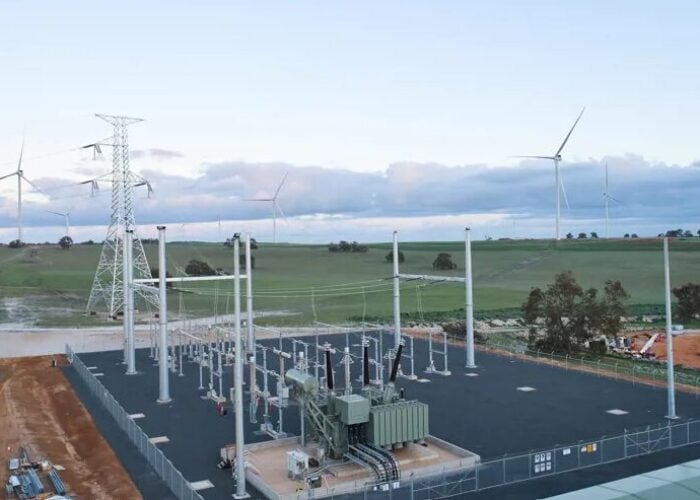
However, one element that could put the breaks on future developments within Asia is constraints on transmission. In the Philippines in particular, Zabeleta said that AC Energy is expecting that in the next 18-24 months the transmission system as it is today will be completely full, possibly resulting in an acceleration of construction of new lines and substations.
A potential solution to this is an increase in the deployment of battery storage, which Gupta described as “very limited” outside of Australia, India and Korea. The reason behind these countries taking the lead is market design, with them being the countries in Asia that – other than Singapore – have a deregulated electricity market and “reasonably good regulation in place for pricing of each of the parts of the system”.
“The way we have seen deployment of batteries is if the revenue stack has multiple revenue sources, it gives that embedded optionality at the time when the grids are evolving, the markets are evolving and the battery technology is evolving,” he said, with Australia seeing a variety of ancillary services, arbitrage, time shifting etc and India being primarily load shifting with ancillary service regulation being “very new”.