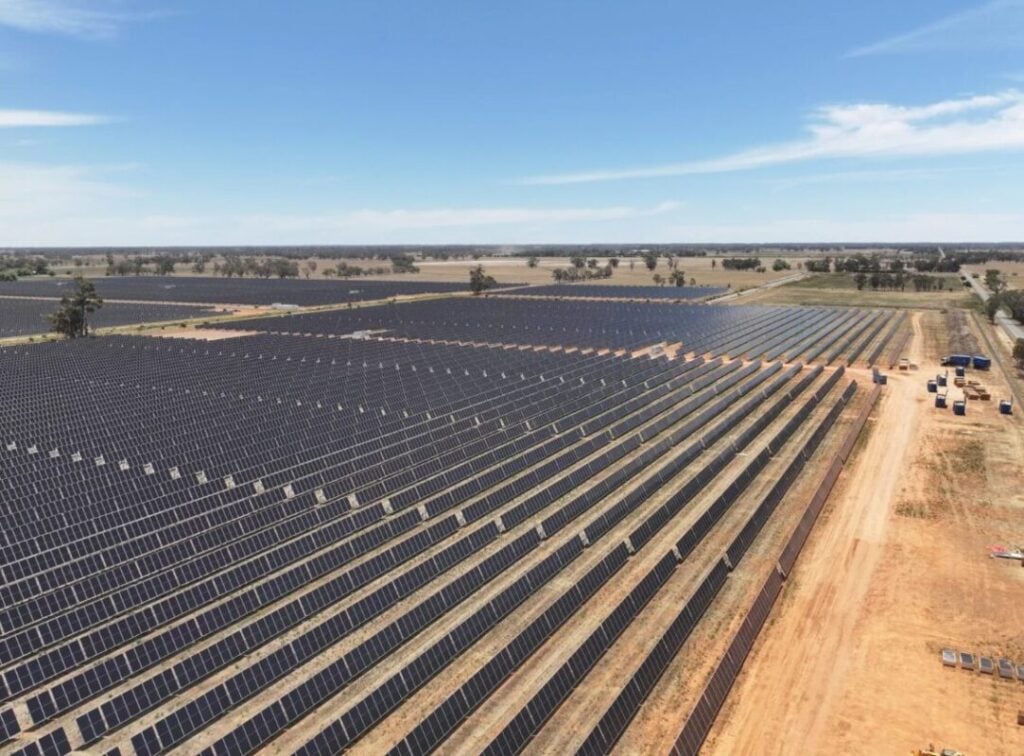
Australia’s National Electricity Market (NEM) connected 9.1GW of new generation and energy storage to full output in FY26, more than double the result achieved in FY25, according to AEMO’s latest 2026 quarterly connections scorecard.
The 34 projects that reached full output in FY26 delivered 12.9GWh of storage capacity alongside the 9.1GW of power generation, with AEMO noting that battery storage projects dominate the technology mix.
Try Premium for just $1
- Full premium access for the first month at only $1
- Converts to an annual rate after 30 days unless cancelled
- Cancel anytime during the trial period
Premium Benefits
- Expert industry analysis and interviews
- Digital access to PV Tech Power journal
- Exclusive event discounts
Or get the full Premium subscription right away
Or continue reading this article for free
Total incremental output, including capacity still in commissioning at partial output levels, reached 10.5GW across the financial year, which runs to 30 June.
AEMO group manager for onboarding and connections, Margarida Pimentel, said the result demonstrated strong end-to-end performance across the pipeline.
“A record 9.1GW of new generation and storage capacity reached full output in the last financial year, more than double the result achieved in FY25,” she said.
Pimentel also highlighted a record year for wind investment, with AEMO receiving 12 wind project applications totalling 5.2GW during FY26, the highest volume of wind applications recorded in a single year.
In the June quarter alone, 14 projects totalling 3.9GW reached full output, covering 2.7GW of battery storage, 0.5GW of solar-plus-storage, 0.4GW of solar and 0.2GW of wind.
A quarterly record of 32 project applications representing 6.9GW were also approved in the quarter, including 3.6GW of battery storage, 1.8GW of solar-plus-storage, 1.3GW of wind and 0.2GW of solar.
Across FY26 as a whole, registrations and application approvals reached 7.4GW and 14.2GW, respectively. Both figures were slightly lower than FY25, reflecting the higher base of the prior year, but the broader connections pipeline continued to expand, growing 42% from 53GW to 75.4GW.
Capacity in the application stage more than doubled across the year and proponent implementation grew by 30%.
To read the full article, please visit Energy-Storage.news.