The Australian Energy Market Commission (AEMC) has released a draft rule to modernise distribution network planning in response to the rapid uptake of consumer energy resources (CERs).
The draft rule proposes introducing a new long-term planning framework and data reporting requirements to improve grid visibility and reduce consumer costs.
Try Premium for just $1
- Full premium access for the first month at only $1
- Converts to an annual rate after 30 days unless cancelled
- Cancel anytime during the trial period
Premium Benefits
- Expert industry analysis and interviews
- Digital access to PV Tech Power journal
- Exclusive event discounts
Or get the full Premium subscription right away
Or continue reading this article for free
Published on 23 April, the draft determination responds to a rule change request submitted by Energy Consumers Australia in January 2025. It proposes replacing the existing distribution annual planning report with a distribution network development plan, published every five years with a standardised 20-year planning horizon.
It would also establish a new framework for distribution network data reporting, with particular emphasis on improving visibility of the low-voltage network where most CERs connect.
AEMC chair Anna Collyer said the reform will give decision-makers across the energy system better information to act earlier.
“With detailed visibility of where solar, battery storage and electric vehicles (EVs) are emerging, distribution network service providers (DNSPs) and investors can plan ahead through targeted upgrades or non-network solutions,” Collyer said.
“That means fewer constraints, less curtailment of rooftop solar, and ultimately more efficient investment decisions that flow onto everyone’s power bills.”
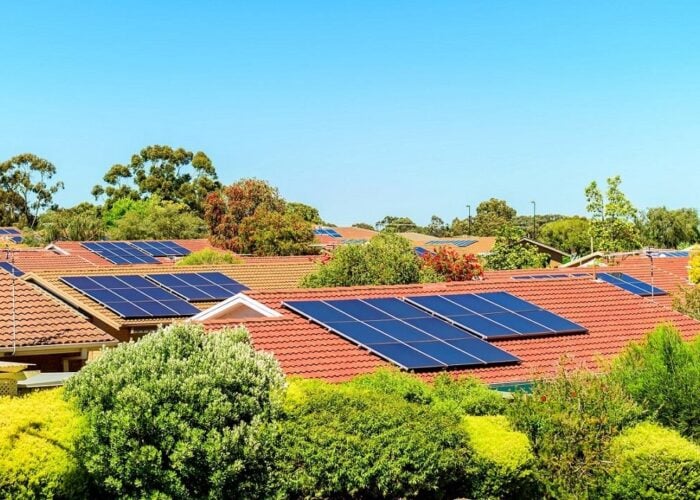
The proposal comes as Australia’s distribution networks face mounting pressure from two-way energy flows. Rooftop solar capacity is forecast to reach 42.5GW by 2036, according to the Australian Energy Market Operator (AEMO), while battery storage and EV adoption continue to accelerate.
These technologies are creating both opportunities for consumers and operational challenges for networks that were designed primarily for one-way power flows.
Under the draft rule, distribution network service providers would be required to prepare a distribution network development plan in conjunction with their regulatory proposals, adopting inputs and scenarios consistent with AEMO’s Inputs, Assumptions and Scenarios Report where practicable.
The framework allows DNSPs flexibility to deviate from AEMO’s scenarios to account for local factors and lower demand diversity at the distribution level.
To maintain near-term transparency, DNSPs would also publish an annual update providing information on key changes to planning outcomes since the previous distribution network development plan.
These updates would include summaries of completed or progressing regulatory investment tests for distribution projects, addressing concerns raised by stakeholders that a five-year planning cycle could reduce the frequency of public reporting compared to the current annual process.
Data visibility and market efficiency
The draft rule establishes a principles-based framework for distribution network data reporting, requiring DNSPs to report data in accordance with guidelines prepared by the Australian Energy Regulator (AER).
The AER would be required to develop these guidelines by 1 March 2028, with DNSPs required to comply within six months.
The framework aims to address the current lack of consistent, granular data on the low-voltage network below zone substations, where congestion is becoming increasingly relevant as consumer energy resource volumes grow.
Improved data availability would help consumers and investors understand existing network constraints, such as the potential for rooftop solar exports to be curtailed, before making investment decisions.
Network costs make up close to half of a typical electricity bill, making efficient planning and investment decisions particularly important for consumers.
The commission is seeking stakeholder feedback on the draft determination and rule, with submissions due by 4 June 2026. A final determination is expected in mid-2026.