The Australian government’s green bank, the Clean Energy Finance Corporation (CEFC), has confirmed it invested a record AU$3.5 billion (US$2.19 billion) in the six months to 31 December 2024.
This record investment is anticipated to deliver a further AU$13.3 billion, aiding the country in achieving its aim of becoming a “renewable energy superpower”, a term often referenced by current prime minister Anthony Albanese and Kane Thornton, CEO of the Clean Energy Council, at All-Energy Australia 2024.
Try Premium for just $1
- Full premium access for the first month at only $1
- Converts to an annual rate after 30 days unless cancelled
- Cancel anytime during the trial period
Premium Benefits
- Expert industry analysis and interviews
- Digital access to PV Tech Power journal
- Exclusive event discounts
Or get the full Premium subscription right away
Or continue reading this article for free
The CEFC also confirmed that it had completed 28 transactions as of December 2024, an average of one per week.
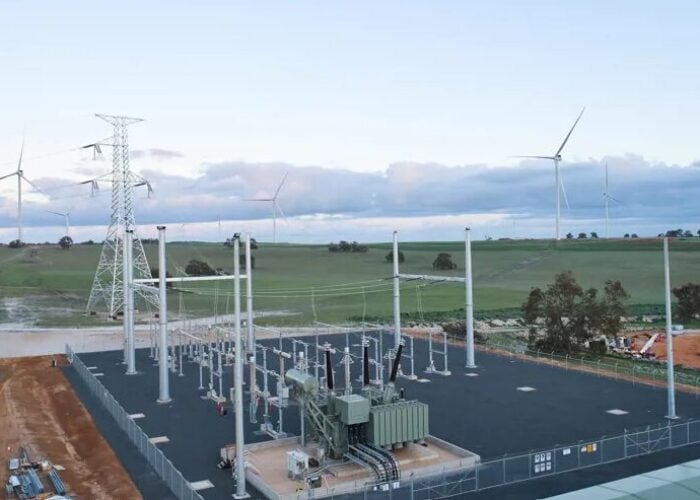
One of these transactions was its largest single investment since its inception in August 2012. In December, the organisation said it was committing up to AU$1.92 billion to enable the construction of the HumeLink transmission project. The project will see 365km of new 500kV high-voltage transmission infrastructure between Wagga Wagga, Bannaby and Maragle in New South Wales.
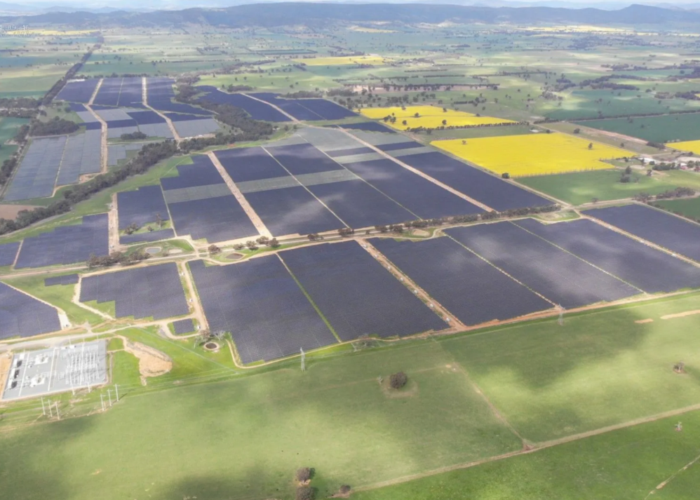
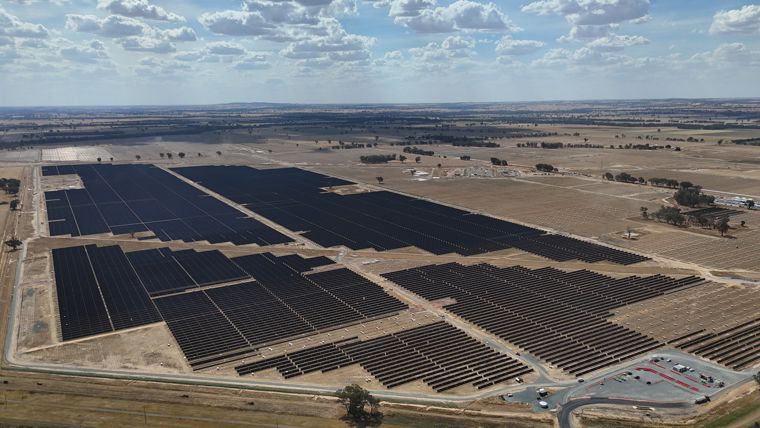
The CEFC also contributed to an AU$1.4 billion finance raise for Neoen secured in December 2024. The capital raise will support the independent power producer’s existing 66MW Parkes, 36MW Griffith, and 28MW Dubbo solar PV plants in New South Wales, alongside the 157MW Kaban Green Power Hub in Queensland, which comprises wind generation.
Ian Learmonth, CEO of the Clean Energy Finance Corporation, believes the scale of the investment the organisation is committing to initiatives shows its potential role in cutting emissions.
“As Australia’s ‘green bank’, we see it as particularly important to maximise the impact of our capital. That means attracting significant new investment from other market participants and putting that capital to work on our most pressing emissions challenges,” Learmonth said.
“The fact that each dollar of CEFC capital has attracted an additional AU$3.01 from other sources demonstrates the ability of the CEFC to crowd in private sector capital as we work towards our national climate goals. This co-investment takes the lifetime value of our investment commitments to AU$71.5 billion.”
Australian government to allocate more funding to CEFC
The CEFC’s confirmation of its investment figures in 2024 comes as Albanese and Chris Bowen, Australia’s minister for climate change and energy, recently outlined its intention to allocate an additional AU$2 billion in funding to the green bank.
As PV Tech reported last week, the Australian government emphasised that the funding would enable the CEFC to unlock further private investment in renewable energy generation and supplementary technologies. The government expects around AU$6 billion to be introduced from global and local organisations through this funding.
This additional funding will take the CEFC’s total investment capacity to AU$32.5 billion, subject to parliamentary approval.
Learmonth said the CEFC had capitalised on strong market interest to make considerable progress across the three funds in their first year of operation.
“Total commitments through the Rewiring the Nation Fund stand at AU$2.8 billion across five transactions, which will help transform our energy grid for the 21st Century,” Learmonth said.
“Robust market interest in the Household Energy Upgrades Fund has seen the CEFC commit AU$345 million to discounted finance programs, mobilising an additional AU$285 million from four participating co-financiers.”