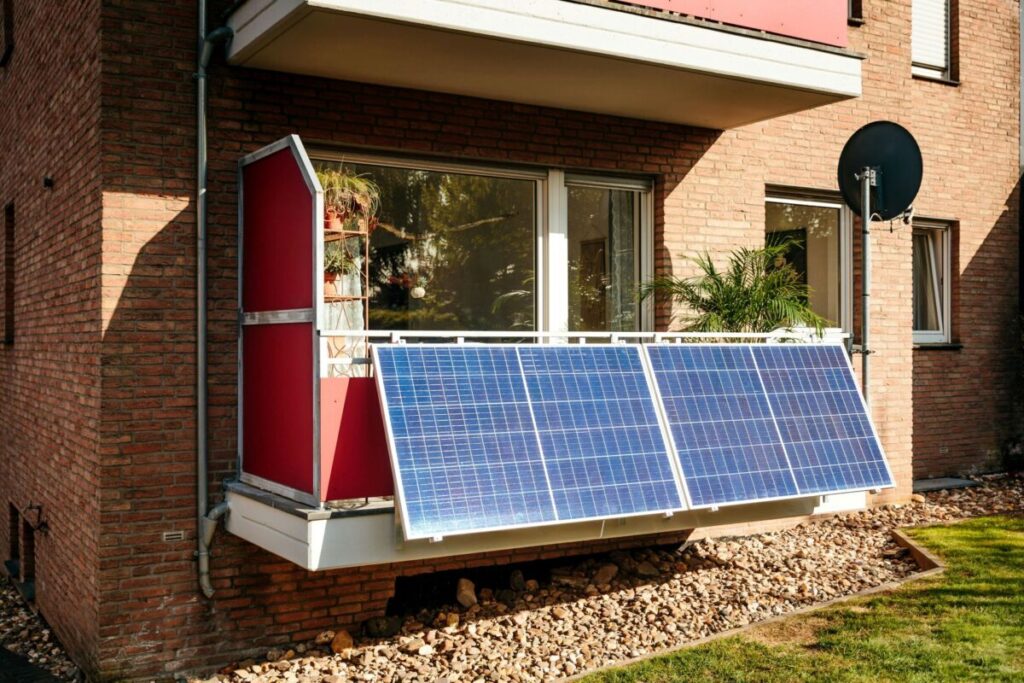
California’s Assembly has unanimously voted in favour (73-0 and six no votes registered or NVR) of a balcony solar bill, Senate Bill 868.
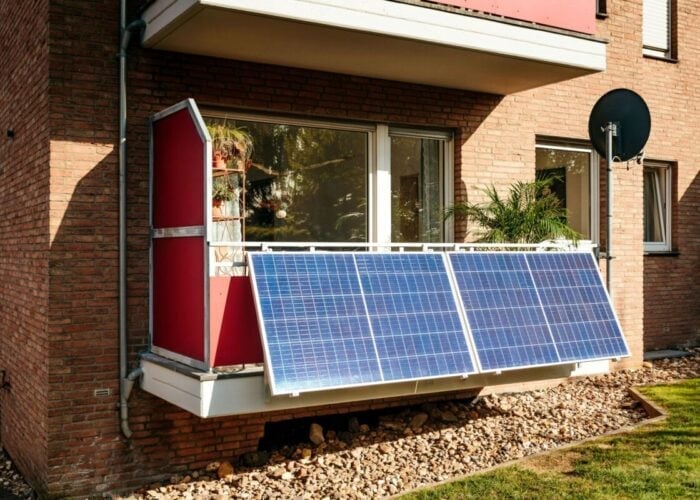
First introduced in March 2026 by the California Senate Energy, Utilities and Communications Committee, SB 868, also known as the Plug and Play Solar Act, aims to facilitate the installation of balcony solar systems in apartments and homes across California.
Try Premium for just $1
- Full premium access for the first month at only $1
- Converts to an annual rate after 30 days unless cancelled
- Cancel anytime during the trial period
Premium Benefits
- Expert industry analysis and interviews
- Digital access to PV Tech Power journal
- Exclusive event discounts
Or get the full Premium subscription right away
Or continue reading this article for free
Under the bill, plug-in solar devices of up to 1,200 watts can be connected to a building’s electrical system through a single standard electrical outlet. These plug-in photovoltaic (PIPV) systems will need to be certified by Underwriters Laboratories (UL) or an equivalent nationally recognised testing laboratory.
The Assembly amended the bill, which was authored by California Senator Scott Wiener, and added a provision to sunset the interconnection exemption on 1 January 2030.
According to the bill’s author: “California has roughly 14 million rental units – around 40% of households in the state – making this an especially powerful tool for expanding access to clean energy.”
Due to their smaller size and portability, balcony solar expands the solar market to renters, condo owners, and people with balconies, allowing them to add a PV system at a lower cost.
“This is the most exciting clean energy idea around,” said Bernadette Del Chiaro, senior vice president for California at Environmental Working Group. “With this bill, California is poised to fling its doors wide open to a real, tangible affordability solution for everyday consumers.
“Solar energy is a no-brainer for California and we applaud Sen. Wiener and his legislative colleagues for their hard work to put this critical clean energy solution on the governor’s desk,” she added.
The balcony solar bill is one step closer to being passed as legislation, and what remains is its concurrence in the Senate of the amendment before being signed into law by California Governor Gavin Newsom.
Since the beginning of this year, several states have either passed or are in the process of passing a law that would allow the installation of plug-in systems of up to 1,200 watts. This includes Maine, Virginia, Colorado and New Jersey, among others, while Utah was the first US state to pass legislation that authorised the use of plug-in solar without utility approval, more than a year ago.
PV Tech Premium recently spoke with Joseph Shangraw, research analyst for solar supply chains at Wood Mackenzie, about the challenges facing the plug-in solar market in the US (subscription required) and the differences with the European market.