Having deemed yesterday “Climate Wednesday”, US President Joe Biden signed a raft of Executive Orders designed to ratchet up the US’ efforts to combat climate change and accelerate the growth of its domestic renewables sector.
And those measures have been warmly received by climate groups in the country, praising the President for taking swift action in addressing matters prioritised by the clean energy industry.
Try Premium for just $1
- Full premium access for the first month at only $1
- Converts to an annual rate after 30 days unless cancelled
- Cancel anytime during the trial period
Premium Benefits
- Expert industry analysis and interviews
- Digital access to PV Tech Power journal
- Exclusive event discounts
Or get the full Premium subscription right away
Or continue reading this article for free
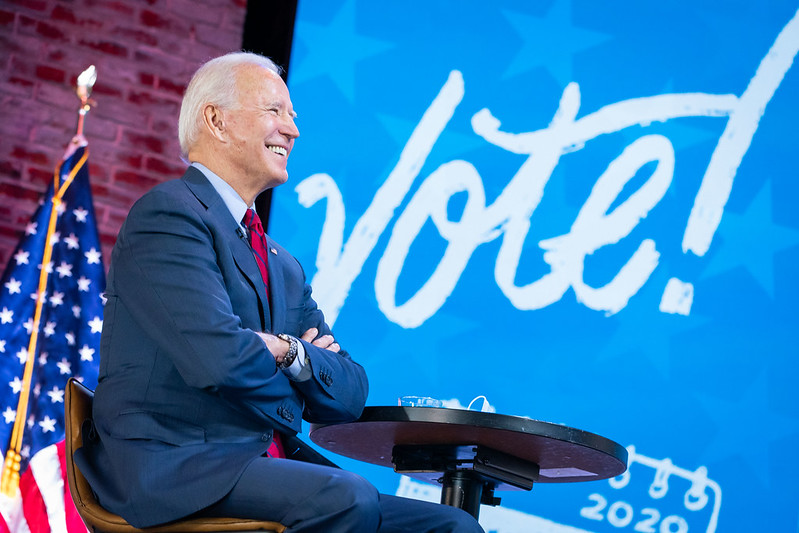
Having campaigned on measures to tackle climate change as a matter of urgency, the newly-elected President signed Executive Orders designed to double down on the US’ commitment to building a greener economy yesterday (27 January 2021).
Those orders relating to the solar industry in the US feed into a commitment from the Biden Administration to ensure that the country has a carbon neutral power system by 2035.
Among the orders signed are a directive to all federal agencies that they must procure “carbon pollution-free electricity” alongside zero-emission vehicles, paving the way for renewables PPAs to feed directly into government electricity procurement.
Furthermore, the order – as was expected – directs the Secretary of the Interior to pause new leases for oil and natural gas projects on public lands and offshore waters. The Trump Administration had all but stopped issuing leases for renewable energy projects on public lands, a matter referenced by trade bodies during last year’s election campaign.
Federal agencies must also act to eliminate fossil fuel subsidies “as consistent with applicable law” and identify new ways in order to help the commercialisation and deployment of clean energy technologies and infrastructure.
Speaking to the press ahead of signing the Executive Orders, Biden moved to intrinsically link climate action with job creation.
“Today is “Climate Day” at the White House and — which means that today is “Jobs Day” at the White House. We’re talking about American innovation, American products, American labour,” the President said.
“When we think of renewable energy, we see American manufacturing, American workers racing to lead the global market… Transforming the American electric sector to produce power without carbon pollution will be a tremendous spur to job creation and economic competitiveness in the 21st century, not to mention the benefits to our health and to our environment.”
And Biden reserved a parting shot at the previous administration for its support of polluting forms of energy.
“Unlike previous administrations, I don’t think the federal government should give handouts to big oil to the tune of US$40 billion in fossil fuel subsidies. We’re going to take money and invest it in clean energy jobs in America — millions of jobs in wind, solar, and carbon capture,” he said.
Abigail Ross Hopper, president and CEO at the Solar Energy Industries Association, praised Biden for addressing several of the domestic solar industry’s priorities.
“The order’s focus on environmental justice is also particularly important in this moment of climate reckoning. This challenge presents an opportunity for economic growth and prosperity, but we must ensure that growth is felt in communities that have been impacted by environmental racism and have historically been shut out from those benefits.
“The president’s order will ensure that 40% of the overall benefits from federal climate investments go to disadvantaged communities and establishes key benchmarks and tracking tools to make that happen,” she said.